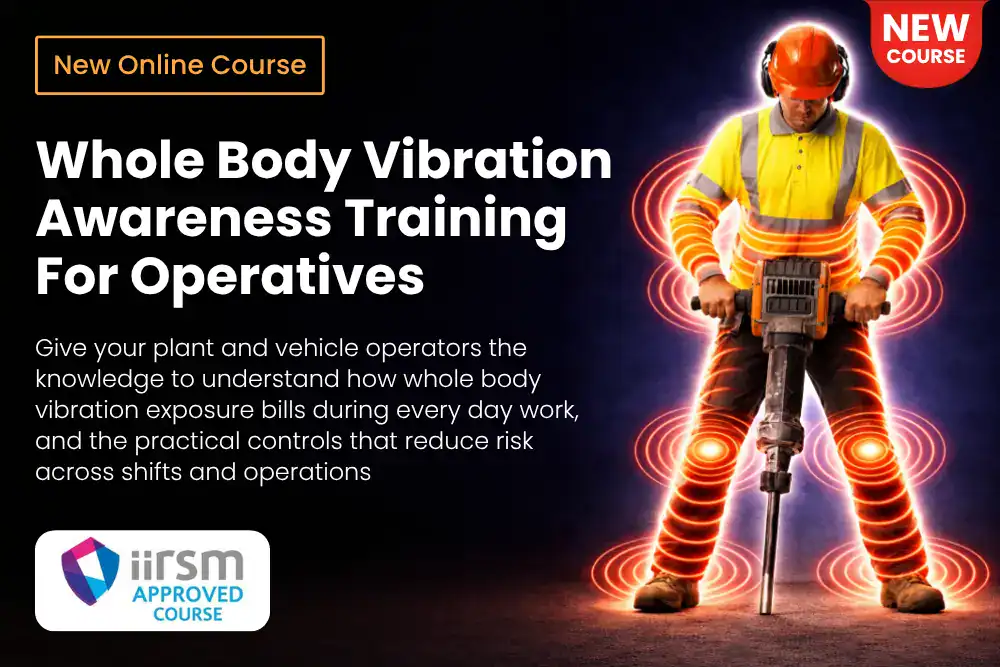
We are pleased to introduce our fully online course: Whole Body Vibration Awareness Training for Operators.
Whole body vibration is one of the most persistent long-term hazards facing plant and vehicle operators, and one of the least visible. Exposure does not announce itself. It accumulates across a shift through decisions that appear entirely routine. Adjusting speed on uneven ground, extending a task or switching to a different machine can all affect the dose an operator receives, often without them realising it. By the time musculoskeletal problems become serious, years of preventable exposure may already have passed.
This IIRSM-approved course gives plant and vehicle operators a clear, practical understanding of how vibration exposure occurs and how their own operating choices shape the risk they face. Employers and site supervisors gain a reliable tool for building operator awareness, reinforcing vibration controls and encouraging early symptom reporting across plant-intensive operations.
Under the Control of Vibration at Work Regulations 2005, employers must assess vibration risks, reduce exposure so far as reasonably practicable and provide workers with adequate information and training. Those duties apply wherever whole body vibration is a routine part of the job, from construction plant to agricultural and utilities vehicles.
The practical difficulty is that operators cannot feel their daily dose building. Unlike a sharp hazard, WBV works gradually. Crossing rough terrain, operating at higher speeds or moving between machines mid-shift can all increase cumulative exposure significantly, but none of those decisions feels unusual at the time. When early symptoms appear, such as lower back stiffness or discomfort, they are often attributed to the physical nature of the job and tolerated rather than reported. Exposure continues, the dose accumulates and the window for early intervention closes.
That pattern is the gap this course is designed to close. Operators cannot manage a risk they do not understand. Where training is absent or limited, operators may be following every required procedure while still making daily decisions that increase their exposure without knowing it. This course builds the understanding they need to make informed choices during normal work and to report concerns before they become long-term problems.
This training is ideal for the following roles.
- Plant and mobile equipment operators
- Excavator, dumper, forklift truck and roller drivers
- Construction, civil engineering and groundworkers
- Agricultural, forestry and utilities workers
- Site supervisors responsible for plant-intensive operations
- Any worker exposed to vibration through vehicle seats or operating platforms
By the end of this course, trainees will understand the following.
- How whole body vibration exposure builds during a shift and why the cumulative dose is not always obvious in the moment
- Which types of plant, terrain and operating conditions generate the highest vibration levels
- How long-term exposure leads to lower back pain, musculoskeletal disorders and balance problems, and why early symptoms are frequently missed or dismissed
- The legal exposure thresholds that apply under the Control of Vibration at Work Regulations 2005 and what those thresholds mean in practical terms
- How task duration, terrain variation, machine switching and posture each affect daily dose
- The hierarchy of controls that reduce vibration risk during routine plant operations
- How to recognise early warning signs and report them promptly, before short-term discomfort becomes a long-term condition
Need to reduce whole body vibration risk and give every operator a practical understanding of how their daily decisions affect the dose they receive? Enrol your workforce on Whole Body Vibration Awareness Training for Operators today. Build operator awareness of vibration controls, exposure limits and the steps that protect people on plant-intensive sites.
Enrol Now
For more details about this course, please contact us.