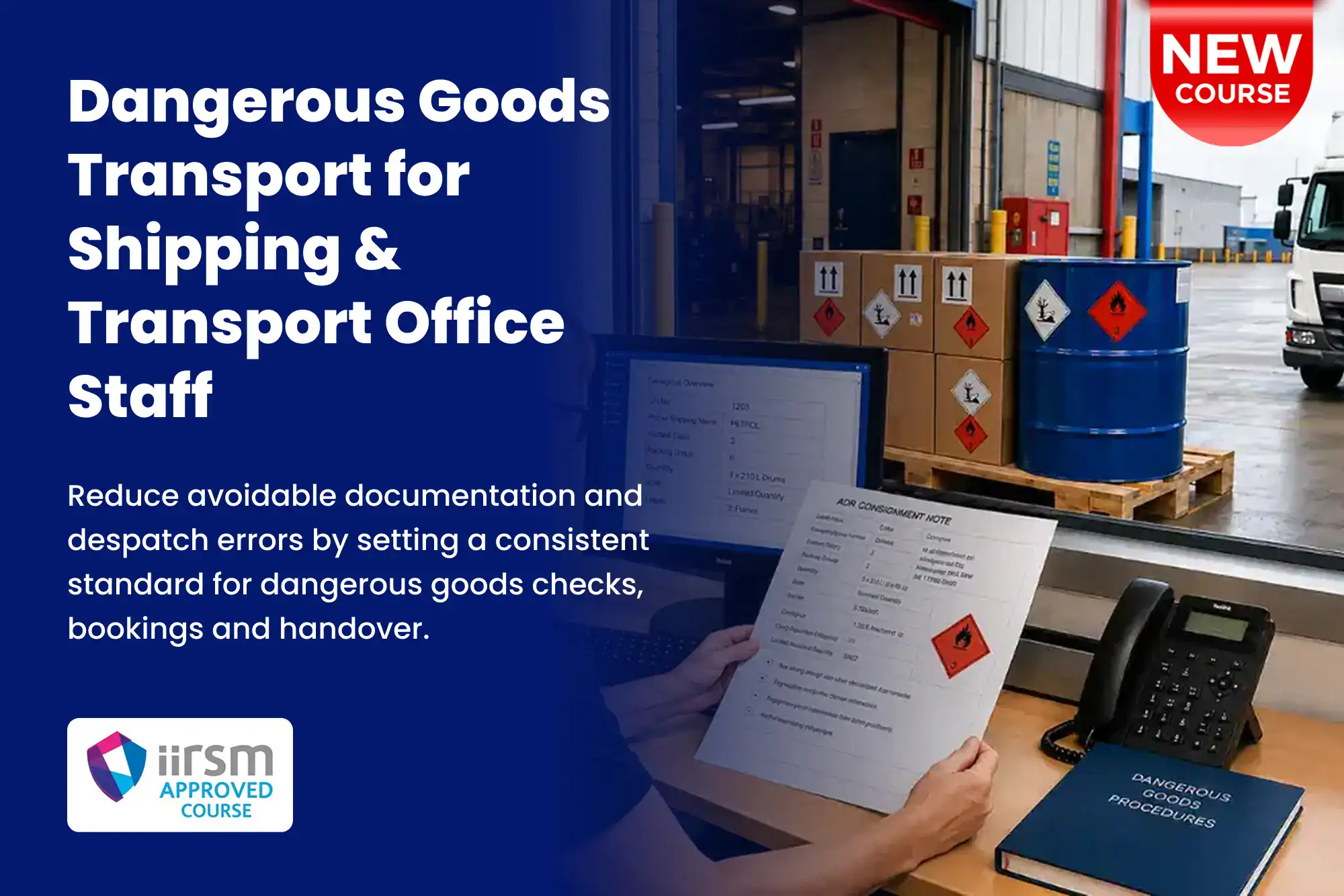
We are pleased to introduce our fully online course: Dangerous Goods Transport for Shipping & Transport Office Staff.
This IIRSM-approved course is designed for office-based staff whose duties include processing, checking, booking or releasing dangerous goods consignments. It focuses on the documentation, communication and pre-despatch decisions that support accurate movement of dangerous goods through the transport chain.
The course takes 50 minutes or more to complete and covers dangerous goods classification, labels and markings, preparation and checking of transport information, multimodal documentation, shipment planning, limited and excepted quantities, carrier communication, pre-despatch checks, handover, record keeping and security.
The programme is fully online and self-paced, with an online assessment and digital certificate on successful completion.
Dangerous goods compliance does not begin when a driver starts a vehicle. Office-based staff can influence whether the information needed to process and transport a consignment is accurate before it reaches the warehouse, loading bay or carrier.
An incomplete or non-compliant transport document can result in a carrier refusing a load and, in some circumstances, can prevent a vehicle from continuing. Staff who prepare, check or release dangerous goods information therefore need to understand the parts of the transport process that relate to their duties.
ADR Chapter 1.3 requires personnel whose duties concern the carriage of dangerous goods to receive training appropriate to their responsibilities before assuming those duties. Employers must also retain records of the training provided.
For office teams, accuracy includes more than completing a form. Staff may need to verify UN numbers, proper shipping names, technical names where required, hazard classes, subsidiary risks and packing groups where applicable. They may also need to check carrier capability, route and tunnel restrictions, receiving-site arrangements and required emergency information before a booking is confirmed.
Where goods move by more than one mode of transport, staff also need to recognise that dangerous goods documentation differs between road, air, sea and rail and ensure the correct requirements are followed for the relevant movement.
This training helps organisations:
- Provide role-appropriate dangerous goods training for relevant shipping and transport office staff
- Improve consistency in how transport descriptions, carrier checks and pre-despatch decisions are handled
- Reinforce documentation, handover, escalation and record-keeping procedures
- Give staff a consistent approach to responding when information is incomplete or a carrier raises a concern
- Support ADR Chapter 1.3 training records with a digital certificate of completion
This course is designed for office-based staff whose actual duties involve dangerous goods consignments. Relevant roles include:
- Shipping coordinators and despatch administrators
- Transport planners and transport office staff
- Freight-forwarding and logistics office staff
- Staff who prepare or check dangerous goods documentation
- Customer-service and order-processing staff handling dangerous goods orders
- Supervisors and managers overseeing despatch and documentation
Working in a transport office does not automatically place every administrator within scope. Employers should determine the training required according to the duties each person actually performs.
By completing this training, relevant staff will understand:
- How to recognise dangerous goods, how they are classified and why office accuracy matters across the transport chain
- How to prepare and check dangerous goods transport information using the required-description sequence
- How to distinguish a proper shipping name from a brand, trade or everyday name
- How to identify dangerous goods documentation used for road, air, sea and rail consignments
- How to check an ADR road transport document and respond when required information is missing
- How to verify limited and excepted quantity conditions against the specific UN entry and mode
- How to plan and book a shipment, including carrier checks, route and tunnel restrictions and emergency information
- How to complete pre-despatch checks, hand over information to the carrier, retain records and escalate concerns
- How to protect consignment and routing information and report requests that may indicate an attempted diversion
Do the people preparing, checking, booking or releasing dangerous goods consignments have training that reflects their documentation and despatch responsibilities?
Enrol relevant staff in the Dangerous Goods Transport for Shipping & Transport Office Staff course to establish a consistent approach to transport information, carrier checks, pre-despatch decisions, handover and record keeping as part of your ADR Chapter 1.3 training arrangements.
Enrol Now
For more details about this course, please contact us.