Course Name: Legionella Risk Management Principles for Responsible Persons
schedule
Course Duration: Approximately 4 hours
This IIRSM-approved Legionella Responsible Person Training explains the principles of Legionella risk assessment and management in hot and cold water systems. It covers the duties of responsible persons, water system design and operation, risk assessment and written control schemes.
The course provides knowledge for responsible persons, deputies and duty holders, including staff preparing to support these roles. Course content is based on HSE’s Approved Code of Practice L8 and HSG274.
Disclaimer: This programme provides knowledge and supporting guidance. Completing it does not by itself make you competent, qualified or authorised for workplace tasks. Follow your employer’s procedures, risk assessments and supervision. It does not appoint you to a dutyholder, responsible person or competent person role.
What You Will Learn
How Legionella spreads and the health risks associated with Legionnaires’ disease
Legislation and HSE guidance relevant to Legionella risk management
Roles and management responsibilities of those involved in Legionella control
Design and operational features of hot and cold water systems that affect Legionella risk
Principles and stages of Legionella risk assessment
The contents and purpose of a written control scheme and the records supporting it
Available in 20+ Languages
Course subtitles are available in multiple languages, including:
This course is approved by the International Institute of Risk & Safety Management (IIRSM).
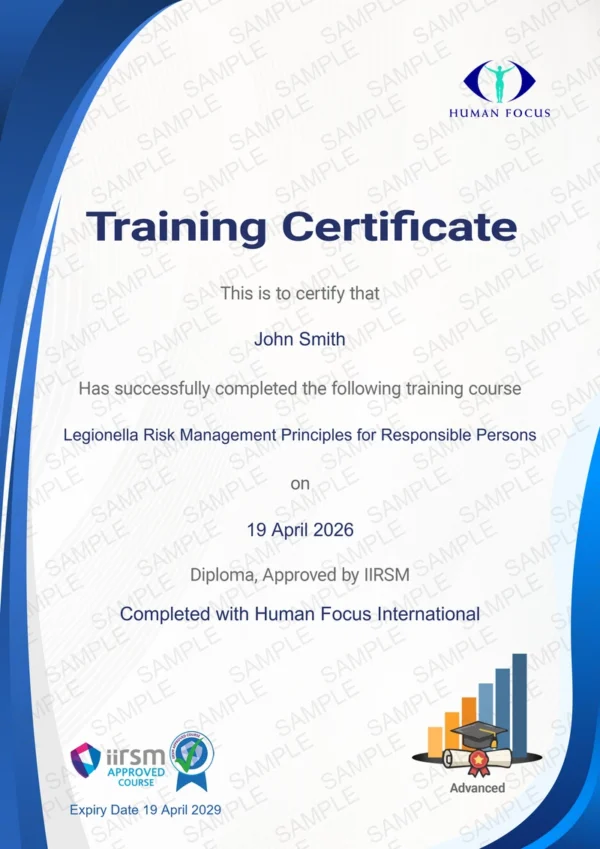
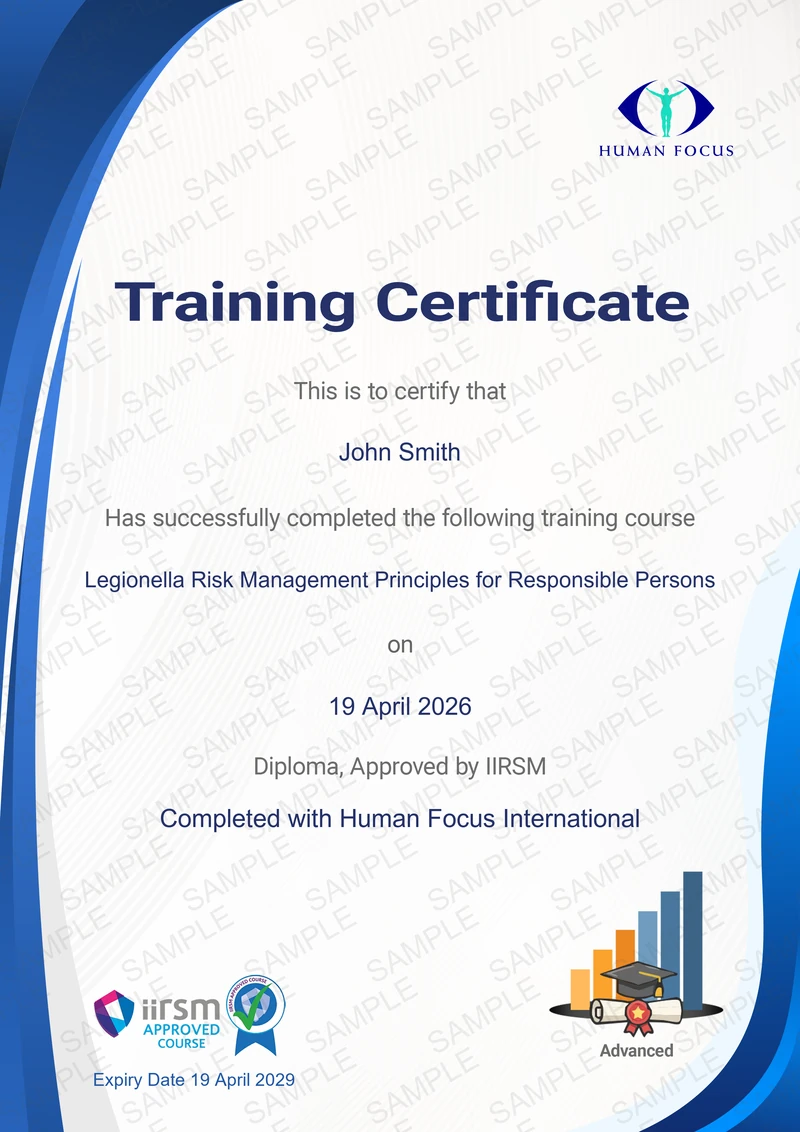
The course certificate includes:
User name
Company name
Course name
Completion date
Expiry date
Approval body
An IIRSM-approved certificate will be available for download and printing instantly upon course completion.
Users must complete an assessment before earning their certificate.
The end-of-course test is:
Fully online
Multiple choice
A score of 80% is required to pass.
Customer Feedback
Why Is Legionella Risk Assessment Training Important?
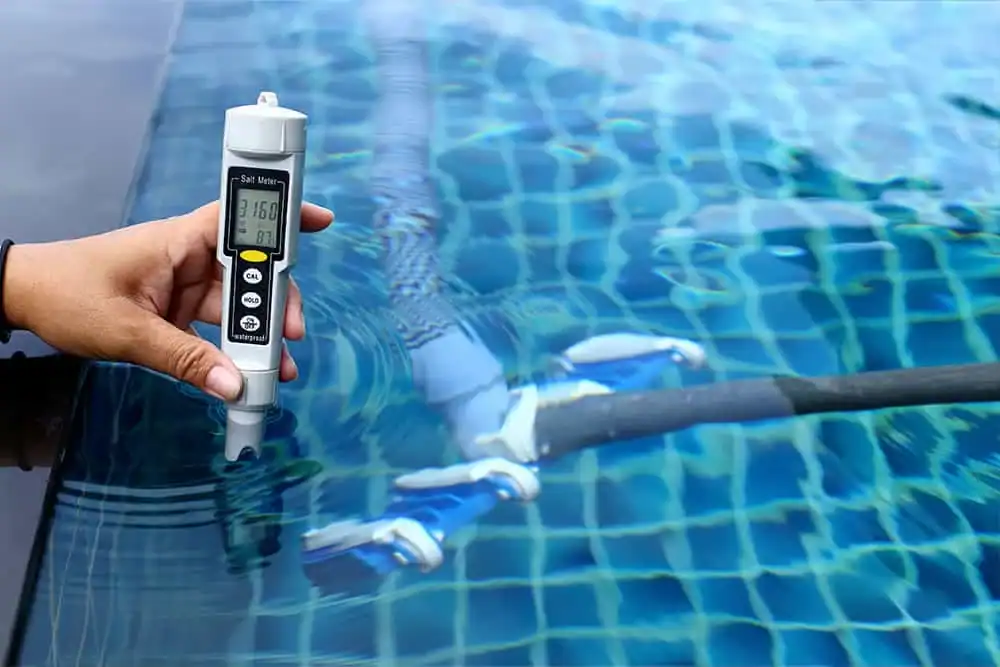
Legionnaires’ disease is a potentially fatal form of pneumonia caused by inhaling airborne water droplets containing Legionella bacteria. The bacteria occur naturally in water sources and can multiply in building water systems when conditions allow.
Hot and cold water systems can present a risk when contaminated water produces droplets that people can inhale, for example through showers. Employers and those in control of premises must identify and assess Legionella risks and put appropriate controls in place.
Anyone responsible for the health and safety of staff or water systems must understand their duties and the arrangements needed to control Legionella risks. This includes clear responsibilities for implementing controls, monitoring their effectiveness and maintaining records.
This online training course supports understanding of Legionella risk assessment and management, the duties of responsible persons and written control schemes. It covers water system design and operation, risk assessment principles and the documentation supporting risk control.
Frequently Asked Questions
A Legionella risk assessment identifies how a water system could expose people to Legionella bacteria and whether existing precautions are adequate. Its findings help determine what additional controls are needed and inform arrangements for monitoring, maintenance and review.
A Legionella risk assessment should cover the water system and how it operates, potential sources of exposure and who might be harmed. It should evaluate existing precautions and identify any additional controls needed.
It should also address management responsibilities, the competence of key personnel, monitoring and maintenance procedures, relevant records and arrangements for reviewing the assessment.
In Great Britain, the main legislation includes:
Health and Safety at Work etc. Act 1974
Management of Health and Safety at Work Regulations 1999
Control of Substances Hazardous to Health (COSHH) Regulations 2002
HSE’s Approved Code of Practice (ACOP) L8 provides practical guidance on meeting the Legionella control duties under this legislation.
A Legionella risk assessment must be carried out by someone competent to assess the water systems involved. This requires sufficient knowledge, training and experience to identify risks and evaluate appropriate precautions.
Anyone choosing a Legionella risk assessor course should check that it addresses the water systems they will assess. Completing this programme does not by itself qualify someone as a Legionella risk assessor.
The responsible person takes day-to-day responsibility for managing Legionella control arrangements. They oversee the implementation of precautions, monitoring, maintenance, records and any necessary follow-up action. They must have sufficient authority, competence and knowledge of the water systems to carry out their responsibilities effectively. Appointing a responsible person does not remove the duty holder’s legal responsibilities.
Employers must provide suitable information, instruction and training to employees whose work may expose themselves or others to Legionella. People carrying out risk assessments or implementing controls need training appropriate to their duties and the water systems involved. The law does not prescribe this particular online course.
Yes. This Legionella risk assessment training course is delivered entirely online, including all five modules and the assessment. Learners can work through the course at their own pace using a desktop, tablet or mobile device, without attending a scheduled classroom session.
The training completion certificate for this Human Focus Legionella risk assessment course is valid for three years. It confirms successful completion of the course and assessment.
This is the provider’s certificate validity period, rather than a universal legal refresher interval. Training may need updating sooner if responsibilities, water systems or working methods change or if gaps in knowledge are identified.