Human Focus AI Ergonomics Module Brings AI-Powered Risk Assessment and Training Together

AI Ergonomics Module Brings AI-Powered Risk Assessment and Training Together

The Human Focus AI Ergonomics Module turns short videos of real workplace activities into structured ergonomic analysis, practical recommendations and task-specific training.

It can be used across three principal areas:

  • Manual handling and lifting activities
  • Industrial postural ergonomics
  • Display screen equipment work

Users capture or upload a video, select the relevant activity type and allow the system to apply the appropriate ergonomic analysis. Depending on the activity, this may include REBA whole-body assessment, RULA upper-limb assessment or NIOSH-based lifting analysis.

The module operates in two connected modes:

  • Ergonomics and manual handling risk assessment
  • Task-specific training and individual coaching

In risk assessment mode, the platform analyses posture, movement, manual handling activity and joint-level risk. It produces visual overlays, risk trends, overall scores, written reports and AI-generated recommendations to support decisions about task design and controls.

In training mode, the same analysed footage can be converted into guidance based on the actual work being performed. Workers can also record themselves completing a task and receive personalised video feedback, allowing improvements to be reinforced and tracked over time.

Together, these capabilities help organisations assess individual activities, improve workplace and task design, create more relevant training and understand ergonomic risk across workers, departments and sites.
How the Module Works

Users follow a straightforward workflow:

  • Capture or upload a short video of a workplace activity.
  • Select the relevant activity type.
  • Allow the AI to apply the appropriate ergonomic assessment.
  • Review the video overlays, scores, trends and recommendations.
  • Download the report or convert the footage into task-specific training.

Selecting the activity type allows the platform to apply the most relevant assessment method and generate insights suited to the work being analysed.

Where the Ergonomics Module Can Be Applied

The Ergonomics Module is designed for activities in which posture, movement, load handling or workstation setup may contribute to musculoskeletal risk. Its main applications are manual handling, industrial postural ergonomics and display screen equipment work.

Manual Handling and Lifting

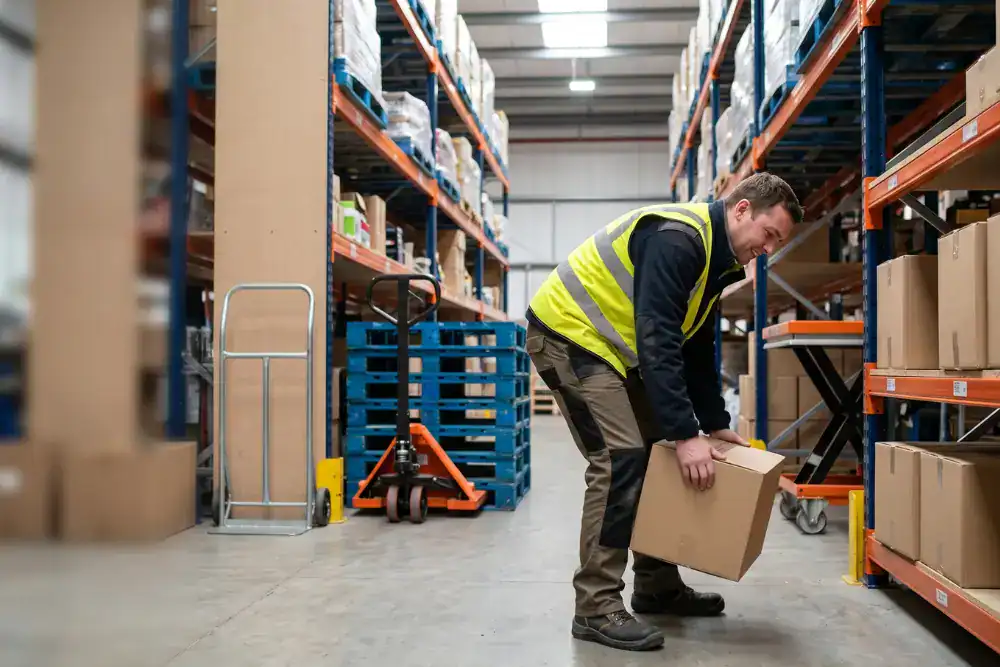
For lifting and other load-handling activities, workplace footage can be analysed to understand the combined effects of posture, movement and task demands.

NIOSH-based lifting analysis helps users identify higher-risk moments and examine factors that may need to be addressed through changes to load weight, equipment, task design or working methods. The analysed footage can then be reused to create task-specific manual handling guidance and provide individual coaching.

This application is particularly relevant to activities in warehousing, distribution, manufacturing, construction, utilities and other environments where workers regularly move or handle loads. The dedicated manual handling solution connects risk assessment with task-specific training, employee assignment and completion tracking.

Industrial Postural Ergonomics

The module can also assess industrial and production activities involving bending, twisting, reaching, repetitive movement or sustained awkward postures.

REBA and RULA analysis provide whole-body and upper-limb perspectives, while joint-level information helps users see which parts of the body are experiencing the greatest exposure. This can support decisions about workstation height, reach distances, equipment positioning, task sequence and working technique.

Potential applications include assembly, manufacturing, maintenance, packaging, warehousing and other workstation or production tasks. Once improvements have been identified, real operational footage can be converted into task-specific postural guidance and individual coaching.

Display Screen Equipment

For display screen equipment work, video analysis can be used to review user posture alongside the wider workstation setup.

RULA-informed analysis can help identify upper-limb, neck and postural concerns relating to screen position, seating and the arrangement of work equipment. This can support more consistent assessments for office-based, home and hybrid workers.

Following workstation adjustments, repeat video capture can provide personalised feedback and help organisations monitor whether posture and working practices improve over time.

The Work This Replaces

Ergonomics and manual handling assessments have traditionally required specialist knowledge and considerable manual effort.

From a risk assessment perspective, this has meant observing tasks in person or repeatedly reviewing video footage, manually applying tools such as RULA (McAtamney & Corlett, 1993), REBA (Hignett & McAtamney, 2000), or the NIOSH 2 Lifting Equation (NIOSH, 1991), and producing written reports after the assessment has been completed.

From a training perspective, this has resulted in widespread reliance on generic ergonomics and manual handling courses, because producing task-specific training has required too much time, expertise, and manual effort to be viable.

As a result, many tasks are assessed infrequently, improvements to task design are slow to implement, and training is often disconnected from the real risks present in the work.

The Human Focus AI Ergonomics Module reduces this manual burden in both modes. Anyone who can capture short video clips using a mobile phone and engage frontline colleagues in walk-through, talk-through discussions of tasks can now undertake detailed ergonomics assessments and generate task-specific training that would previously have required significant specialist input.

Risk Assessment Mode: Analysing Ergonomics and Manual Handling

Automated Ergonomic Assessment

In risk assessment mode, users record a short video of a workplace activity using a smartphone or tablet, or upload existing footage for analysis.

They select the relevant activity type and allow the system to apply the appropriate ergonomic assessment. The footage is then analysed using AI-powered ergonomics tools, with the results made available through the Human Focus system.

Depending on the selected activity, the module can analyse whole-body and upper-limb posture, manual handling and lifting risk, or display screen equipment posture and workstation setup.

Postural ergonomics video analysis covers both whole-body and upper-limb assessment. The system applies established tools such as REBA for whole-body posture and RULA for upper-limb and neck posture.

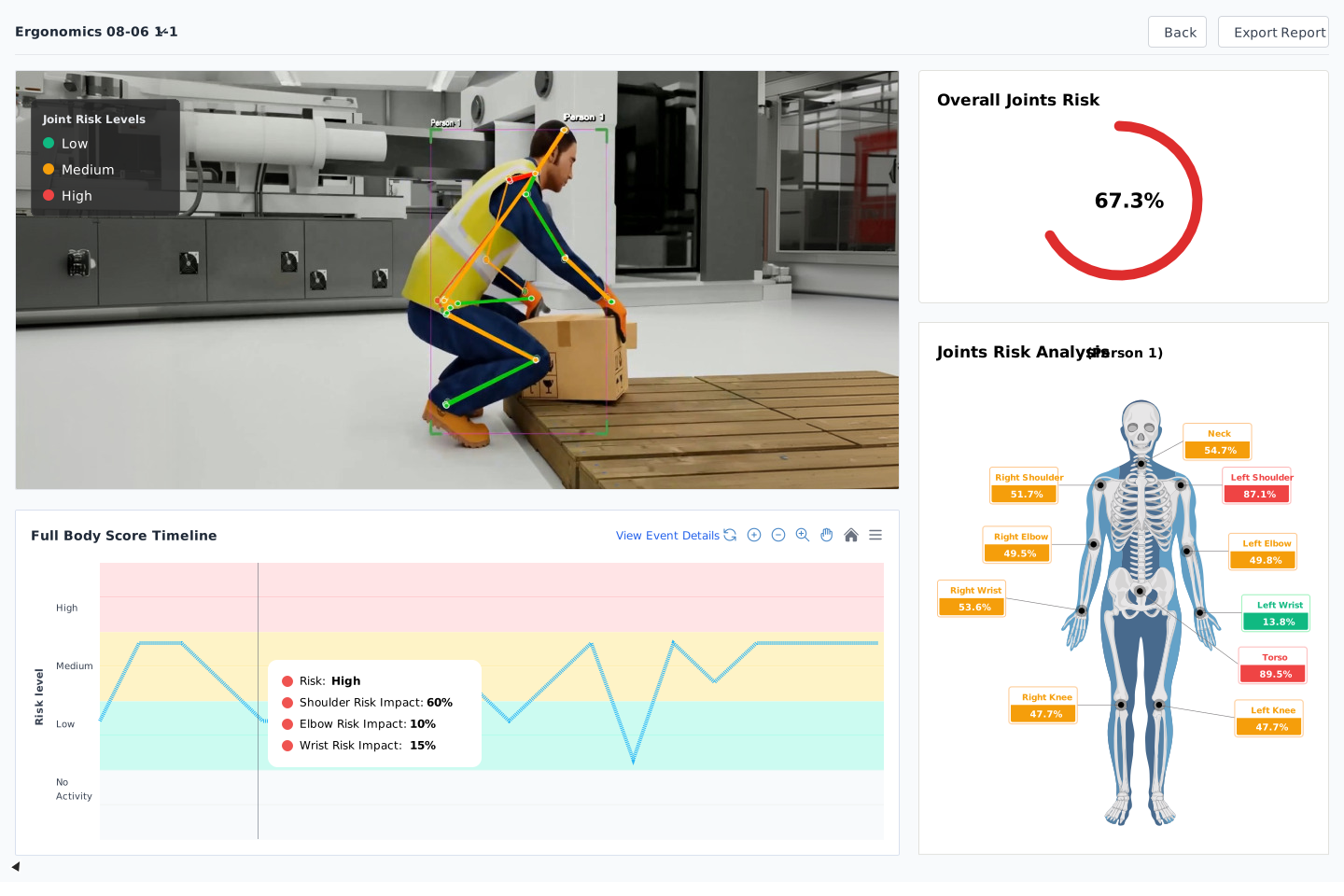
Analysed videos are overlaid with 3D musculoskeletal graphics that highlight posture, joint angles and areas of elevated risk, making the results easier to review and interpret.

Manual handling analysis uses the NIOSH 2 Lifting Equation to assess lifting risk. This supports identification of risk factors and provides evidence to inform improvements in task design, equipment selection, and handling technique.

Across both postural and manual handling analysis, the module provides joint-level visibility, showing how individual body areas are affected during a task. This makes it possible to see which joints carry the greatest risk and to focus improvements where they will have the most effect. The joints and body areas covered include:

  • Neck
  • Back
  • Shoulders
  • Elbows
  • Wrists
  • Torso
  • Knees

A dedicated wrist analysis capability provides deeper insight into wrist-specific risks, including repetitive movements, awkward wrist postures, and other upper-limb strain indicators. This is particularly useful in environments involving repetitive tasks, assembly, manufacturing, warehousing, and packaging.

Risk Assessment Outputs and Reporting

Risk assessment outputs are directly linked to the analysed video.

Graphs show how ergonomic risk changes over time and are synchronised with the footage. Selecting a point on a graph plays the corresponding moment in the video, removing the need for manual cross-referencing or annotation.

Risk Assessment Outputs and Reporting

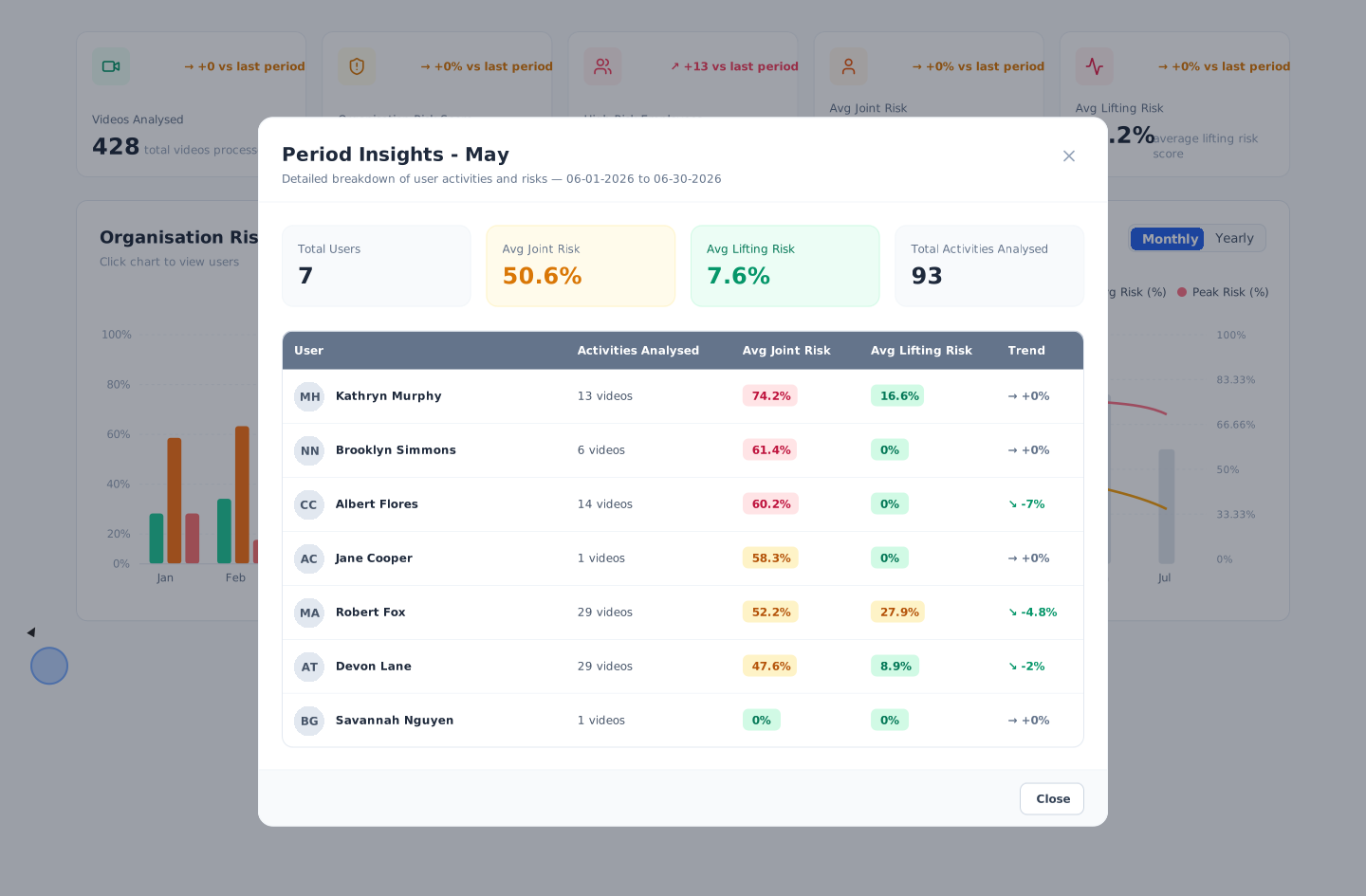
Alongside this moment-by-moment view, the module summarises risk across the whole clip — highlighting peak risk moments, average risk exposure, and how risk changes over the course of the task. Where several people or repeat clips are assessed, this also helps identify the tasks and individuals exposed to the highest levels of risk.

Text-based reports analyse the risks identified and make suggestions for improvement. Risk assessment reports can be downloaded as PDFs, including screen grabs from videos, posture overlays, graphs, and written analysis, removing the need to produce separate documentation after the assessment.

These reports also include AI-generated recommendations that go beyond identifying risk. Tailored to the activity analysed and the specific risks detected, they offer practical guidance on improving working technique, reducing ergonomic exposure, and addressing the highest-risk movements.

Each analysed video receives an overall ergonomic score, giving a single, comparable measure of ergonomic performance. This provides an intuitive way to compare tasks and to see how performance varies across workers, departments, and sites.

Organisation-Wide Ergonomic Intelligence

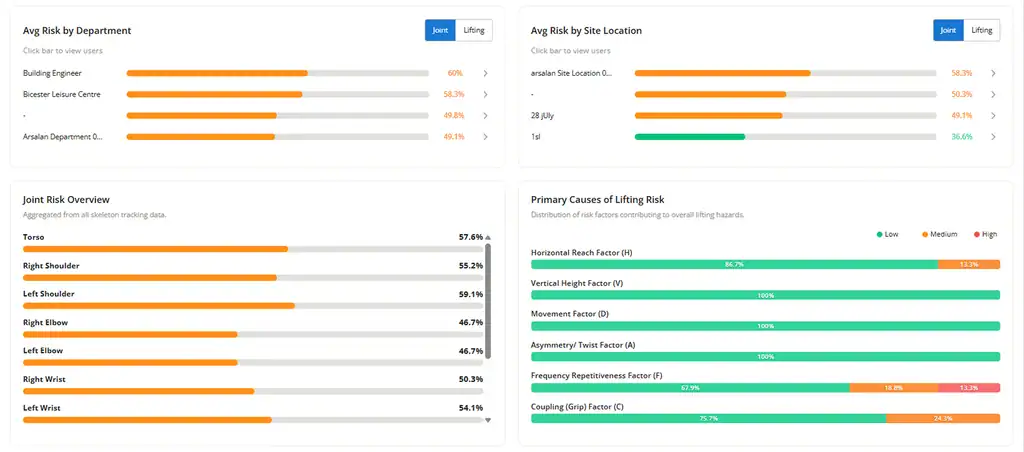
Beyond individual assessments, the module brings results together into organisation-level analytics, helping health and safety teams understand ergonomic performance across the whole workforce rather than one task at a time.

These insights include:

  • Joint-specific and body-region risk trends
  • Peak and average risk scores
  • Department-level comparisons
  • Site and location comparisons
  • Workforce-wide ergonomic performance metrics
Organisation-Wide Ergonomic Intelligence

Together, this allows organisations to move from reactive, one-off assessments towards proactive ergonomic risk management, targeting the departments, sites, and tasks where the need is greatest.

Training Mode: Task-Specific Training and Individual Coaching

Creating Task-Specific Ergonomics Training

In training mode, the same analysed video content is reused to create task-specific ergonomics and manual handling training.

Video clips with overlaid ergonomics graphics and risk indicators can be published through the Human Focus content tools, allowing organisations to create training that reflects the exact tasks being performed.

This enables the creation of large volumes of bespoke, task-specific training that incorporates built-in ergonomics analysis. Employers can now create hundreds of individual task-specific training courses covering posture, ergonomics, and manual handling across their organisation.

Individual Coaching and Reinforcement

Training mode also supports individual coaching and reinforcement.

The same video-capture process can be used to record individual trainees performing workplace tasks. Their clips are uploaded to the Human Focus system, analysed using AI and used to provide personalised visual feedback.

Trainees can review their performance alongside automated ergonomics feedback that highlights good practice and opportunities for improvement. Repeat recordings allow performance to be monitored over time, supporting continued coaching and reinforcement with less repeated manual analysis.

What the Human Focus AI Ergonomics Module is and is Not

The Human Focus AI Ergonomics Module is designed to act as a co-pilot, not the pilot, for ergonomics risk assessment and training.

It does not replace professional judgement, nor does it automatically redesign tasks or workplaces. Decisions about task design, controls, and safe systems of work still sit with people who understand the work being done.

What the module does is reduce the manual, specialist-dependent effort that has traditionally limited ergonomics risk management. By automating ergonomics assessment via AI-automated video analysis, posture scoring, reporting, and the creation of training-ready content, it takes the friction out of producing risk assessments and task-specific, bespoke ergonomics training that would otherwise be impractical to create and maintain.

Human Focus supports this capability with a range of advanced online training courses in posture and manual handling, recognised by the International Institute of Risk and Safety Management (IIRSM). These courses develop the professional knowledge needed to interpret assessments properly, apply judgement, and use the outputs of the Human Focus AI Ergonomics Module effectively.

This solution, providing both individual competence and expertise through the AI intelligence process, delivers genuine safety performance improvement.

About the author(s)

Human Focus Editorial Staff comprises a dedicated collective of workplace safety specialists and content contributors. The team shares practical guidance on human factors, risk, and compliance to support safer, more effective workplaces.

Share with others
You might also like

Popular Courses

GDPR Awareness Training Course
GDPR Training
View Course Details
LOTOTO online training course
Safe Isolation – Lock Out, Tag Out, Try Out (LOTOTO) Training
View Course Details
IOSH Managing Safely
IOSH Approved Managing Safely e-Learning
View Course Details
spill kit training
Spill Kit Hazardous Substances Training
View Course Details
Legionella-Risk-Assessment-Training
Legionella Risk Management Principles for Responsible Persons
View Course Details

Recent Articles

ladder inspection hired equipment responsibility
Ladder Inspection for Hired Equipment: Who Is Responsible?
IOSH Managing Safely team leaders supervisors
IOSH Managing Safely for Team Leaders and Supervisors: What It Covers and Why It Matters
Course Announcement Dangerous Goods Transport Awareness for All Staff
Course Announcement: Dangerous Goods Transport Awareness for All Staff
IOSH Working Safely new employee induction
Why IOSH Working Safely Is Ideal for New Employee Induction
fragile roof rooflights working at height
Working Near Fragile Roofs: Risks and Controls Explained

Current Offers

Fire Stopping Course
Fire Stopping

Original price was: £295.00.Current price is: £250.00. +VAT

near miss reporting for effective learning
Managing Near Miss Reporting for Effective Learning

Original price was: £895.00.Current price is: £595.00. +VAT

Sustainability and Environmental Management Training
Sustainability & Environmental Management Training

Original price was: £895.00.Current price is: £595.00. +VAT

colour blind test
Colour Blind Test

Original price was: £25.00.Current price is: £15.00. +VAT

Icon-PNG
Home Working Bundle Pack (4 in 1)

Original price was: £100.00.Current price is: £49.00. +VAT