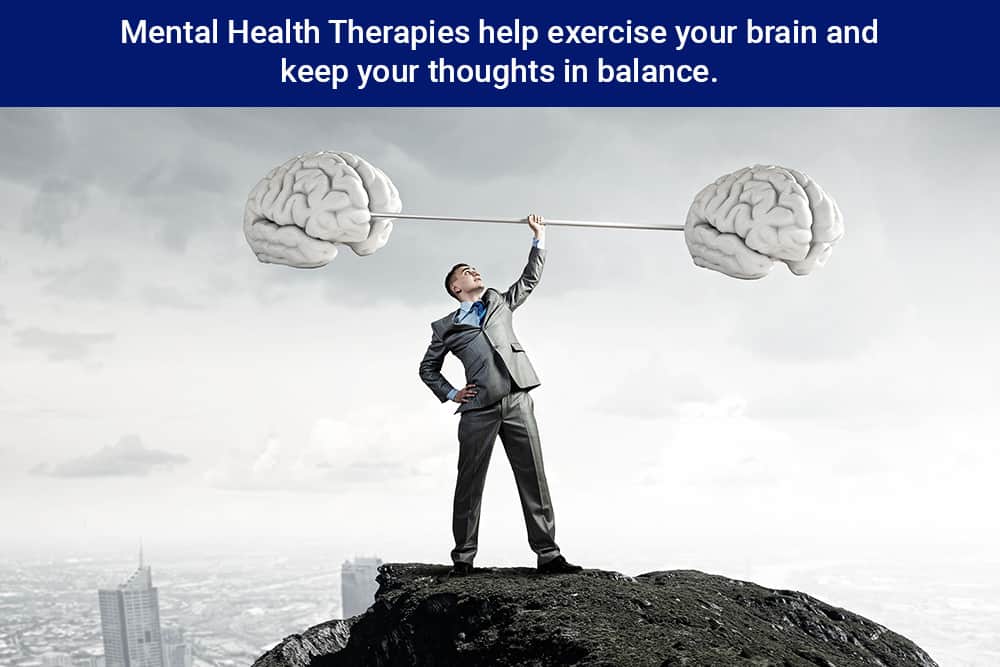
Mental health can affect how people feel, communicate and function at work. Working conditions such as excessive demands, limited control, poor relationships or organisational change can in turn affect wellbeing.
Psychological therapies can help with a range of mental health problems and difficult life experiences. Employers are not responsible for diagnosing employees or choosing treatment, but they can provide supportive working conditions, signpost appropriate services and make it easier for employees to seek help.
This article introduces six types of mental health therapy, explains how employees can access professional support and outlines the practical role employers can play.
The World Health Organisation (WHO) defines mental health as ‘a state of mental well-being that enables people to cope with the stresses of life, realise their abilities, learn and work well, and contribute to their community’.
Mental health includes emotional, psychological and social wellbeing. It can affect how people think, feel and act, but it is influenced by many interacting factors. These factors can shape how someone responds to everyday pressures and major life events.
Therapy provides a supportive space to explore thoughts, feelings, behaviours, relationships or difficult experiences with a trained professional. Different therapies work in different ways. Some focus on present-day thoughts and actions, while others explore relationships, past experiences, emotions or creative expression.
Therapy does not assume that distress is simply caused by pessimism or distorted thinking. The most appropriate approach should reflect the person’s needs, goals and circumstances.
Mental health difficulties can affect attendance, concentration, confidence, relationships and performance at work. Therapy may form part of an employee’s wider support, but employers and managers should focus on workplace needs rather than attempting to direct clinical treatment.
There is an extensive range of psychological therapies, and different approaches may be used for different mental health conditions and life experiences. The most suitable option depends on the person’s needs, preferences and circumstances. The following sections introduce six examples.
Counselling is a form of talking therapy. The aim of counselling is to help people deal with a range of emotional issues such as anxiety, depression and low self-esteem. It is also effective when tackling the mental effects of physical conditions such as health issues and challenging life events.
Counselling is usually held over a number of sessions with a qualified therapist. Their role is not to tell you what to do or give you advice, but to help you to understand and process your thoughts so that you can come up with your own solutions to your problems. Sessions can take place face-to-face, through live chat, on the phone, even by email.
CBT helps people explore the links between situations, thoughts, feelings and behaviours, and identify patterns that may be contributing to their difficulties.
Specific forms of CBT are recommended for conditions including panic disorder, phobias and post-traumatic stress disorder (PTSD), with the approach adapted to the person’s symptoms and needs.
This form of therapy focuses on simple techniques, such as keeping a thought diary, which help people identify patterns in their thoughts. By recognising these patterns, there is an opportunity to identify areas for improvement.
CBT is usually delivered over a number of sessions, with the format and duration depending on the problem and the person’s needs. It may be offered on its own or alongside other treatment, including antidepressant medicines. A healthcare professional can help someone understand the available options.
People are normally encouraged to continue using the skills they have learnt after their sessions end. Anyone taking prescribed medication should speak to their prescriber before changing or stopping it.
Another mind management technique is existential therapy. This type of psychotherapy looks at a person’s inner conflicts, such as concerns about meaning, life and death, and freedom and responsibility.
These concerns are a common part of life, although they can sometimes contribute to distress or uncertainty. An existential therapist supports you in exploring concerns, without prescribing particular answers.
The existential approach to therapy considers how your choices relate to your circumstances and values. Its aim is to help you develop a clearer understanding of what matters to you and how you want to live.
We all know the saying, ‘blood is thicker than water’, but that does not mean that you will always get along with your family members. Differences and conflict with your family can really have a deep impact on your mental wellbeing.
Where it is safe and appropriate, family therapy can provide a structured space to discuss difficulties and understand different perspectives.
Family therapy considers the whole family unit by looking at relationships between family members and considers everyone’s individual experiences. It can be particularly useful when a family member is suffering from mental health issues that affect or are affected by other family members.
The aim of family therapy is to strengthen relationships, open up communication channels and identify negative and positive (it’s not all bad) behaviours. The goals depend on those involved and may include healthier communication, clearer boundaries or other agreed changes.
Arts therapies use art, drama or music as a primary form of communication within psychological therapy. They can give people another way to explore experiences, emotions and relationships, particularly when expressing these solely through words is difficult.
In the UK, the title ‘art therapist’ is protected by law. Anyone seeking one of these therapies should check that the practitioner is registered with the Health and Care Professions Council.
Mindfulness-based cognitive therapy is a structured psychological therapy that incorporates mindfulness techniques such as meditation and breathing exercises into cognitive behaviour therapy (CBT).
Mindfulness does not aim to suppress thoughts or make anxiety impossible. Mindfulness-based therapies may be offered for less severe depression, but they are not suitable or helpful for everyone. Some people find that mindfulness makes them feel worse, so anyone experiencing severe or worsening symptoms should seek professional advice.
Employers should not attempt to diagnose mental health conditions, recommend a particular form of therapy or provide treatment unless this is delivered by an appropriately qualified professional. Their role is to create a supportive workplace and help employees access suitable assistance.
Practical measures may include:
- Managing workplace factors that could contribute to stress or poor mental health
- Training managers to respond appropriately when an employee raises a concern
- Providing clear information about available support, such as an Employee Assistance Programme or occupational health service
- Considering appropriate changes to duties, hours or working arrangements
- Allowing reasonable privacy and flexibility for healthcare appointments
- Protecting confidentiality and avoiding pressure on employees to disclose medical details
The support required will depend on the individual and the circumstances. Managers should listen, discuss what may help at work and encourage professional advice where appropriate.
A GP can discuss symptoms, treatment options and local services. In England, adults can also self-refer to NHS Talking Therapies for anxiety and depression without first seeing a GP. Access routes vary elsewhere in the UK, so check the relevant national NHS website.
If your employer provides an Employee Assistance Programme (EAP), it may offer short-term counselling or onward referral. Check what the service includes, who provides it and any limits on confidentiality.
If choosing a private therapist, check that they are registered with a professional organisation accredited by the Professional Standards Authority.
Urgent or Crisis Support
If someone’s life is at immediate risk, or they cannot keep themselves or someone else safe, call 999 or go to A&E.
For urgent mental health support:
- In England, call 111 and select the mental health option.
- In Wales, call 111 and press 2.
- In Scotland, call NHS 24 on 111.
- In Northern Ireland, call Lifeline on 0808 808 8000.
For free emotional support at any time, call Samaritans on 116 123.
Providing employees with accessible mental health resources can encourage earlier help-seeking and give staff practical ways to manage everyday pressures.
Human Focus offers the Mental Health Resilience CPD-certified e-learning course. Designed for employees at all levels, it explains how the brain relates to mental health and introduces practical techniques informed by approaches such as cognitive behavioural therapy and mindfulness.
The course is designed to build mental health awareness and everyday resilience skills. It is not a form of therapy and does not replace professional assessment, diagnosis or treatment. Employees can complete the training online at their own pace, making it a practical addition to an organisation’s wider approach to workplace wellbeing.