DSEAR zones classify hazardous places according to how often an explosive atmosphere may occur and how long it may last. Zones 0, 1 and 2 cover gases, vapours and mists; Zones 20, 21 and 22 cover combustible dust clouds. The classification helps determine precautions against ignition, including equipment selection and working practices.
This guide explains the six zones, what affects their boundaries and what employers need to understand when using a hazardous-area classification.
DSEAR stands for the Dangerous Substances and Explosive Atmospheres Regulations 2002, which set duties for controlling risks from dangerous substances at work in Great Britain. The Human Focus guide to DSEAR and its regulations explains the wider framework.
Under regulation 7, employers must classify places where explosive atmospheres may occur as hazardous or non-hazardous, then divide hazardous places into zones.
In this context, a place is hazardous where an explosive atmosphere could occur in quantities requiring special precautions to protect workers. These precautions include preventing equipment and work activities from introducing ignition sources.
An explosive atmosphere forms when dangerous gases, vapours, mists or dust mix with air and combustion can spread through that mixture after ignition.
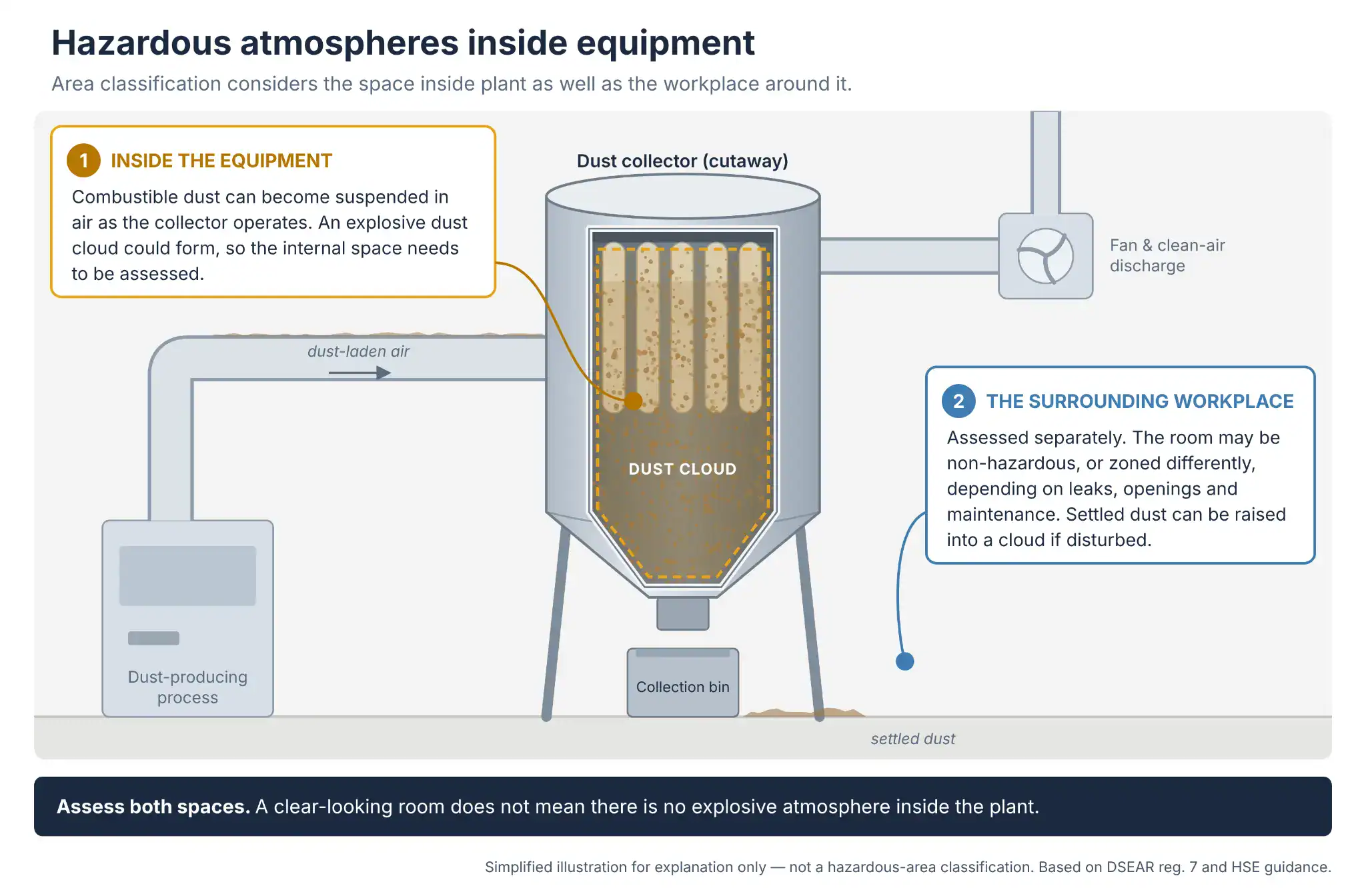
A zone can exist inside equipment as well as in the surrounding workplace. For example, the inside of a dust collector may require classification because an explosive dust cloud could form there, even if the surrounding room is not classified as hazardous.
Schedule 2 of DSEAR distinguishes between hazardous and non-hazardous places where explosive atmospheres may occur. Hazardous places are then classified into zones according to how frequently an explosive atmosphere may occur and how long it may persist.
“Normal operation” means using an installation within its design parameters. It includes routine operating activities, so an atmosphere arising during regular filling or discharge cannot simply be disregarded.
The zone number describes the occurrence of the atmosphere. It does not measure the size of a possible explosion or how severe the injuries could be.
The distinction between Zone 1 and Zone 2 is whether an explosive atmosphere is likely during normal operation. Zone 1 covers occasional occurrence under those conditions. DSEAR Zone 2 covers circumstances where it is unlikely and, if it occurs, short-lived.
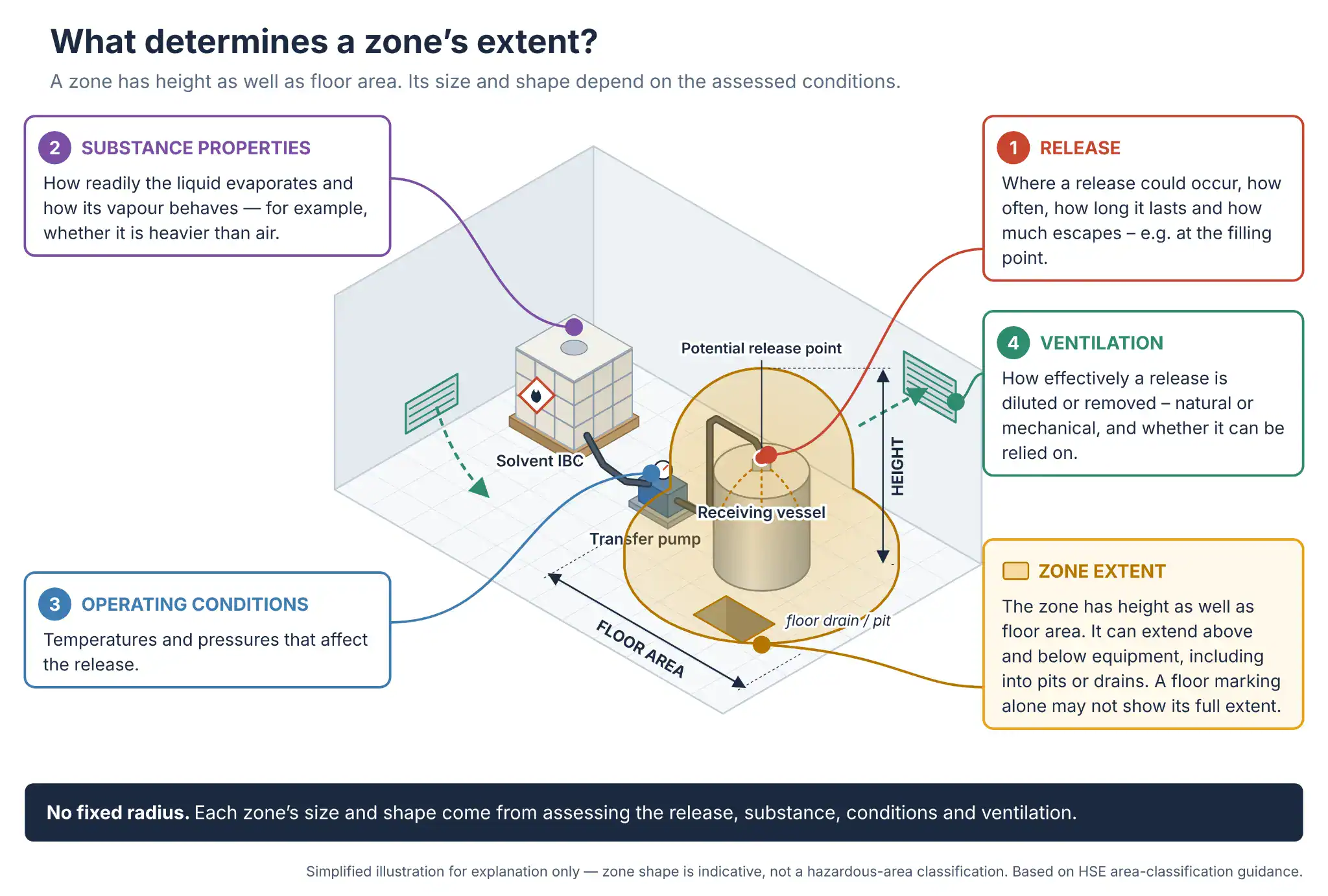
For example, assessing a solvent-transfer point involves considering releases during routine transfer and foreseeable leakage. The presence of solvent alone does not establish the zone: its properties, the release conditions and ventilation all affect the assessment.
These classifications help employers decide what equipment can operate in an area and what restrictions apply to work there. Human Focus’s DSEAR Gas and Liquid Explosion Risk Assessment Training for Duty Holders covers gas and vapour zoning and equipment selection principles.
Dust zones use the same frequency and duration distinctions, but concern clouds of combustible dust. The difference between Zone 21 and Zone 22 therefore follows the same principle as the distinction between Zones 1 and 2.
Assessment must consider settled dust as well as visible clouds. Deposits on equipment or surfaces may become airborne when disturbed. An explosive atmosphere may also occur inside a dust collector or processing vessel even when the surrounding room appears clear.
For a powder-transfer operation, relevant questions include where dust escapes, how often clouds form and how deposits are removed. These questions inform classification; they do not give every transfer point or dust collector the same zone.
Human Focus’s DSEAR Dust Explosion Risk Assessment Training for Duty Holders covers dust hazards, practical classification and equipment decisions.
Classification identifies both the zone type and its extent. Type describes how often an explosive atmosphere may occur and persist. Extent describes the space it could occupy.
HSE’s hazardous-area classification guidance identifies factors including:
- Substance properties: how the gas, vapour, mist or dust behaves.
- Release conditions: where a release could occur, its frequency, duration and amount.
- Operating conditions: temperatures and pressures affecting the release.
- Ventilation and dispersion: how effectively a release is diluted or removed.
Containment, dust extraction and connected spaces also need consideration where relevant. A zone may extend above or below equipment; a floor marking alone may not communicate its full extent.
The outcome should be recorded clearly in classification documents and drawings, as explained in HSE’s guidance on zoning and equipment selection. Supporting information should identify the substances, activities and assumptions behind the decision, such as reliance on mechanical ventilation. These records help people check proposed equipment and work against the assessed conditions.
A useful check when reading a drawing is whether it covers the activity being planned. Opening equipment for maintenance, for example, can introduce release conditions that differ from those considered during routine operation.
Changes to materials, equipment, ventilation or work methods may require the classification to be reviewed. Regulation 5 requires regular review of the risk assessment, particularly where its validity is in doubt or significant changes have occurred.
Equipment used in a hazardous area must be suitable for the explosive atmosphere and its conditions of use. Schedule 3 of DSEAR sets out the following equipment categories for each zone:
The categories reflect different levels of protection against ignition. More frequent or persistent explosive atmospheres require equipment with a higher level of protection.
The equipment must also suit the relevant gas, vapour, mist or dust. Category alone does not establish suitability: material characteristics, temperature limits, installation requirements and conditions of use also matter.
This applies to potential ignition sources in mobile and non-electrical equipment as well as fixed electrical installations. Portable tools, inspection equipment, cleaning machines and vehicles therefore need consideration before entering a zone.
An “ATEX” description or conformity mark is not enough on its own. The equipment’s markings and instructions need to be checked against the actual hazard and classification.
Zoning should inform everyday work controls. Employees and contractors need to understand where the zones are, what equipment is permitted and which activities require additional precautions.
Relevant controls may include:
- Restrictions on hot work and other activities that produce sparks or heat.
- Measures to control static electricity, including suitable work clothing.
- Cleaning methods and equipment appropriate to combustible dust hazards.
- Controls over temporary equipment and maintenance activities.
For example, cleaning should not introduce an unsuitable vacuum cleaner into a dust zone. HSE’s guidance on dust explosions explains why a dust cloud inside a vacuum cleaner can ignite if it encounters a spark or hot component.
Where necessary, hazardous areas must have the specified EX warning sign at their entry points. Signs need to be supported by instructions and suitable work controls.
Before a workplace containing hazardous zones first comes into use, the employer must also arrange verification of its overall explosion safety by someone competent in explosion protection. HSE’s guidance on explosive atmospheres explains these requirements.
The terms generally refer to the same zone-numbering system for explosive atmospheres. HSE explains that DSEAR implements the ATEX workplace requirements in Great Britain. Equipment has a related regulatory framework under the Equipment and Protective Systems Intended for Use in Potentially Explosive Atmospheres Regulations 2016. Workplace classification and equipment conformity are connected, but remain separate considerations.
Classification needs knowledge and experience appropriate to the substances, processes and assessment methods involved. A person who understands general workplace safety may still need specialist support for this task.
HSE advises seeking external help where the necessary competence is unavailable internally. Training can contribute to knowledge, but completion alone does not establish competence for every classification task.
There is no single radius for all DSEAR zones. The boundary depends on the release, substance properties, ventilation and installation. Relevant standards and industry guidance can support the assessment, but site conditions must be considered. Zones do not necessarily form circles or three concentric areas around equipment.
Human Focus offers training for different levels of responsibility. The introductory DSEAR Training course covers area classification alongside the wider legislation and control measures. Two duty-holder courses provide more detailed coverage of zoning, equipment selection and assessment decisions for gas and vapour hazards or combustible dust.
These courses support understanding alongside workplace-specific information, instruction and experience. Employers must assess competence against the responsibilities and tasks involved; course completion alone does not qualify or authorise someone to classify hazardous areas.