Awaab’s Law places new duties on social housing landlords as of 27 October 2025.
From this date, landlords must investigate and address health hazards in their properties within legally defined timeframes. If you’re in social housing, this law will affect you.
This blog explains exactly what the first phase of Awaab’s Law requires, when enforcement starts and how landlords can comply.
Awaab’s Law is new legislation created under the Social Housing (Regulation) Act 2023. It applies to all social landlords, which typically means local authorities and housing associations.
From October 2025, social landlords must act within fixed timeframes when health hazards are reported in their properties.
At its core, the law is about accountability. In the past, some landlords delayed responding to tenant complaints or made only the barest efforts to fix obvious problems. Awaab’s Law is designed to prevent this.
Landlords must now investigate issues promptly, explain their actions to tenants and complete repairs before strict deadlines.
For the majority of social landlords who already treat tenants well, this law will make little difference. But for those who allow issues to drag on, tenants now have clear legal recourse.
Awaab’s Law is named after two-year-old Awaab Ishak, who died in December 2020 following lifelong exposure to mould in his family’s housing association flat.
Despite repeated complaints from his parents, little was done to resolve the problem. An inquest later concluded that his death was directly caused by the damp and mould in his home.
The case exposed a wider issue: some social landlords are comfortable dismissing tenants’ concerns or applying only superficial fixes, even when there are clear health risks. Awaab’s story showed, in the starkest possible way, what happens when hazards are left untreated.
Awaab’s Law should prevent this tragedy from repeating. It provides tenants with clear rights and holds landlords accountable for timely and lasting repairs to unsafe conditions.
The first phase of Awaab’s Law will be enforced from 27 October 2025.
From this date, landlords will have to fix damp and mould issues (and other emergency hazards) promptly or risk non-compliance.
Further phases covering other health hazards are planned for 2026 and 2027. We’ll return to these later in the blog.
Overall, Awaab’s Law sets stricter timelines for addressing risks to tenants’ health.
Given its tragic origins, it is no surprise that the first phase focuses on damp and mould and other life-threatening hazards.
These hazards are categorised as either “emergency” or “significant”. Slightly different duties apply to each.
(Please note that the advice below is based on the government’s draft guidance. It’s possible that details may have changed since writing.)
An emergency hazard is defined as a hazard that poses “an imminent and significant risk of harm” to a tenant’s health or safety.
Examples include:
- Gas leaks
- Broken boilers
- Total loss of water supply
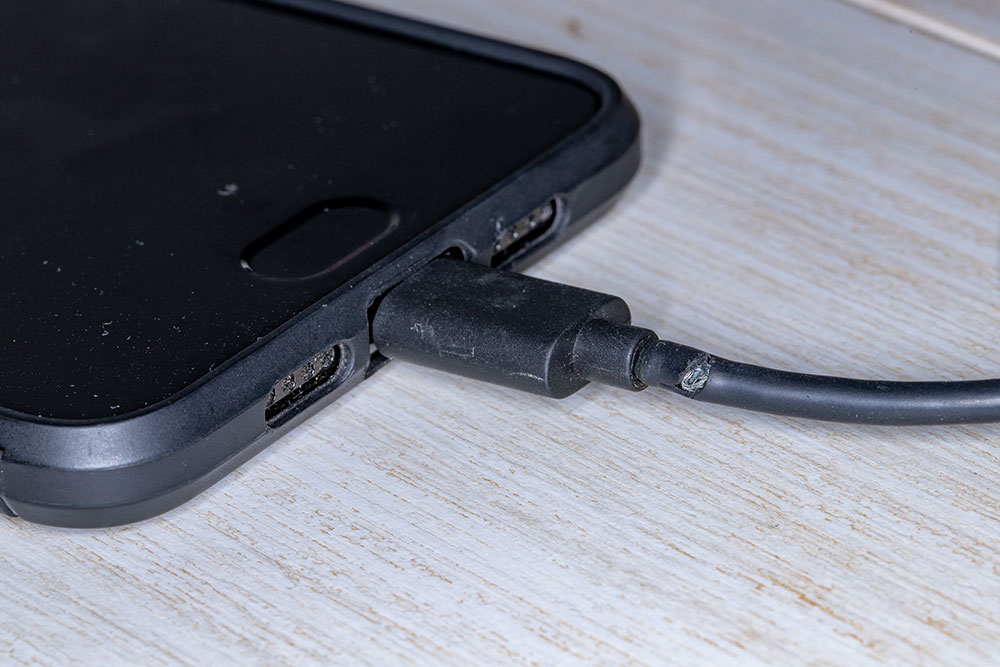
- Electrical hazards, such as exposed wiring
- Significant leaks
- Broken doors or windows that compromise security
- Damp and mould already affecting a tenant’s health (especially if they’re vulnerable)
- Significant structural defects
Once landlords are aware of a potential emergency hazard, they must investigate without delay. If the investigation confirms an emergency hazard is present, it must be made safe.
The initial investigation and safety works must both be completed within 24 hours.
Alongside emergency hazards, landlords must also address “significant hazards” within strict timelines. Significant hazards have the potential to harm over time, but aren’t an immediate threat.
There aren’t set examples. Instead, landlords need to make a judgement based on the:
- Nature of the problem
- Tenant’s individual circumstances (including age, physical or mental health)
- Scale of works required
- Likelihood and severity of harm if action is delayed
Once landlords are aware of a significant hazard, they must investigate it within 10 working days.
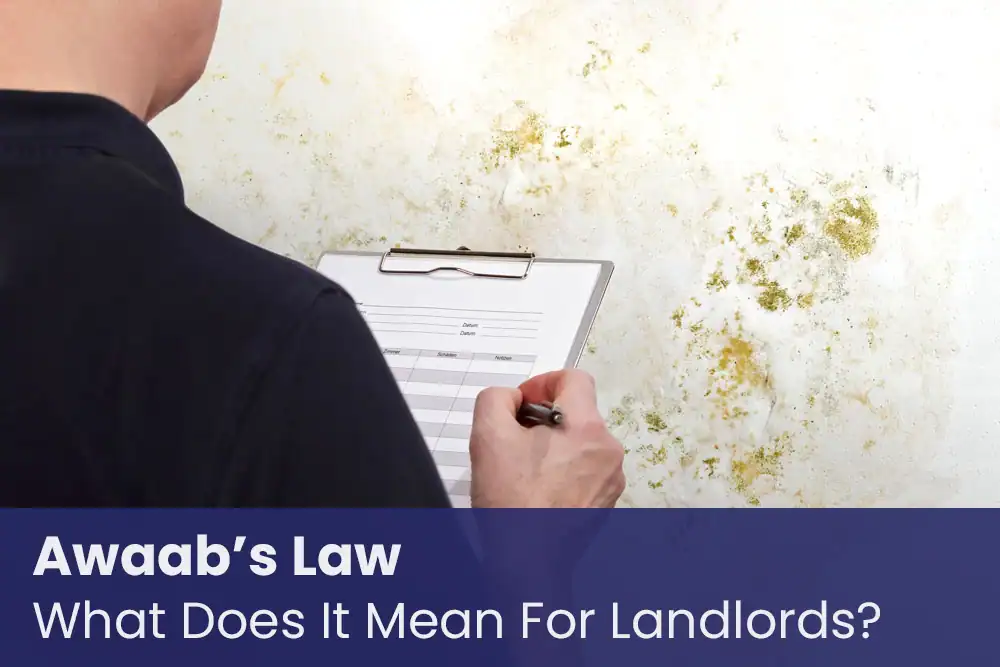
Damp and mould are treated as a special priority under Awaab’s Law. They can be classed as either a significant hazard or an emergency hazard, depending on their severity.
- If damp and mould are already having a material impact on a tenant’s health – for example, causing breathing difficulties – they must be treated as an emergency hazard and investigated and made safe within 24 hours
- In other cases, damp and mould should be treated as a significant hazard: investigated within 10 working days and acted on promptly if a risk of harm is confirmed
In both situations, landlords must keep tenants informed and provide advice on staying safe while works are carried out.
When a tenant reports a hazard, you must use all available information – including tenant details, property history and government guidance – to decide whether it should be treated as an emergency hazard or a significant hazard.
Remember, an emergency hazard is one that poses “an imminent and significant risk of harm” to health or safety. If this describes the reported hazard, you must:
- Investigate within 24 hours of becoming aware of the issue
- If confirmed, complete safety works within the same 24 hours
- If the property can’t be made safe within 24 hours, alternative accommodation must be provided (see below)
- A written summary of the investigation must be provided to tenants within 3 working days of the investigations’ end
A significant hazard is one that poses a risk of harm over time. If this describes the reported hazard, you must:
- Investigate within 10 working days of becoming aware
- Provide the tenant with a written summary of findings within 3 working days of the investigation concluding if it confirmed a significant hazard.
- Make the property safe within 5 working days of the investigation concluding
- Begin any further works within 5 working days, or as soon as possible if that is not feasible, with physical work starting no later than 12 weeks
- Complete all works satisfactorily within a reasonable timeframe.
- Keep the tenant updated and provide advice on how to stay safe.
If your investigation of a suspected “significant” hazard reveals that it is in fact an emergency, you must immediately follow the steps outlined above for emergency hazards.
Awaab’s Law also requires landlords to provide suitable alternative accommodation when safety work cannot be completed within the required timeframes. Alternative accommodation must be arranged and paid for by the landlord.
Tenants must be kept updated on the repairs and how long they’re expected to remain in temporary accommodation.
Yes. Awaab’s Law is being introduced in phases, with further duties planned for 2026 and 2027.
- 2026 – The law will expand to include additional hazards such as structural collapse, fire risks, electrical risks, hygiene-related issues and excess heat and cold
- 2027 – Awaab’s Law will be rolled out in full, covering all hazards listed under the Housing Health and Safety Rating System (HHSRS), excluding overcrowding
This phased launch doesn’t mean social landlords should put off repairing any issues listed above. The government stresses that tenants’ health is still the priority. However, there are currently no legal timeframes you need to meet.
Awaab’s Law marks a clear new direction: tenants’ health is now the priority for all social landlords.
To prepare, you must understand how to recognise, assess and address damp and mould before it becomes a legal or health crisis. Our online Damp and Mould Awareness Training course is CPD-certified and IIRSM-approved. It equips housing officers, landlords, property managers and other team members with the knowledge to:
- Identify risks early
- Assess the severity of damp and mould problems
- Plan follow-up actions in line with UK housing law
This training provides a practical next step for organisations looking to meet their new obligations and protect the people they house.