Once you have identified the compliance areas that are relevant to your organisation, the next question is not just who needs training, but what types of safety training each role needs.
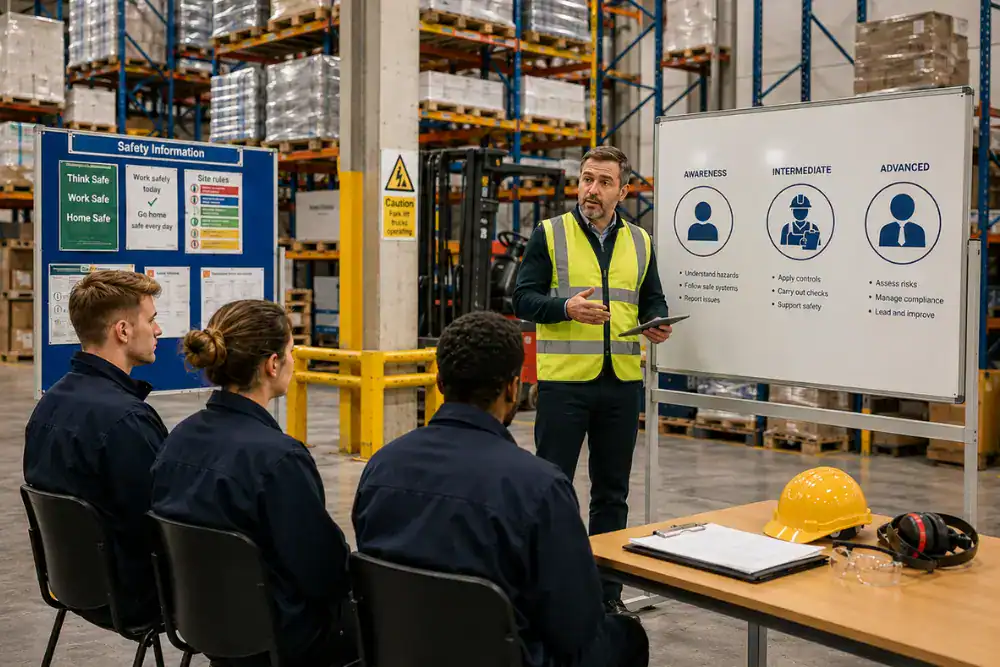
Human Focus uses three levels of safety training, Awareness, Intermediate and Advanced, to help organisations make that decision role by role. The aim is to match the depth of training to the responsibility a person carries, rather than issuing the same course to everyone regardless of the risks they manage or the compliance duties attached to their work.
This article explains what each level covers, uses equipment and physical safety as a worked example, and shows how to apply the three levels across your own roles and compliance areas. Applied properly, the levels make it easier to show that training reflects real responsibility, not one standard course used everywhere.
Consider a simple fire safety example. Everyone completes the same fire awareness course. But the responsible person has no additional training in fire safety management, the fire wardens have no warden-specific training, and nobody has been trained to check fire doors, even though the premises have fire doors that require regular inspection.
The organisation has training records. But the people with the most significant responsibilities have training that does not reflect what their role requires. If there is an incident, inspection or legal challenge, that gap may be exposed.
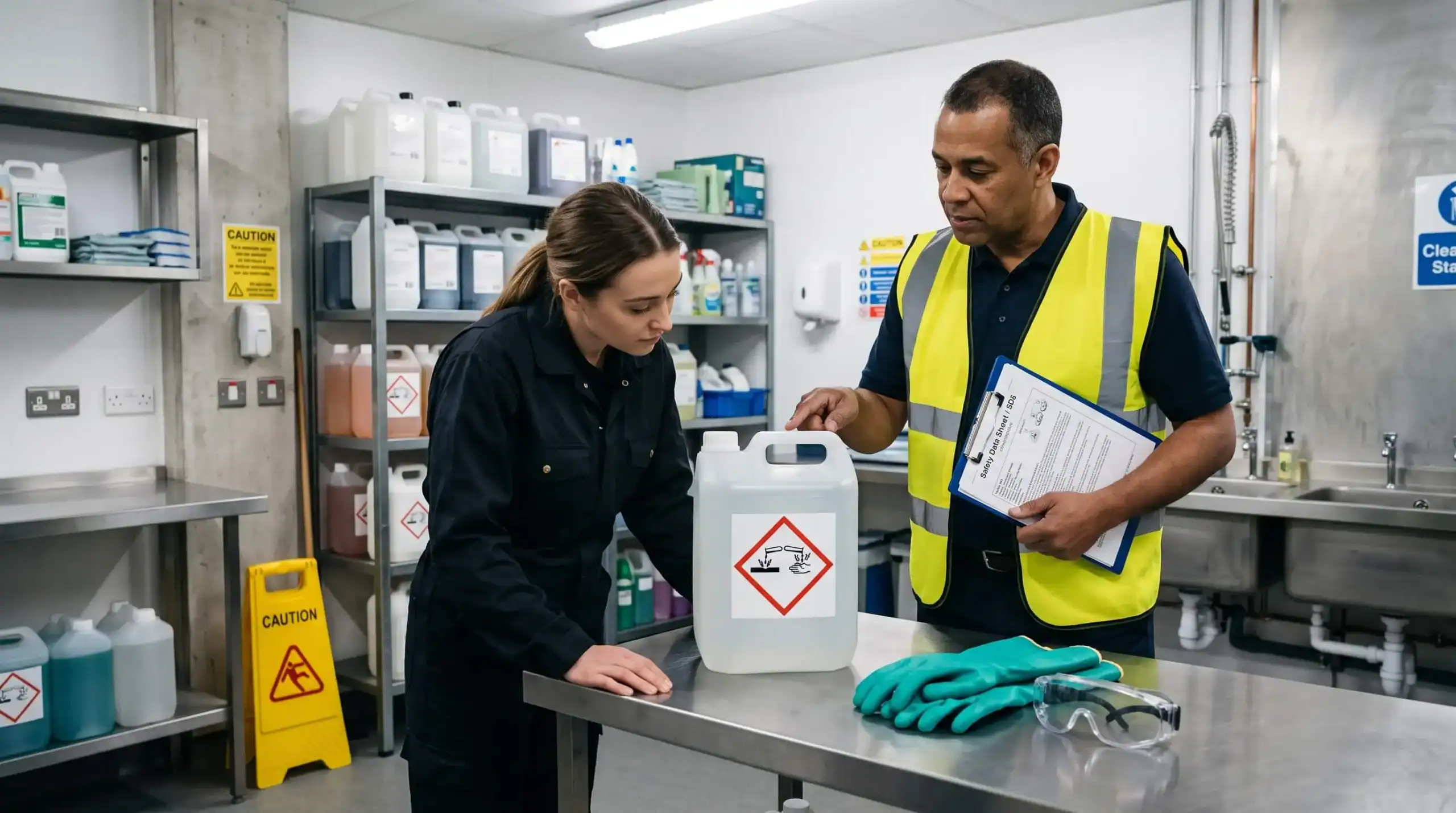
The same pattern repeats across many compliance areas. PUWER creates training needs for equipment users, but also creates higher-level needs for people who maintain, inspect or manage equipment compliance. COSHH creates awareness needs for exposed workers, but also creates competency needs for people who conduct COSHH assessments. Risk management requires workers to understand hazards, but managers and duty-holders need to know how to assess, control, review and learn from events.
Human Focus uses three practical training levels to simplify role-based training planning. These levels are not categories set out in UK legislation or guidance. They are a Human Focus structure designed to make a confusing process easier to work through — without making it simplistic. The legal question remains the same: is the training suitable for the work people do, the risks they face and the responsibilities they hold?
Key point
The level is determined by the role, not by job title or seniority. A maintenance technician may need Advanced-level PUWER training if their role includes formal equipment inspection or compliance responsibilities. A senior manager with no equipment safety responsibilities may only need awareness of the issue.
Equipment and physical safety is a useful example because one compliance area can create different training needs for different roles. PUWER applies wherever work equipment is used. LOLER applies where lifting equipment or lifting operations are involved. But the training need is not the same for a machine operator, a supervisor, a maintenance technician and a duty-holder responsible for equipment compliance.
The example below draws on course types in the Human Focus library. It is not a fixed prescription. The right level depends on the equipment, the tasks, the inspection arrangements and who holds responsibility in your organisation.
Some inspection-related courses sit at Intermediate level where they support defined checks or appointed responsibilities. Others sit at Advanced level where the role involves formal inspection competency, compliance management or duty-holder accountability. The important question is not the course label alone, but what the person is expected to do after training.
Most organisations already have an organisation chart, a role list, a training matrix or an HR structure. Start there. Do not begin by browsing a course catalogue. Begin with the roles that exist in your organisation and work systematically through them.
- Get the current organisation structure or role list, including site-based, mobile, shift-based and office-based roles.
- For each role or role group, note the work people actually do, the compliance areas they touch and the risks they face.
- Identify whether the role simply needs to understand and follow rules, or whether it must supervise, check, inspect, assess, authorise, manage or hold named responsibility.
- Match the role to Awareness, Intermediate or Advanced training within each relevant compliance area.
- Compare the result with your current training records to identify gaps, expired training or evidence held outside the system.
This turns training planning from a guessing exercise into a role-based review. It also helps avoid both under-training and over-training: the aim is to give each role the level and type of training its responsibilities require.
A role-based training plan is only useful if the organisation can show that the right people have completed the right training and that the evidence is current. As you map levels, also check:
- Are online, classroom and external certificates held in one place?
- Can you see which training applies to which role, site and compliance area?
- Are refresher dates visible, with expired or soon-to-expire training easy to identify?
- Are training records available when clients, contractors, auditors or regulators ask for evidence?
- Can mobile, site-based, shift-based or remote workers access the training they need?
- Do multilingual workers receive training in a language they can understand?
The match between roles and training levels is not permanent. Review the plan when any of the following change:
- New roles or responsibilities — especially inspection, supervisory or duty-holder duties
- New sites, equipment, processes or high-risk operations
- New contracts, client requirements or audit expectations
- Incidents or near misses that reveal training was not sufficient for the work being done
- Changes in legislation, guidance or sector standards
- Organisational changes, restructures, TUPE transfers or workforce changes
A safety training plan that was right two years ago may have gaps today. Reviewing it against the three levels and the eleven compliance areas at least annually — and whenever significant organisational changes occur — helps keep training aligned with the organisation.
How to Use This Worksheet
The first guide in this series introduced the 11 Human Focus compliance areas as a practical way of grouping safety training needs. Use this worksheet alongside that guide. For each compliance area that applies to your organisation, list the roles that need Awareness, Intermediate or Advanced training and note the likely training topics. Leave blank any areas that do not apply.
The aim is not to force every organisation into all three levels. The aim is to identify the level of training each role needs based on the work people do, the risks they face and the responsibilities they hold.
What to look for in your completed worksheet
Any compliance area where roles have supervisory, inspection, assessment or duty-holder responsibilities but only Awareness training is listed is a likely gap. Any blank area that does apply to your organisation is a question to resolve. These are the areas to focus on in a Competency Gap Analysis.
Use the completed worksheet as the starting point for a structured Competency Gap Analysis. It shows which roles need Awareness, Intermediate or Advanced training in each compliance area, and where current training may not match the responsibility people carry.
Human Focus uses this analysis to test the training plan role by role. It compares your roles, risk profile and safety training legal duties against the 11 compliance areas and three training levels, then identifies what training is needed, where evidence is missing and which gaps should be addressed first.
Book a consultation to start that conversation. Bring your completed worksheets to help focus the discussion on your roles, risks, and current training.