Dangerous Goods Transport for Shipping and Transport Office Staff
schedule
Course Duration: 50+ minutes
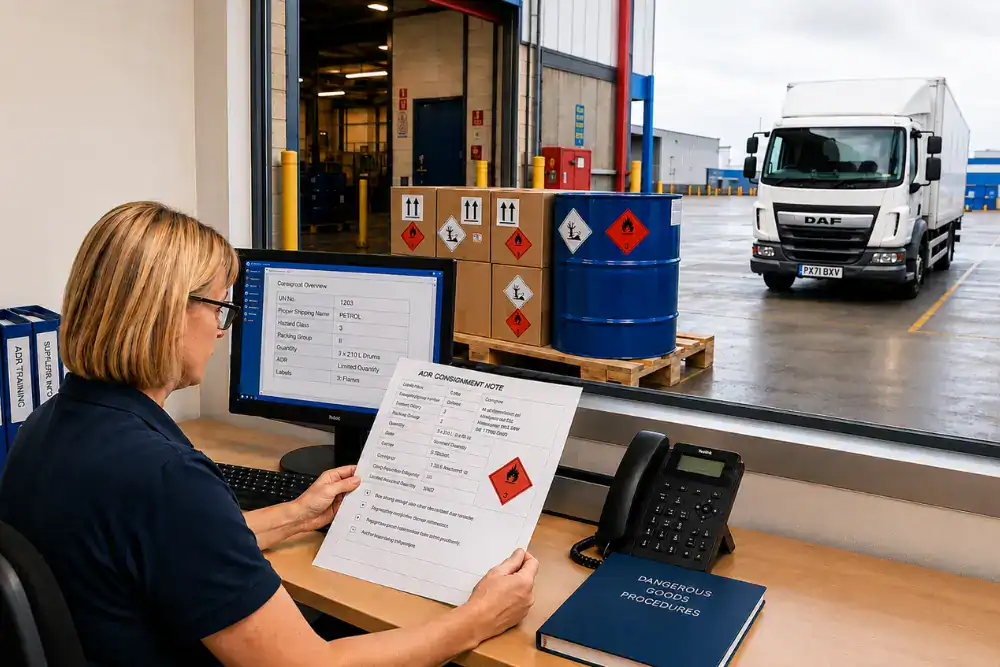
A non-compliant dangerous goods transport document can cause a carrier to refuse a load and, in some cases, documentary breaches can lead to enforcement action that prevents a vehicle from continuing. Office personnel who prepare, check or release road-transport information may be subject to ADR Chapter 1.3 training requirements where their duties concern the carriage of dangerous goods.
This IIRSM-approved Dangerous Goods Transport for Shipping and Transport Office Staff course is built specifically around documentation and despatch accuracy for shipping and transport office staff. It helps teams prepare and verify dangerous goods transport information accurately before consignments are processed.
This course is designed for office-based staff whose actual duties include processing, checking, booking or releasing dangerous goods consignments in logistics, freight forwarding, manufacturing and chemical despatch, import and export, distribution, wholesale, e-commerce fulfilment and multimodal transport operations, including:
Shipping coordinators and despatch administrators
Transport planners and transport office staff
Freight-forwarding and logistics office staff
Staff who prepare or check dangerous goods documentation
Customer-service and order-processing staff handling dangerous goods orders
Supervisors and managers overseeing despatch and documentation
Working in a transport office does not by itself place every administrator in scope. Employers should decide who needs training by reference to the duties they actually perform.
Course Content
The Dangerous Goods Transport for Shipping and Transport Office Staff course includes the following sections:
Recognise everyday substances treated as dangerous goods and understand how office accuracy affects the people who handle them later.
Understand the road-transport framework, the role of ADR Section 1.3, the regulations governing dangerous goods transport by air, sea and rail and the requirement to use the correct document format for the mode of transport.
Identify the nine ADR hazard classes, including the divisions within the classes that have them, and recognise the different hazards they represent.
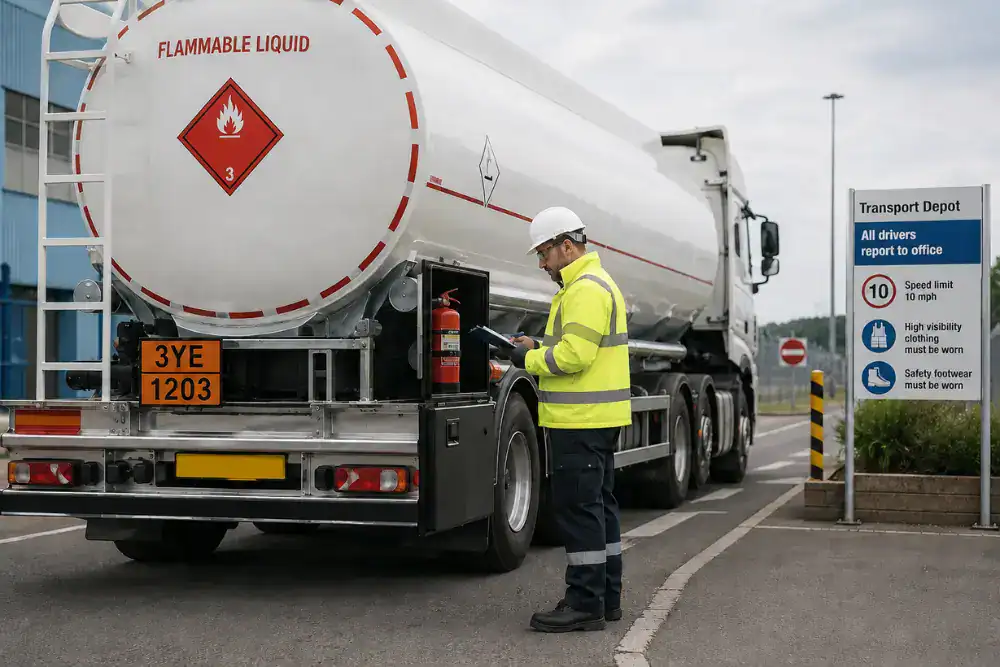
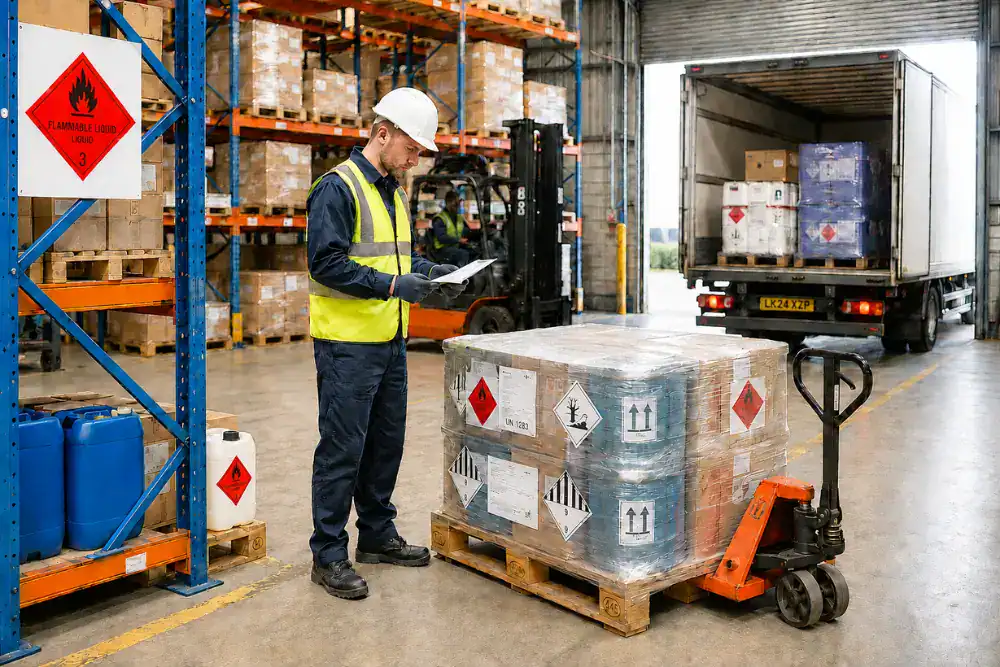
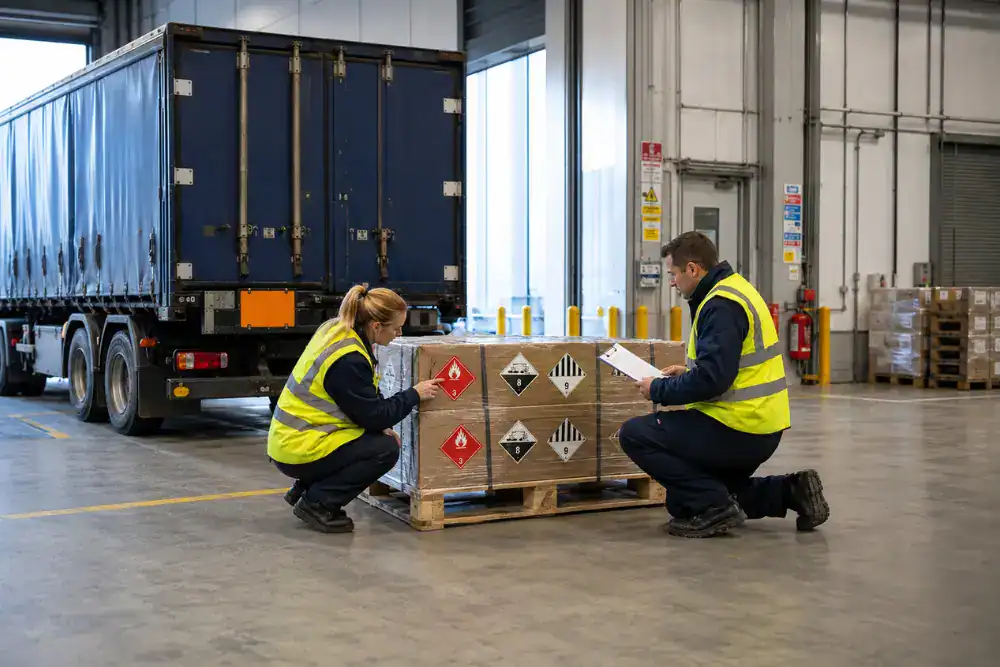
Check labels, placards, orange plates and emergency action codes, and identify markings that require correction or escalation.
Verify UN numbers, proper shipping names, technical names where required, classes, subsidiary risks and packing groups where applicable in the required order.
Identify the dangerous goods documentation used for road, air, sea and rail, and check an ADR road transport document for the required information covered by the course.
Work through the five-step booking sequence, including carrier capability, route and tunnel restrictions, receiving-site arrangements, Written Instructions confirmation and a recorded booking confirmation.
Respond when a carrier raises a query, refuses a consignment or reports an incident in transit.
Verify limited and excepted quantity conditions against the specific UN entry and mode.
Complete pre-dispatch checks, hand over correctly to the carrier, keep accurate records and escalate incidents for appropriate reporting.
Protect routing and consignment information, identify requests that may signal an attempted diversion and recognise the additional controls for High Consequence Dangerous Goods.
Understand which parts of ADR and associated regulations apply to your role, stop and escalate a non-compliant consignment, report unsafe practices through internal channels and keep refresher training current with the regulations.
Disclaimer: This course builds awareness and knowledge of dangerous goods transport documentation and dispatch processes for shipping and transport office staff. Completing it does not by itself make a learner competent or qualified for any task or role — under UK law, competence combines training, knowledge, skills and experience, and confirming it is the employer’s responsibility. It provides underpinning knowledge only; competence to check, process, or release dangerous goods consignments also requires supervised practical experience and employer authorisation.
What You Will Learn
How to recognise dangerous goods, how they are classified and why office accuracy matters across the transport chain
How to prepare and check transport information using the required-description sequence
How to distinguish a proper shipping name from a brand, trade or everyday name
How to identify the dangerous goods documentation used for road, air, sea and rail consignments
How to check an ADR road transport document and respond when required information is missing
How to verify limited and excepted quantity conditions against the specific UN entry and mode
How to plan and book a shipment, including carrier checks, route and tunnel restrictions and emergency information
How to complete pre-despatch checks, hand over to the carrier, retain records and escalate concerns
How to protect consignment and routing data and report requests that suggest an attempted diversion
Available in 20+ Languages
Course subtitles are available in multiple languages, including:
This course is approved by IIRSM – the International Institute of Risk & Safety Management.
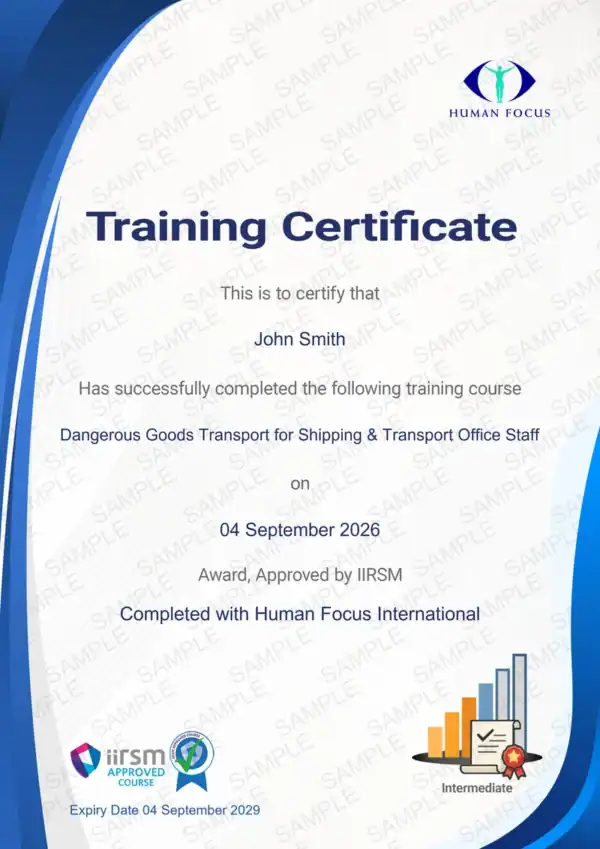
The course certificate includes:
User name
Company name
Course name
Completion date
Expiry date
Approval body
An IIRSM-approved Dangerous Goods training certificate will be available for download and printing instantly upon course completion.
Users must complete a final theory test before earning their certificate.
The end-of-course test is:
Fully online
Multiple choice
A score of 80% is required to pass.
Course attempts
Each licence includes one attempt at the final knowledge assessment.
If a trainee does not pass and wishes to try again, an additional licence is required. For their second attempt, the trainee can retake the assessment without repeating the course content.
Customer Feedback
Why Is Dangerous Goods Documentation Training Important?
An incomplete or non-compliant transport document can result in a refused load or a vehicle being prohibited from continuing. Because office staff may prepare, check or release that information, relevant dangerous goods training duties extend beyond drivers.
Proper shipping names and the required-description sequence are critical controls. Multimodal consignments also require staff to distinguish the relevant dangerous goods documentation for road, air, sea and rail.
ADR Chapter 1.3 requires personnel whose duties concern dangerous goods transport to receive training appropriate to their responsibilities before assuming those duties. Employers must also retain the related training records.
How This Training Supports Your Organisation
Delivered online and self-paced, this IIRSM-assured programme supports employers in providing ADR Chapter 1.3 general awareness and function-specific training for relevant shipping and transport office staff.
Provide role-appropriate online learning before staff take on relevant dangerous goods duties
Improve consistency in how required descriptions, carrier checks and pre-despatch decisions are handled
Reinforce handover, escalation, security and record-keeping procedures
Use the digital certificate as evidence that the course has been completed
Support refresher training as ADR requirements are updated
Improve the Accuracy of Dangerous Goods Documentation Across Your Despatch Office
Give relevant shipping and transport office staff a consistent standard for checking dangerous goods transport information before release. The course covers required descriptions, carrier and route checks, multimodal document identification, pre-despatch checks, handover and record keeping. Use it within your ADR Chapter 1.3 training arrangements alongside site, load and procedure-specific instruction.