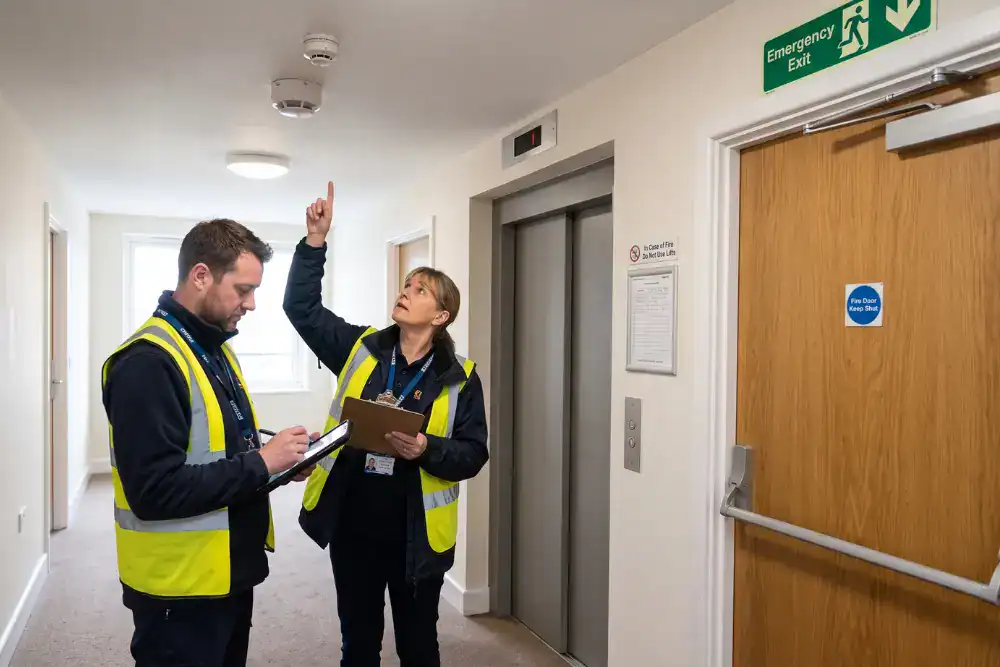
This IIRSM-approved Identifying & Managing Building Safety Risks course supports accountable persons in recognising defects and acting on assessment findings. It focuses on fire spread and structural failure in occupied higher-risk residential buildings in England. It also addresses associated communal hazards, making clear that their assessment and control may involve separate legal duties. The step-by-step approach connects competent specialist input, suitable controls and continuing review with current building safety records.
Identifying & Managing Building Safety Risks
for Accountable Persons & Principal Accountable Persons
schedule
Course Duration: 35+ minutes
live_tv
100% online training
volume_up
Full audio voiceover
repeat_on
Fully online assessment
account_balance_wallet
Discounts when you buy in bulk
important_devices
Access on any device
app_shortcut
App available for iOS & Android
Training You Can Trust


Course Preview
Course Details
| Course Duration | 35+ minutes |
|---|---|
| Approval body | IIRSM |
| Format | Fully online |
| Assessment | Multiple choice |
| Certification | Same-day digital certificate |
| Certificate Valid For | 3 years |
Suitable For
This course is for organisations managing occupied higher-risk residential buildings within England’s building safety regime. Relevant sectors include housing associations, registered housing providers, local authority housing, residential property management and build-to-rent. Freeholders, managing agents, high-rise residential asset managers and student accommodation providers are included where the relevant regime applies.
Course Content
This standalone module has ten sections. It also forms part of the ten-module Building Safety Act – Duties and Compliance for Accountable Persons & Principal Accountable Persons course.
Learn how to identify hazards, assess likelihood and severity, select controls and record findings using a five-step approach. Identify who may be harmed and recognise why commissioning assessments leaves the accountable person’s legal responsibilities in place.
Learn how to recognise weaknesses in compartmentation, escape routes and fire protection systems. Recognise residents’ evacuation needs and when external wall risks require specialist appraisal under Publicly Available Specification PAS 9980.
Learn how to recognise structural warning signs and identify changes requiring specialist review. Consider building records, deterioration and materials such as reinforced autoclaved aerated concrete when seeking engineers’ advice.
Learn how to coordinate asbestos surveys, management plans and information for contractors before work starts. Recognise applicable duties under the Control of Asbestos Regulations 2012 and record relevant findings and actions.
Learn how to use Electrical Installation Condition Reports to coordinate responses to defects in communal electrical systems. Recognise defect classifications and the role of British Standard BS 7671, the Wiring Regulations.
Learn how to coordinate gas safety checks for communal installations and landlord-provided appliances where landlord duties apply. Distinguish responsibilities for resident-owned appliances and retain records of work by Gas Safe registered engineers.
Learn how to recognise legionella risks and the need for competent water-system assessment. Identify relevant controls and monitoring arrangements using the Health and Safety Executive’s Approved Code of Practice L8.
Learn how to distinguish routine lift servicing from competent thorough examination. Recognise serious defects requiring action, firefighting lift availability and the importance of maintenance and examination records.
Learn how to use the hierarchy of control to prioritise prevention and protective measures. Consider suitable interim arrangements, verification and commissioning so controls remain effective during and after remedial work.
Learn how to review risks after changes or incidents, using resident reports and inspection trends. Connect assessments and remedial records with the golden thread of digital safety information and the building’s safety case.
Disclaimer: These courses provide awareness of specific duties under the Building Safety Act 2022. Completion does not constitute a formal assessment of competence to undertake statutory dutyholder responsibilities.
What You Will Learn


Available in 20+ Languages
Course Approval Body
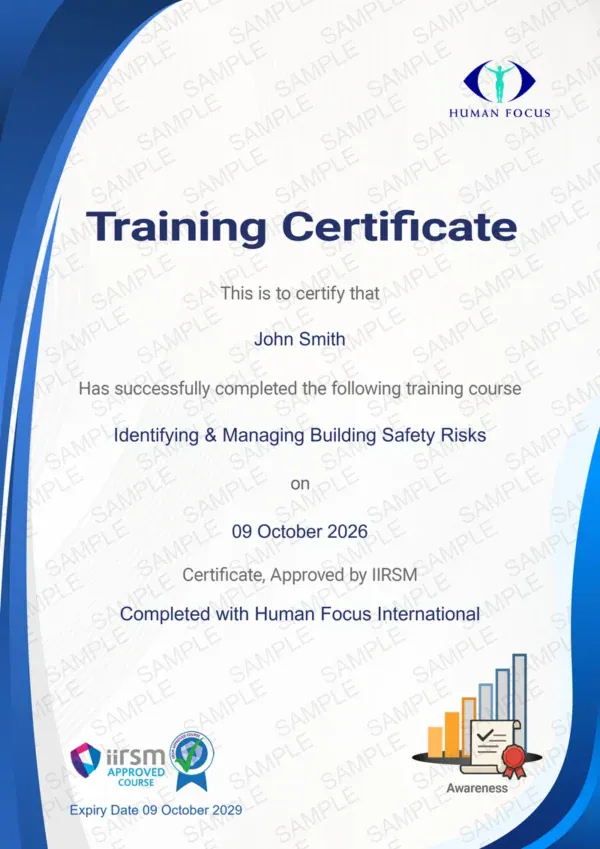
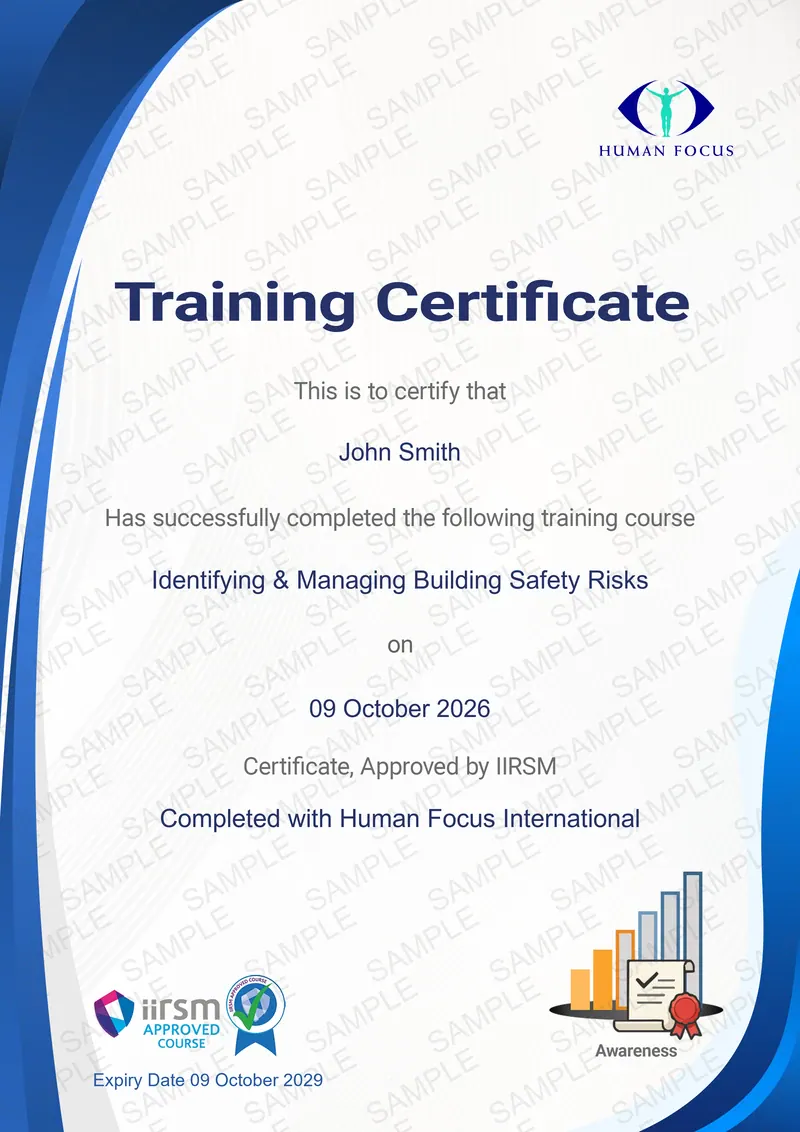
The course certificate includes:
- User name
- Company name
- Course name
- Completion date
- Expiry date
- Approval body
An IIRSM-approved course certificate will be available for download and printing instantly upon course completion.
Users must complete a final theory test before earning their certificate.
The end-of-course test is:
- Fully online
- Multiple choice
A score of 80% is required to pass.
Customer Feedback
Why Is Identifying & Managing Building Safety Risks Training Important?
Unidentified defects and outdated assessments can leave accountable persons without a reliable basis for controlling fire and structural risks.
A fire door that fails to close can weaken compartmentation. Unauthorised alterations or deteriorating structural components can change the risks residents face. Assessments need to lead to action, with competent specialists involved where the hazard requires their expertise.
The Building Safety Act 2022 sets assessment and management duties for accountable persons under Part 4. These include reviewing assessments and taking all reasonable steps to prevent risks materialising or reduce incident severity. Fire safety duties under the Regulatory Reform (Fire Safety) Order 2005 remain distinct from these Part 4 responsibilities.
Associated hazards may require separate assessments and controls under the legislation applicable to each duty holder. Relevant requirements addressed in the course include:
- The Control of Asbestos Regulations 2012 for managing asbestos in relevant communal areas.
- The Electricity at Work Regulations 1989 for preventing danger from relevant electrical systems.
- The Gas Safety (Installation and Use) Regulations 1998, as amended in 2018, for applicable landlord duties.
- The Health and Safety at Work etc. Act 1974 for applicable duties towards residents and others.
- The Control of Substances Hazardous to Health Regulations 2002 for assessing and controlling relevant legionella exposure.
- The Lifting Operations and Lifting Equipment Regulations 1998 where lifts are provided for use at work.
This training connects a structured assessment approach with specialist surveys, suitable controls and continuing review. It supports the current records needed to follow through on findings and maintain the building’s safety case.
This training helps ensure:
- Fire and structural warning signs receive appropriate assessment and follow-up.
- Specialist findings inform controls and remedial decisions.
- Building changes and resident concerns prompt relevant reviews.
- Risk records reflect current findings and actions.
How This Training Helps Your Organisation
- Improve recognition of fire and structural defects requiring specialist attention.
- Strengthen coordination of assessments across different communal building hazards.
- Reinforce timely action on inspection findings and remedial work.
- Support accountable persons’ assessment and management duties under the Building Safety Act 2022.
- Maintain current records supporting continued review and the building’s safety case.
Strengthen Assessment and Follow-Up of Building Safety Risks
Give accountable persons and supporting teams a consistent approach to recognising hazards and acting on specialist findings. Build the knowledge needed to coordinate controls, maintain current records and review risks throughout occupation.