Dangerous Goods Transport for Warehouse and Logistics Staff
schedule
Course Duration: Approximately 1 hour
ADR Chapter 1.3 training is not limited to drivers. Where warehouse and logistics staff have duties concerning the packing, loading or unloading of dangerous goods, employers must provide training appropriate to those responsibilities before staff assume them.
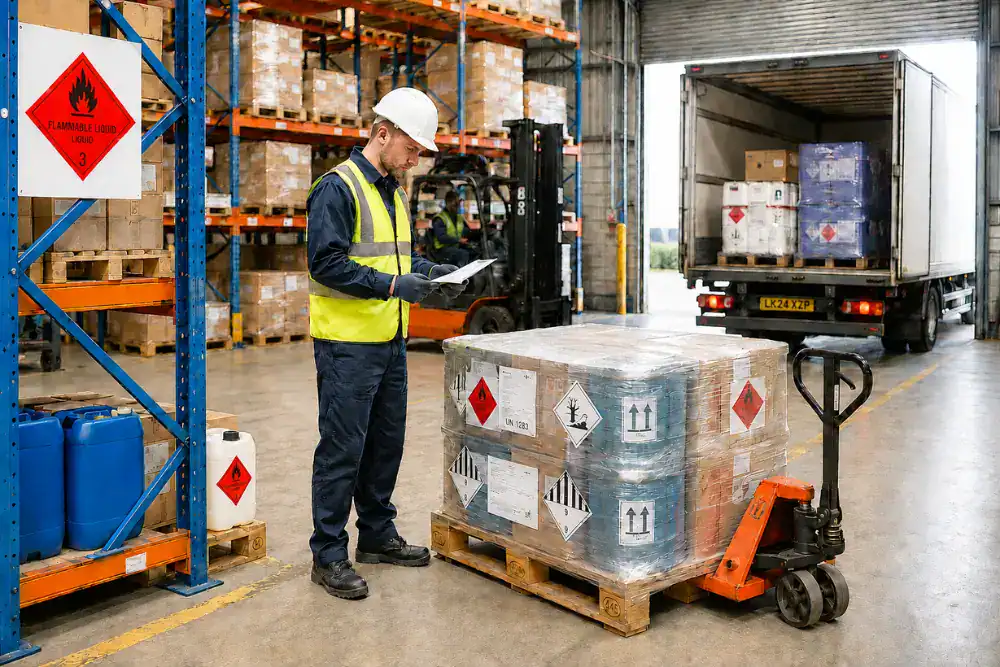
This IIRSM-approved course is designed to support that requirement with a role-specific framework from goods-in to load-out Written to ADR 2025, it covers the checks staff make when receiving, storing, packing, loading and unloading dangerous goods, including the loader’s segregation duties under ADR 7.5.2.
Successful completion provides a digital certificate of completion and an LMS completion record. These document the course completed and support the employer’s training record-keeping arrangements.
This course is designed for sites where dangerous goods are received, held and despatched. It is suitable for logistics, warehousing and distribution, manufacturing and engineering, chemical storage and hazardous waste handling, builders’ merchants and construction supply and retail and wholesale distribution centres. Relevant roles include:
Warehouse operatives who receive, store, pick, pack and despatch dangerous goods.
Forklift and mechanical-handling-equipment operators handling hazardous consignments.
Goods-in / goods-out and loading-bay staff.
Loaders responsible for load segregation.
Warehouse supervisors and team leaders overseeing storage and despatch.
Staff needing ADR 1.3 general awareness plus function-specific knowledge rather than a driver VTC.
Course Content
This Dangerous Goods Transport for Warehouse and Logistics Staff course contains the following sections:
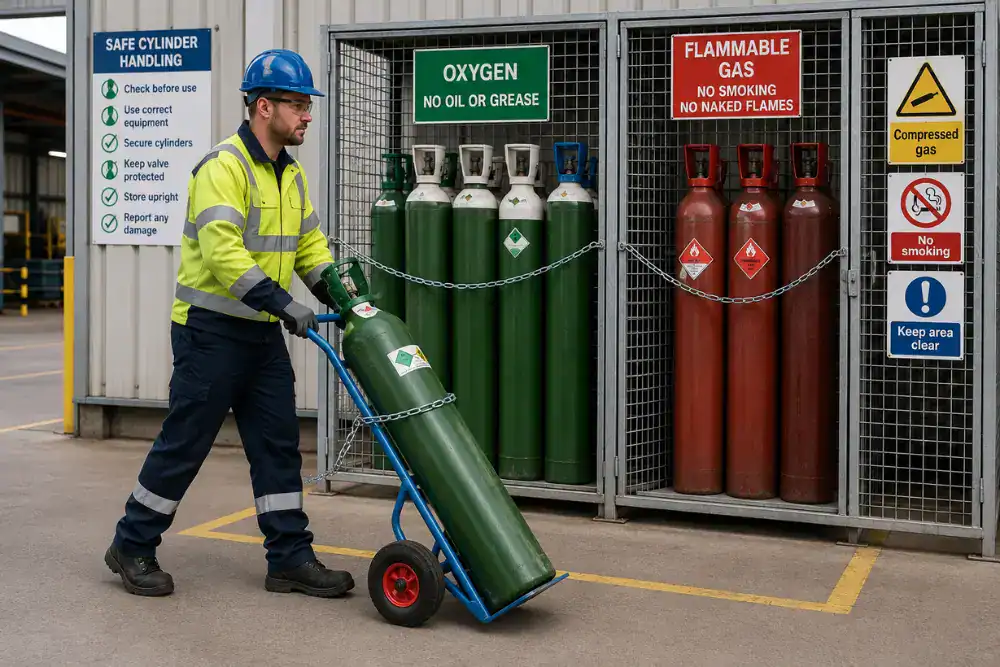
Learn how to recognise the everyday products that count as dangerous goods, from fuels and cleaning chemicals to gases, paints and batteries. See how movement, incorrect handling and changing conditions can increase the risks they present.
Learn how ADR sets the rules for classifying, packaging, labelling, documenting, loading and transporting dangerous goods by road, and how CDG 2009 gives those rules legal force in the UK. Understand the related DSEAR and COSHH duties covering site risk assessment, hazardous-zone classification and Safety Data Sheet availability.
Recognise the nine hazard classes and the divisions and subdivisions addressed within Classes 1, 2, 4, 5 and 6. Understand the different hazards they communicate and why specific handling procedures exist.
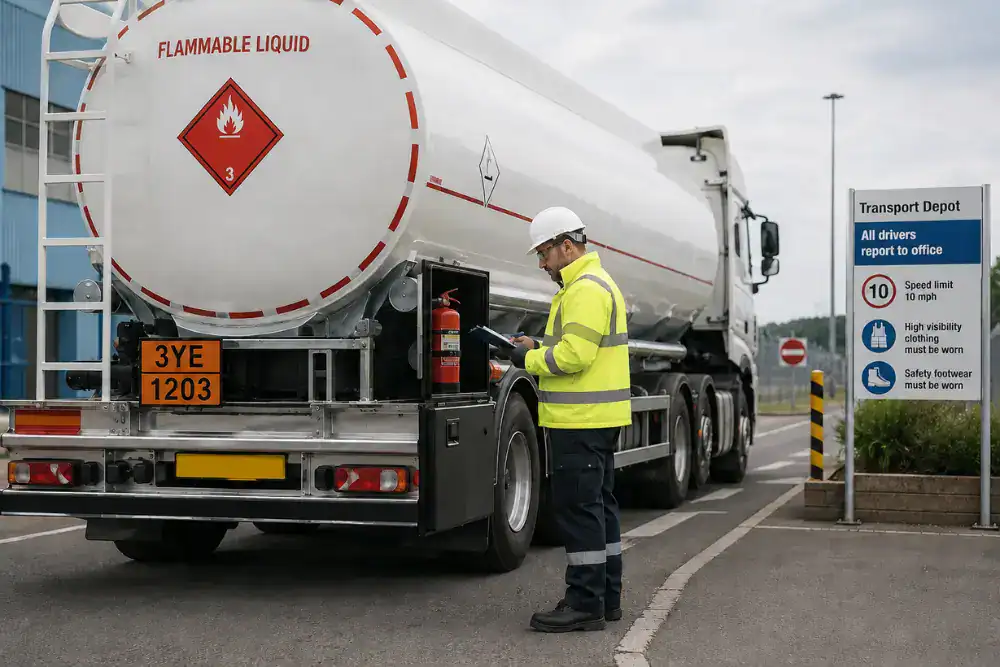
Learn how to read hazard labels, placards, orange plates, UN Numbers, Hazard Identification Numbers and Emergency Action Codes. Recognise damaged, missing or mismatched markings and know when they must be challenged before goods are accepted or despatched.
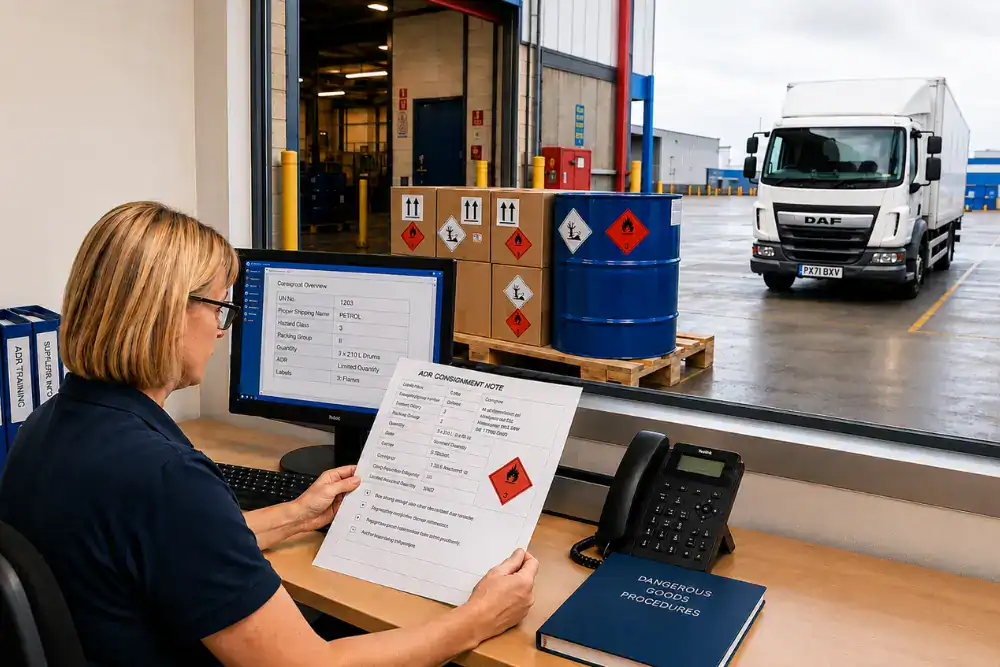
Work through five goods-in checks covering hazard labels, UN Numbers, packaging condition, additional markings and transport documentation. Learn when to quarantine and report a consignment, reject it for a UN Number mismatch and contact the supplier when checks fail.
Learn how to follow the site storage plan, keep incompatible substances apart and work within quantity limits and required temperature, light and moisture conditions. Understand how relevant Safety Data Sheets, DSEAR hazardous-zone controls and HSG71 guidance shape separate site-storage decisions alongside ADR transport duties.
Understand inner and outer packaging, absorbent cushioning and UN-approved packaging. Learn to read X, Y and Z packing-group performance codes and recognise limited quantity, excepted quantity, overpack and orientation markings.
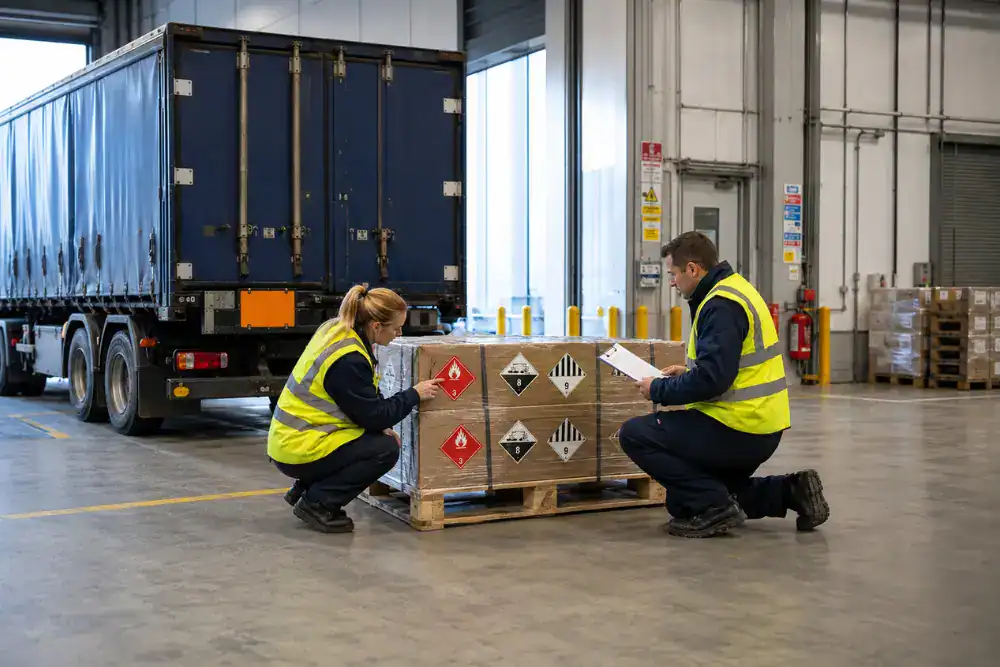
Learn the checks required before loading, including the transport document, vehicle condition and load segregation. Understand the unloader’s duties to check goods against the transport documentation, inspect them as they come off the vehicle and stop unloading goods that are damaged or leaking.
Know how to respond to spills, leaks, fire, fumes and exposure, including what to do first, what to report and what to leave to trained responders. Learn how to protect drains and watercourses and what information emergency services need.
Learn how to check a transport document against the consignment, including the UN Number, proper shipping name, hazard class, packing group, packages and quantities. Understand the information required under ADR 5.4.1, the conditions for electronic transport documents and when a Dangerous Goods Note is used for sea freight.
Learn how to recognise a non-conformance, make the area safe within your training and authorisation, report it to a line manager or Dangerous Goods Safety Adviser and record it. Understand that some incidents can trigger external reporting under ADR 1.8.5, RIDDOR or environmental requirements and learn the security awareness addressed in ADR Chapter 1.10.
Disclaimer: This course builds awareness and knowledge of dangerous goods handling, storage, and transport for warehouse and logistics staff. Completing it does not by itself make a learner competent or qualified for any task or role — under UK law, competence combines training, knowledge, skills and experience, and confirming it is the employer’s responsibility. It provides underpinning knowledge only; competence to receive, store, pack, or load dangerous goods also requires supervised practical experience and employer authorisation.
What Your Staff Will Learn
Understand what dangerous goods are, how they are classified, and why they require careful management.
Identify correct labelling and packaging on incoming dangerous goods consignments.
Understand segregation rules and safe storage conditions.
Understand the requirements for overpacking, inner and outer packaging, and quantity limits.
Recognise safe handling procedures and load segregation requirements when loading and unloading.
Recognise transport documents and understand what information must accompany a consignment.
Know when and how to raise a concern or report a non-conformance.
Available in 20+ Languages
Course subtitles are available in multiple languages, including:
This course is approved by IIRSM – the International Institute of Risk & Safety Management.
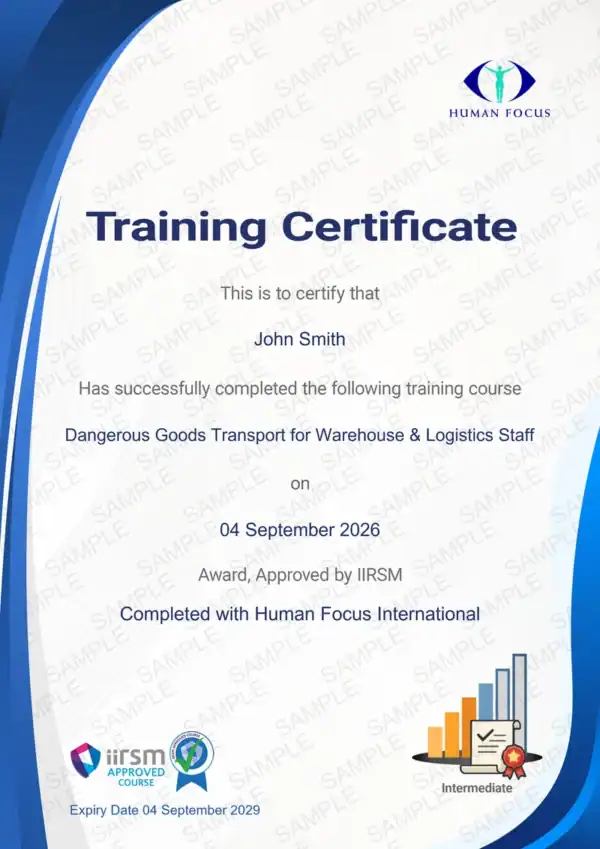
The course certificate includes:
User name
Company name
Course name
Completion date
Expiry date
Approval body
An IIRSM-approved certificate will be available for download and printing instantly upon course completion.
Users must complete a final theory test before earning their certificate.
The end-of-course test is:
Fully online
Multiple choice
A score of 80% is required to pass.
Course attempts
Each licence includes one attempt at the final knowledge assessment.
If a trainee does not pass and wishes to try again, an additional licence is required. For their second attempt, the trainee can retake the assessment without repeating the course content.
Customer Feedback
Why Is Dangerous Goods Transport Training for Warehouse and Logistics Staff Important?
Warehouse and logistics staff work at several critical points in the dangerous goods chain. A missing label, damaged package, storage incompatibility or documentation mismatch can move into the next stage unless the person receiving, packing, loading or unloading the goods recognises it and follows the correct procedure.
ADR Chapter 1.3 requires training appropriate to the responsibilities and duties of people whose work concerns the carriage of dangerous goods. ADR also assigns distinct obligations to packers, loaders and unloaders. The loader’s segregation duties under ADR 7.5.2 and the unloader’s identity and condition checks are part of this compliance chain, not controls that can be left to the driver alone.
Written to ADR 2025, this programme also shows where road-transport duties meet separate site controls. DSEAR risk assessment and hazardous-zone controls, COSHH assessments, Safety Data Sheets and HSG71 storage guidance do not form part of ADR Chapter 1.3, but they can all shape how dangerous goods are managed in warehouse operations. Limited and excepted quantities can reduce some requirements without removing every relevant ADR duty.
How Dangerous Goods Transport Training for Warehouse and Logistics Staff Helps Your Organisation
This course supports organisations that receive, store, pack and despatch dangerous goods by:
Establishing one role-specific framework from goods-in checks through storage, packing, loading and unloading
Supporting consistent use of five receiving checks before a consignment enters the warehouse process
Making the named packing, loader segregation and unloading responsibilities more visible across relevant roles
Connecting ADR transport duties with separate DSEAR, COSHH, Safety Data Sheet and HSG71 site controls
Building recognition of UN-approved packaging, packing-group codes, limited and excepted quantities, overpacks and orientation markings
Giving staff defined points for stopping, quarantining, reporting and escalating discrepancies within their training and authorisation
Providing a digital certificate of completion and LMS completion record to support employer training records
Standardise Dangerous Goods Checks From Goods-In to Load-Out
Give relevant warehouse and logistics staff a shared, role-specific framework for receiving, storing, packing, loading and unloading dangerous goods. Use it as part of your ADR Chapter 1.3 training arrangements, alongside site, load and procedure-specific instruction, supervised practical experience and employer confirmation of competence.