This IIRSM-approved Dangerous Goods Transport Awareness for All Staff course provides the general awareness training required under ADR Section 1.3 for personnel whose duties concern the carriage of dangerous goods.
It gives staff across the dangerous goods transport process one consistent foundation for recognising transport hazards, understanding their responsibilities and knowing when not to proceed without further checks or escalation.
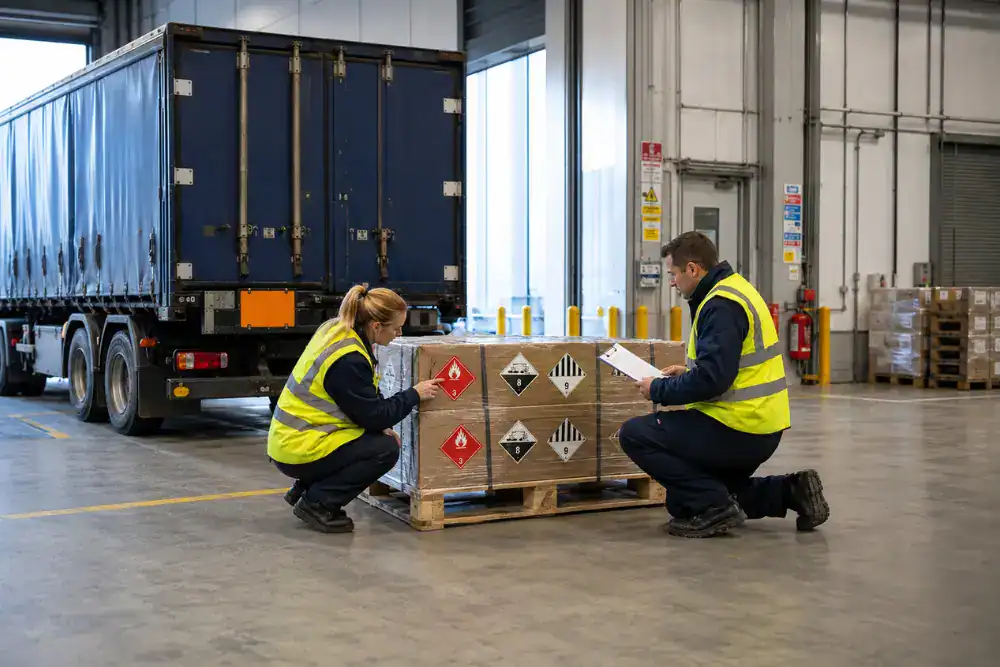
Learners gain the awareness to recognise the nine hazard classes, interpret labels, placards and orange plates, identify damaged or non-compliant consignments and know when to stop, keep clear and escalate a spill, leak or other dangerous goods incident.
This ADR general awareness training is designed for personnel whose duties relate to the carriage of dangerous goods, including packing, loading, unloading, transport-related handling or supervision across warehouses, depots, transport operations and relevant construction, waste or manufacturing sites, including:
Drivers who carry dangerous goods
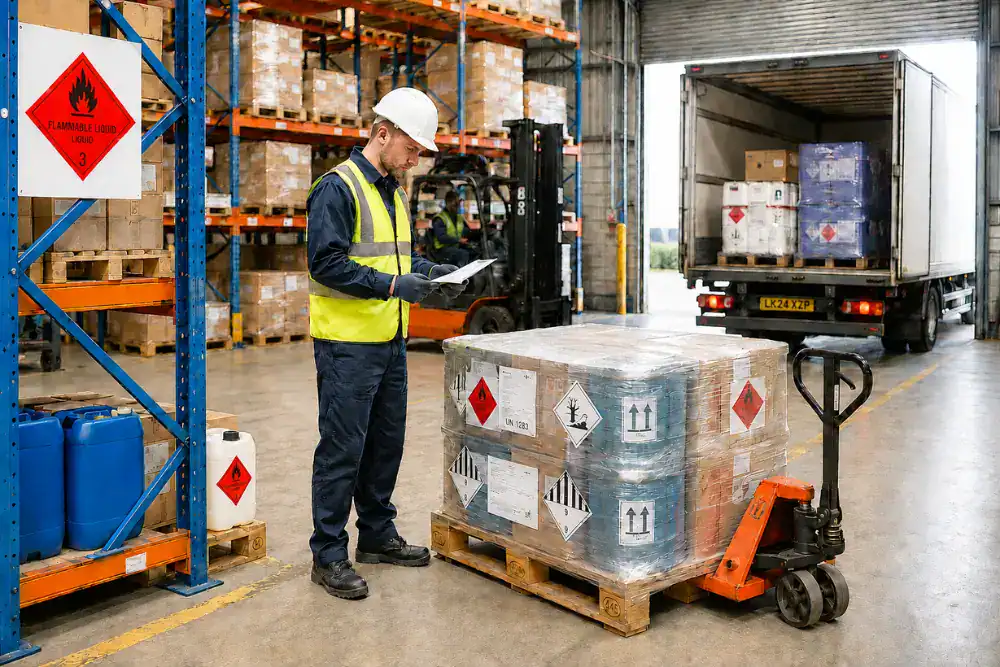
Packers and loaders
Warehouse and distribution operatives
Transport administrators and freight staff
Supervisors and site managers
Waste, construction and manufacturing operatives
Course Content
The Dangerous Goods Awareness course includes the following sections:
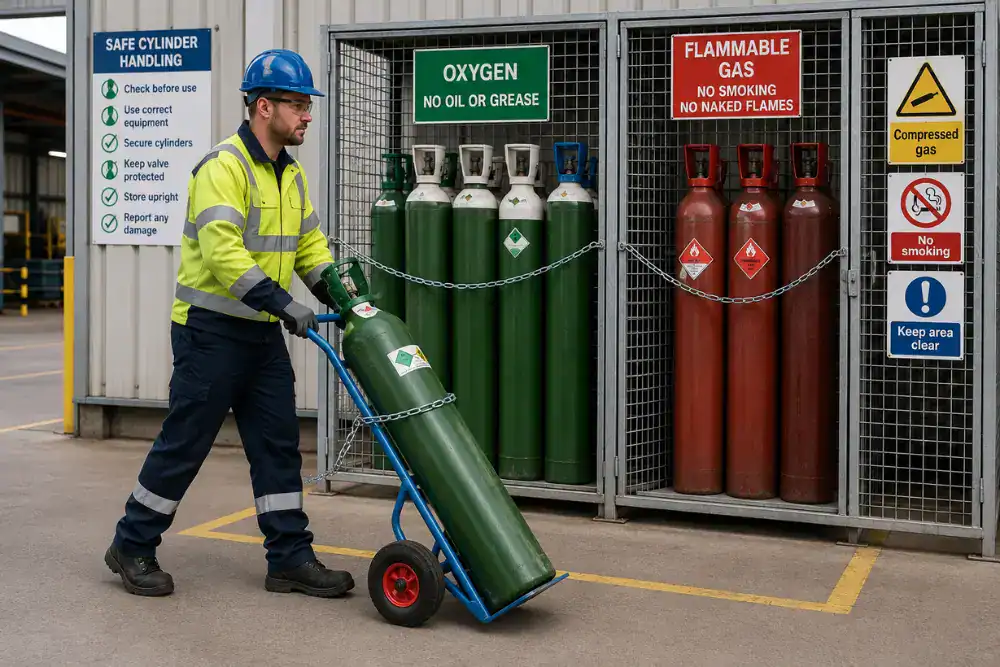
Recognise what counts as a dangerous good and understand why these substances must be controlled during transport, handling and storage.
Understand how the Carriage of Dangerous Goods and Use of Transportable Pressure Equipment Regulations 2009 (CDG 2009) implement ADR requirements in Great Britain. Learn who enforces the rules and why the required ADR 1.3 training must be completed before personnel carry out their duties.
Identify the nine hazard classes and common examples within each, so staff can recognise the main hazards and understand why different controls apply.
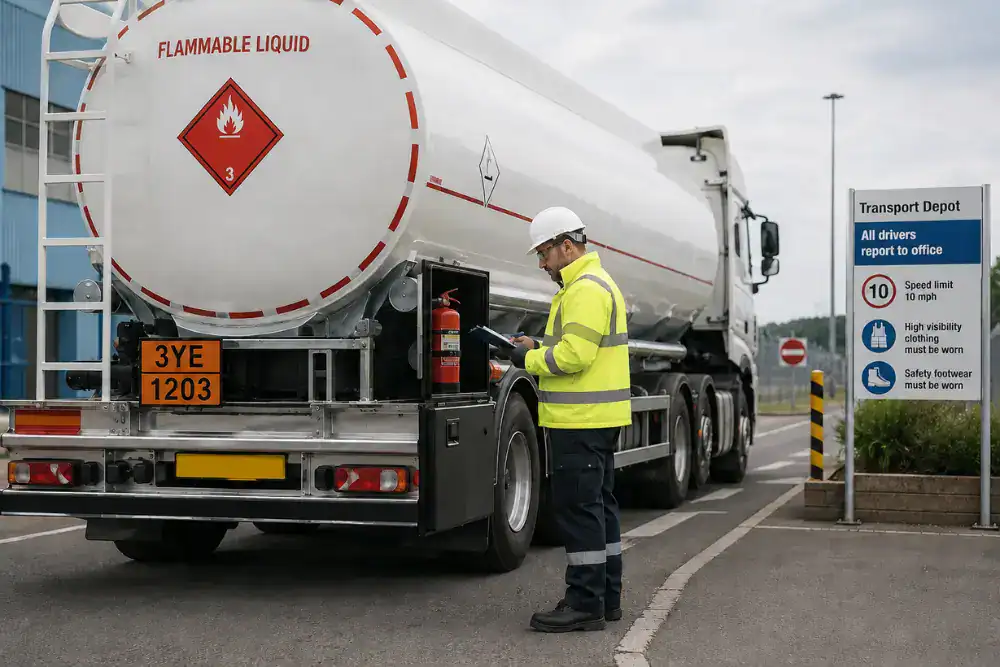
Learn how to read hazard labels, placards, orange plates and UN Numbers, and how to spot and report markings that are damaged, missing or incorrect.
Know what actions to take if something goes wrong, including how to stop and assess safely, call the emergency services and report every incident.
Understand the duties that ADR and CDG 2009 place on you, your colleagues and your employer, and how to challenge and escalate non-compliant consignments.
Disclaimer: This course builds awareness and knowledge of dangerous goods transport. Completing it does not by itself make a learner competent or qualified for any task or role — under UK law, competence combines training, knowledge, skills and experience, and confirming it is the employer’s responsibility. It meets the general awareness training requirement under ADR Section 1.3 only; it does not meet any function-specific or safety training requirement for a learner’s actual role.
What You Will Learn
By the end of this course, staff will be able to:
Recognise what counts as a dangerous good and understand the main risks these substances and articles can present during transport
Identify the nine dangerous goods classes and recognise the standard hazard labels used for each
Read key transport markings, including placards, orange plates, UN Numbers and Hazard Identification Numbers
Spot damaged, missing or incorrect labels and markings, and know when a consignment should not be processed or accepted without escalation
Understand the general duties that ADR and the Carriage of Dangerous Goods and Use of Transportable Pressure Equipment Regulations 2009 place on personnel across the supply chain
Respond safely at an awareness level by stopping, assessing from a safe distance, raising the alarm and passing relevant substance information to the emergency services
Report spills, leaks, damaged packages, near misses and other dangerous goods incidents through the correct internal channels
Available in 20+ Languages
Course subtitles are available in multiple languages, including:
This course is approved by IIRSM – the International Institute of Risk & Safety Management.
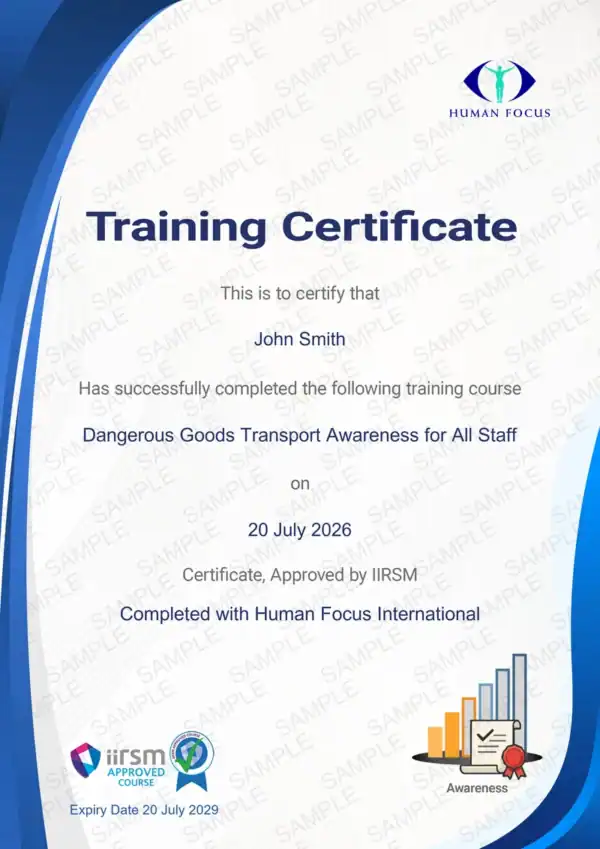
The course certificate includes:
User name
Company name
Course name
Completion date
Expiry date
Approval body
An IIRSM-approved Dangerous Goods training certificate will be available for download and printing instantly upon course completion.
Users must complete a final theory test before earning their certificate.
The end-of-course test is:
Fully online
Multiple choice
A score of 80% is required to pass.
Course attempts
Each licence includes one attempt at the final knowledge assessment.
If a trainee does not pass and wishes to try again, an additional licence is required. For their second attempt, the trainee can retake the assessment without repeating the course content.
Customer Feedback
Why Is the Dangerous Goods Transport Awareness Training Important?
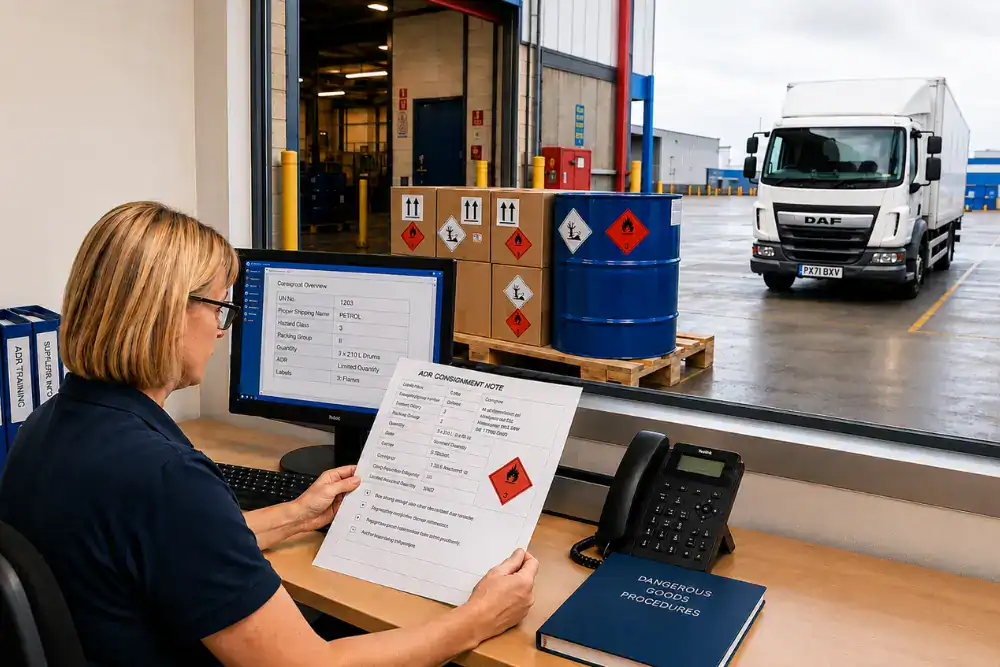
ADR training is not limited to drivers. Packers, loaders, warehouse operatives and others whose duties concern the carriage of dangerous goods must receive training appropriate to their responsibilities.
Fuels, gases, paints and other dangerous goods can be transported safely when suitable controls and procedures are followed. Risks can increase when goods are handled or stored incorrectly or exposed to changing conditions such as heat, pressure or vibration. Damaged packages and missing or incorrect markings can also indicate that a consignment should not proceed without further checks or escalation.
ADR Section 1.3 requires personnel whose duties concern the carriage of dangerous goods to receive training appropriate to their responsibilities before assuming those duties. Until their training is completed, they may perform them only under the direct supervision of a trained person.
This ADR awareness course provides the general-awareness element of ADR Section 1.3 for relevant packing, loading, warehousing, administration and transport roles. It does not replace any function-specific, safety or driver training required for the work.
How Does Dangerous Goods Transport Awareness Training Help Your Organisation?
Help establish a consistent general-awareness baseline across personnel whose duties concern dangerous-goods carriage
Give relevant personnel a shared understanding of hazard classes, labels, markings and the signs of a non-compliant consignment
Reinforce when staff should stop, keep clear, report an incident or escalate a concern
Promote a consistent awareness-level response to damaged packages, missing markings, spills and leaks
Support the employer’s responsibility to provide and record appropriate dangerous-goods training
Cover the general-awareness element while making clear that additional function-specific, safety or driver training may also be required
Give Every Relevant Role a Consistent Dangerous-Goods Awareness Baseline
Assign the course to personnel involved in packing, loading, warehousing, transport administration and supervision. Give each learner the same awareness-level foundation and retain their completion record in the Human Focus training system.
This online Dangerous Goods Transport Awareness course costs £25 + VAT per learner.
Dangerous-goods compliance depends on more than the person driving the vehicle. Goods may be prepared, packed, loaded, documented, supervised, received and unloaded by different people before and after transport.
The course is suitable for packers, loaders and unloaders, warehouse operatives, transport administrators, freight staff, supervisors, managers and drivers whose duties involve the carriage of dangerous goods. It can therefore be used across construction, waste management, manufacturing, logistics, utilities and facilities management where these responsibilities apply.
ADR requires periodic refresher training, and training must keep pace with changes to the regulations. Employers should also review a learner’s training when their duties change, particularly if the new role introduces different dangerous goods, procedures or responsibilities.
Employers must keep a record of the ADR training provided so they can confirm what training each person has completed and whether it remains current.
×
Behavioural Safety Programmes
Has Yours Reached Its Limit?
How a human factors-led approach can extend your view of risk and unlock the next step-change in safety performance
📅 14th October 2026⏰ 2PM BST
All attendees will receive a certificate from Human Focus.