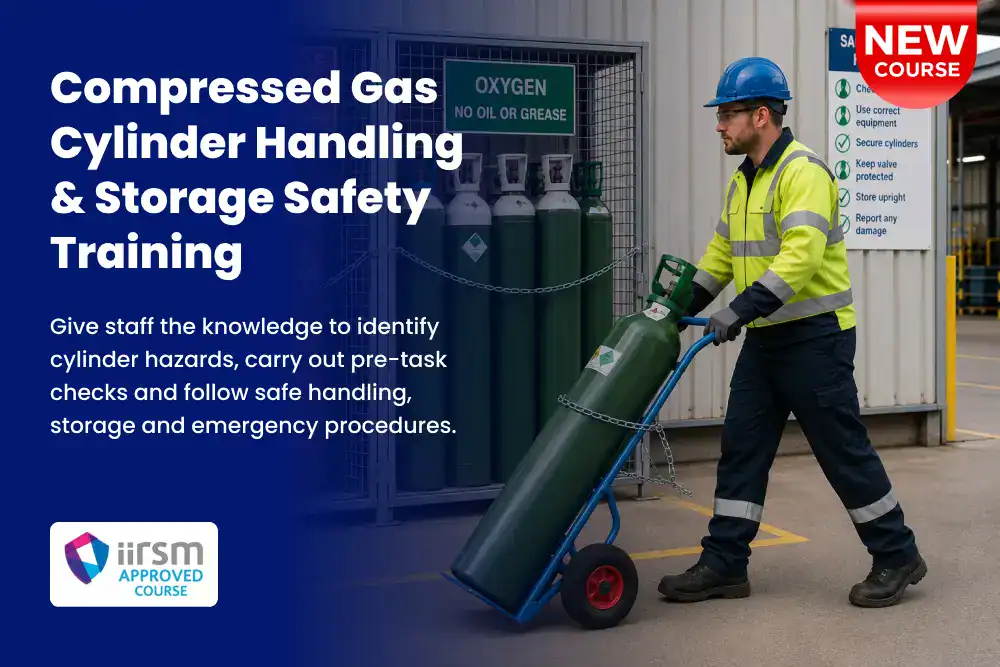
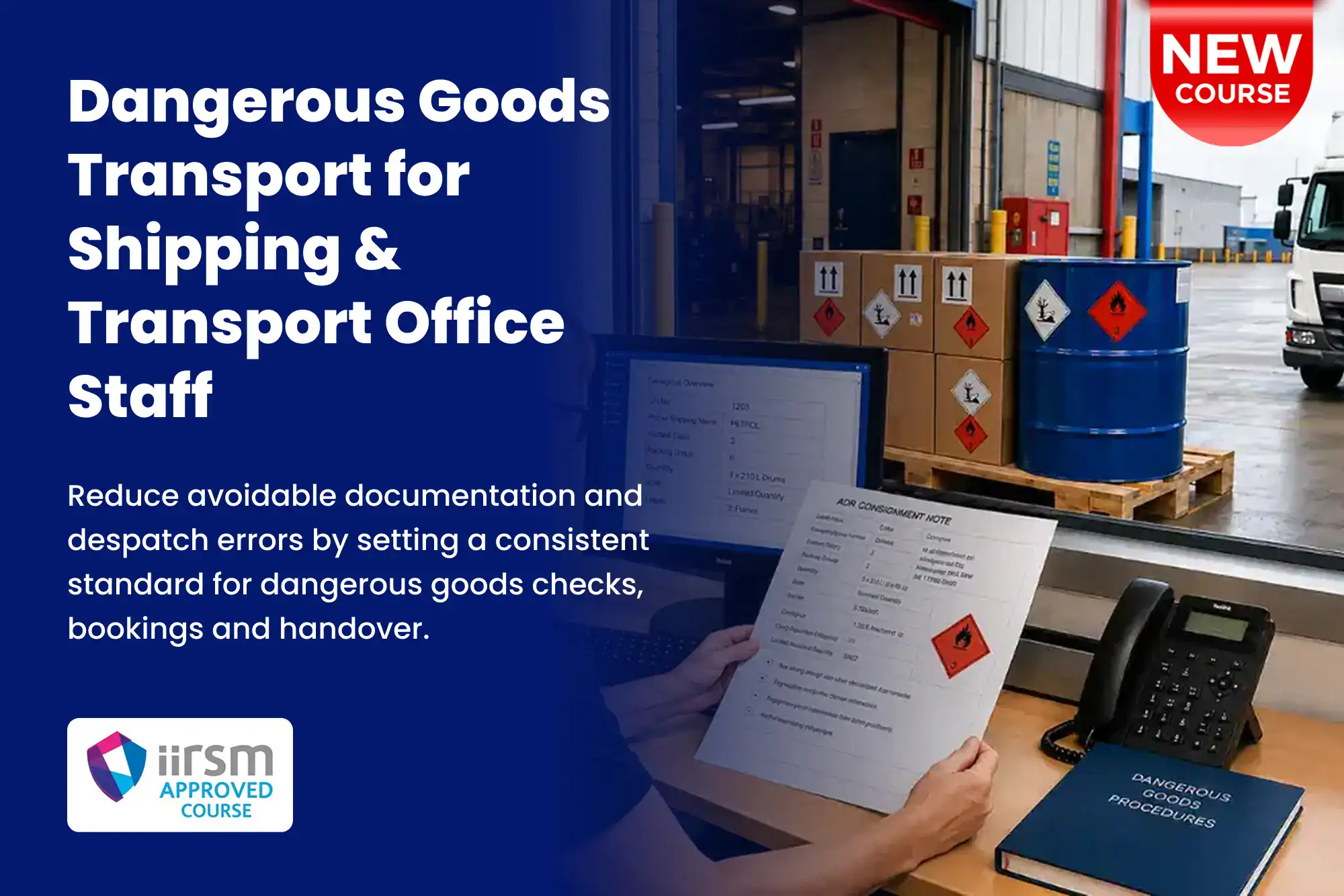
We are pleased to introduce our fully online course: Compressed Gas Cylinder Handling & Storage Safety Training. This course gives staff who handle, move, use or work near compressed gas cylinders a clear understanding of the hazards involved and the controls they must follow.
This IIRSM-approved course gives staff practical guidance on cylinder hazards, safe handling and storage, and emergency response. It explains how gas contents affect cylinder behaviour, how to identify, check, handle and store cylinders correctly and when to stop work, report unsafe conditions and raise the alarm. The training supports a consistent, site-wide approach aligned with risk assessments, safe systems of work and emergency procedures.
Employers must control the risks their staff are exposed to at work. Compressed gas cylinder risks are hard to manage through supervision alone because cylinders are often received, moved, stored and worked around by several teams.
A damaged valve, an unsecured cylinder, poor segregation or a missed leak can lead to fire, explosion, asphyxiation, toxic exposure or serious injury. Preventing these incidents depends on staff knowing what they are handling, checking labels and markings, using the correct equipment and securing cylinders properly. Where these practices vary from one team to the next, the risk rises across the whole site.
Several pieces of legislation apply. The Health and Safety at Work Act 1974 and the Management of Health and Safety at Work Regulations 1999 require employers to assess workplace risks and provide suitable information, instruction and training. The Dangerous Substances and Explosive Atmospheres Regulations 2002 apply where dangerous substances, including relevant compressed gases, could create a fire or explosion risk. The Control of Substances Hazardous to Health Regulations may also apply where gases are hazardous to health. Employees must follow safe systems of work, use controls correctly and report damage, leaks or unsafe conditions.
This training helps organisations:
- Give staff a consistent baseline for safe cylinder handling and storage
- Support employer duties to provide suitable information, instruction and training
- Help reduce the risk of avoidable fires, explosions, leak-related incidents and handling injuries
- Improve consistency in cylinder identification, pre-task checks, movement, storage and segregation
- Provide a certificate for each staff member who completes the course
This training is suitable for anyone who handles, moves, uses or works near compressed gas cylinders, including:
- Operatives and technicians
- Warehouse and stores personnel
- Welders and fabricators
- Maintenance engineers and facilities teams
- Delivery and logistics staff
- Laboratory and research staff
- Catering and hospitality staff
- Supervisors, team leaders and health and safety officers
This IIRSM-approved course covers:
- How to recognise the main cylinder hazards, including stored pressure, fire, asphyxiation, toxic exposure and cold burns
- Your own legal responsibilities, and those of your employer, when handling and storing cylinders
- How to identify a cylinder’s contents using its label, hazard pictograms, shoulder colour and safety data sheet
- How to carry out pre-task checks and select the right equipment and personal protective equipment (PPE) before moving a cylinder
- What safe movement, unloading and storage involve, including securing, segregation and the specific rules for acetylene
- How to recognise unsafe conditions and know when to stop work and report a problem
- How to respond to a gas leak, fire or damaged cylinder
Do different teams across your site receive, move, store or work near compressed gas cylinders? Enrol your team in the Compressed Gas Cylinder Handling & Storage Safety Training course to give them a clear understanding of the hazards and the controls they must follow. The training provides a practical baseline for working safely with cylinders and a completion certificate for each member of staff who finishes it.
Enrol Now
For more details about this course, please contact us.