Manual handling injuries continue to appear in organisations that already have training and risk assessments in place. This is rarely because the hazards are unknown or the rules are unclear.
More often, it reflects a gap between work as imagined — how manual handling tasks are expected to be carried out when controls are designed — and work as done under real operating conditions. As workloads fluctuate, storage space may fill up, equipment may become shared or intermittently unavailable, and priorities may shift. Where this occurs, tasks can adapt in ways that procedures did not anticipate.
These adaptations typically occur in small, local steps. Each adjustment helps work continue in the moment. Over time, however, they can accumulate and subtly reshape how tasks are performed, a pattern widely described in safety research as practical drift. As these changes become familiar, they are less likely to be questioned, leading to a gradual normalisation of deviance, where departures from original controls become accepted practice.
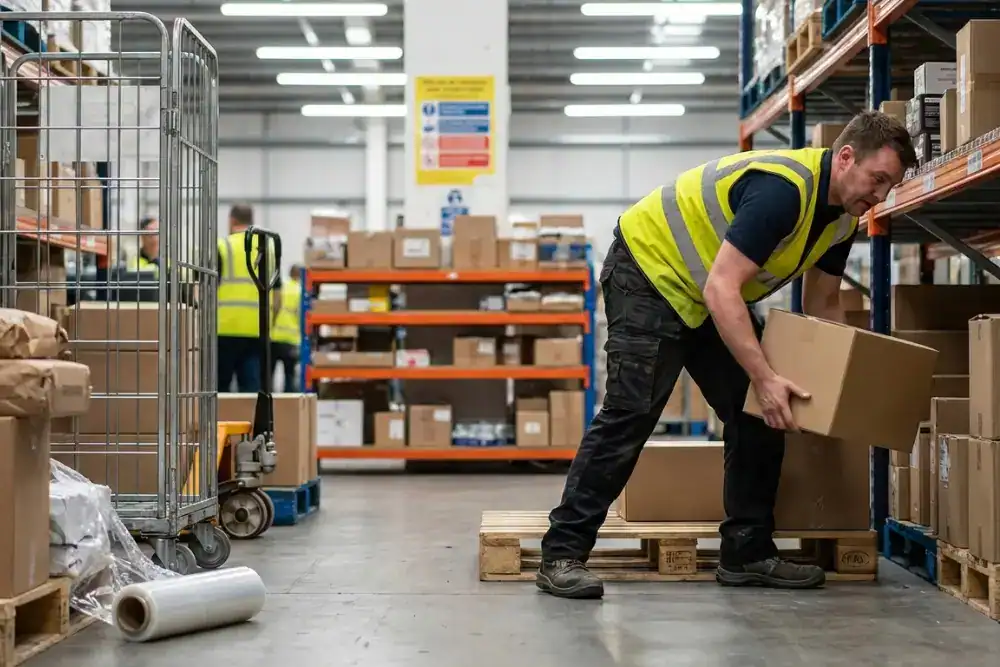
In many workplaces, changes in workload, space use, stock flow, or equipment availability alter how manual handling tasks are actually performed. Lifting aids may be shared, temporarily unavailable, or used for other purposes. Storage arrangements shift. Routes become less clear. Where these conditions arise, tasks previously assessed as low risk can involve more carrying, twisting, reaching, or sustained effort in order for work to continue.
Many manual handling injuries do not stem from a single, clearly identifiable failure or one “bad lift”. Instead, risk can increase incrementally as loads handled become heavier, handling frequency rises, or recovery time reduces — changes that are often not immediately visible when they occur. They are more often associated with repeated exposure to awkward postures, load handling, or force over time — particularly where controls are inconsistently available, difficult to use, or poorly aligned with how work is done in practice.
In these situations, the issue is not necessarily that the risk was misunderstood or that training was ineffective. More commonly, controls were designed for one set of operating conditions and have not been reviewed, adapted, or protected as those conditions varied.
This guide examines common manual handling hazards, the injuries they are associated with, and why controls that look adequate on paper can quietly lose reliability unless they are actively reviewed and adapted as work changes.