This IIRSM-approved Resident Engagement course strengthens how accountable persons involve residents in building safety decisions. Give housing teams a consistent approach to preparing, distributing, consulting on and reviewing a building-specific strategy. Make safety information accessible and connect resident feedback with related evacuation-planning responsibilities in England. Record concerns, decisions and follow-up so residents can see how their views inform action.
Resident Engagement
for Accountable Persons & Principal Accountable Persons
schedule
Course Duration: 35+ minutes
live_tv
100% online training
volume_up
Full audio voiceover
repeat_on
Fully online assessment
account_balance_wallet
Discounts when you buy in bulk
important_devices
Access on any device
app_shortcut
App available for iOS & Android
Training You Can Trust


Course Preview
Course Details
| Course Duration | 35+ minutes |
|---|---|
| Approval body | IIRSM |
| Format | Fully online |
| Assessment | Multiple choice |
| Certification | Same-day digital certificate |
| Certificate Valid For | 3 years |
Suitable For
Teams managing occupied higher-risk residential buildings in England need resident engagement arrangements suited to each building. These responsibilities apply across housing associations, registered providers, local authority housing, freeholders, managing agents and residential asset management.
Build-to-rent and student accommodation are relevant where buildings fall within the higher-risk building regime. The course is designed for those responsible for overseeing, managing or delivering resident engagement arrangements, including:
Course Content
The Resident Engagement course covers the following sections:
Distinguish the principal accountable person’s responsibilities from accountable persons’ supporting duties. Recognise how resident reports and engagement records support wider building safety management.
Prepare, distribute, consult on and review a Resident Engagement. Establish arrangements for recording feedback, communicating decisions and retaining evidence that the strategy is being followed.
Identify communication barriers linked to language, literacy, disability and access to technology. Select formats and communication channels that reflect the building’s residents and their needs.
Recognise related evacuation-planning duties and identify residents who may need assistance. Distinguish duty-holder roles, voluntary participation, consent, information sharing and review requirements within residential Personal Emergency Evacuation Plans (PEEPs).
Involve residents in safety decisions and communicate how their concerns have been considered. Recognise residents’ duties, manage disagreements and distinguish engagement feedback from the separate statutory complaints procedure.
What You Will Learn


Available in 20+ Languages
Course Approval Body
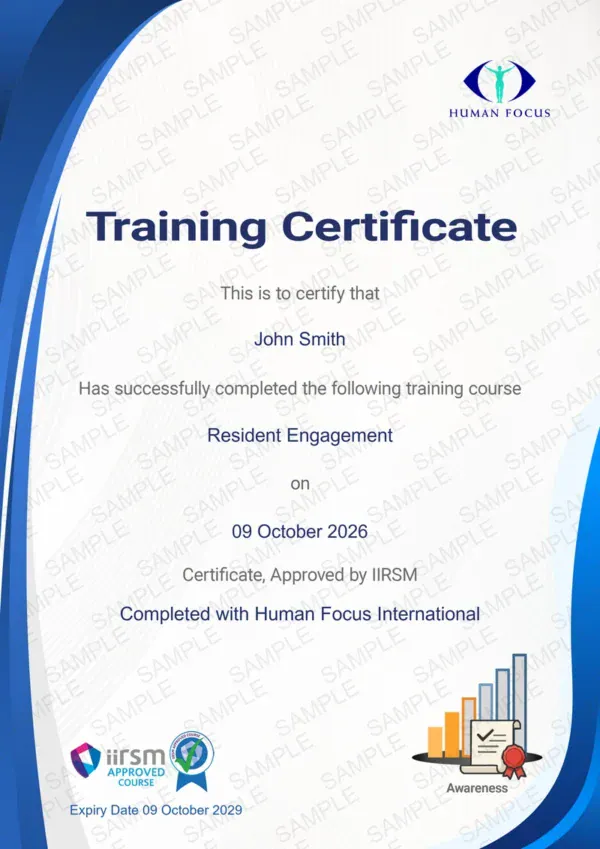
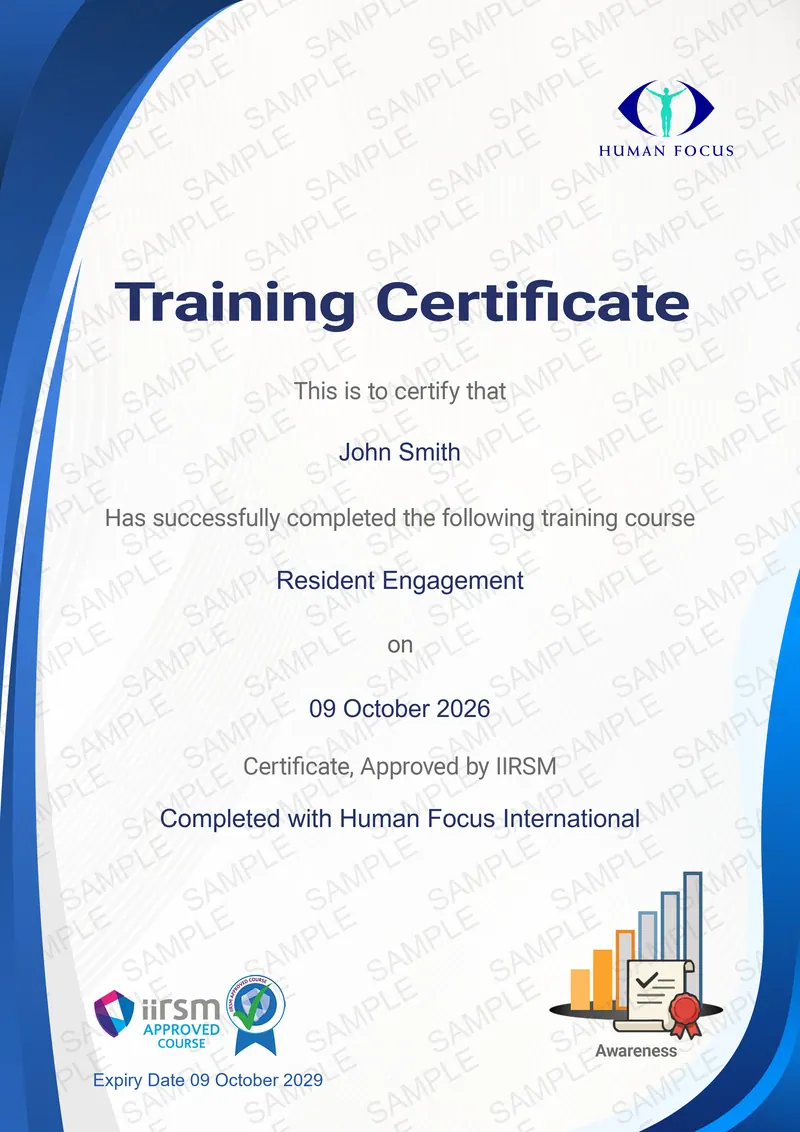
The course certificate includes:
- User name
- Company name
- Course name
- Completion date
- Expiry date
- Approval body
An IIRSM-approved course certificate will be available for download and printing instantly upon course completion.
Users must complete a final theory test before earning their certificate.
The end-of-course test is:
- Fully online
- Multiple choice
A score of 80% is required to pass.
Customer Feedback
Why Is the Resident Engagement Training Important?
Sending safety information achieves little if residents cannot access it or see their concerns acted on.
An unread evacuation notice or an unrecorded fire-door concern can leave management teams unaware of risks residents encounter daily. Documented consultation and follow-up make residents’ experiences part of safety decisions.
Section 91 of the Building Safety Act 2022 requires the principal accountable person to prepare a Resident Engagement. The duties include reviewing and revising the strategy, consulting relevant people and acting in accordance with it.
The Fire Safety (Residential Evacuation Plans) (England) Regulations 2025 introduce separate duties for the Responsible Person. That role sits under the Regulatory Reform (Fire Safety) Order 2005 and may differ from the accountable person.
- Match communication methods to residents’ needs.
- Record how consultation informs decisions.
- Review feedback, follow-up actions and the strategy as part of ongoing safety management.
How This Training Helps Your Organisation
- Improve consistency in preparing, distributing and reviewing resident engagement strategies.
- Reduce communication barriers that prevent residents receiving important safety information.
- Strengthen records of consultation, resident concerns and follow-up actions.
- Support resident engagement duties under the Building Safety Act 2022.
- Connect residents’ experiences with building safety decisions and evacuation-planning needs.
Make Resident Engagement Part of Everyday Building Safety Management
Give your teams a shared approach to accessible communication, meaningful consultation and documented follow-up. Use Resident Engagement training to strengthen how residents participate in safety decisions across your buildings.