Damaged cylinders or unsecured loads can cause gas leaks, fires or serious injuries during road transport. Small-load exemptions can remove some transport requirements, but safety precautions and employer instructions still apply.
This Transporting Gas Cylinders Safely course provides guidance for workers carrying smaller loads without full dangerous goods driver certification. It helps teams check cylinders, secure loads, maintain ventilation and respond safely to transport incidents.
This course is for workers carrying cylinders by road in gas supply, heating, refrigeration, plumbing and welding operations. It is suitable for employees and sole traders who load, drive or assist with cylinder transport, including:
Welders
Plumbers
Gas engineers
Heating, ventilation and air conditioning technicians
Refrigeration technicians
Delivery drivers
Field engineers
Technicians using company vehicles
Course Content
The Transporting Gas Cylinders Safely course contains the following six sections:
Learn how to recognise pressure, fire, explosion, asphyxiation, toxic exposure and handling hazards associated with gas cylinders. Identify how cylinder components and compressed, liquefied or dissolved gases affect loading and transport precautions.
Learn how the Agreement concerning the International Carriage of Dangerous Goods by Road (ADR) governs cylinder transport. Recognise small-load duties, employer instructions and the point at which further advice or driver certification is needed.
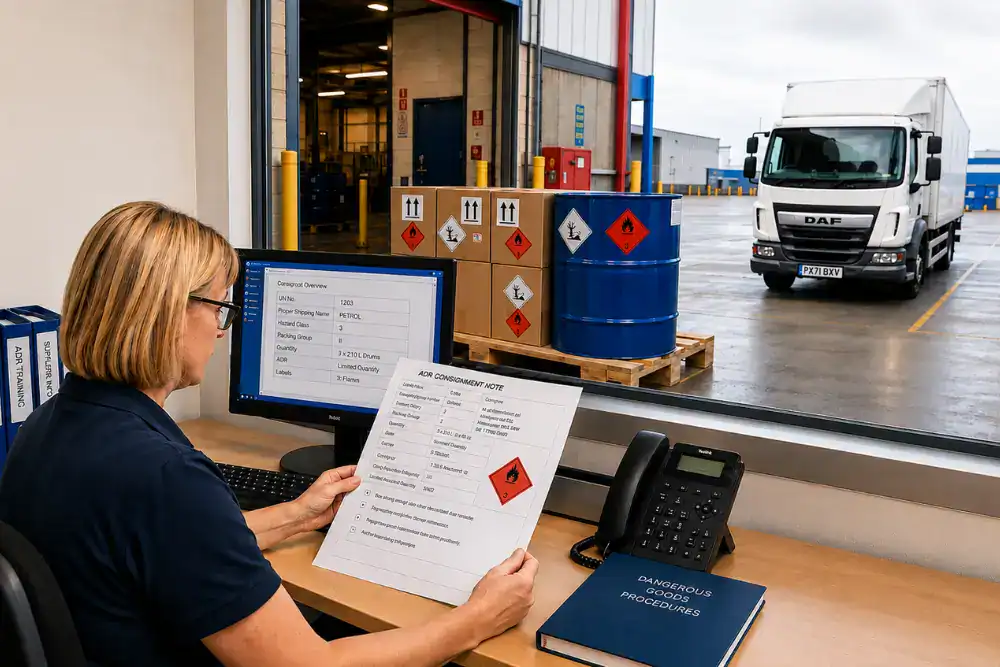
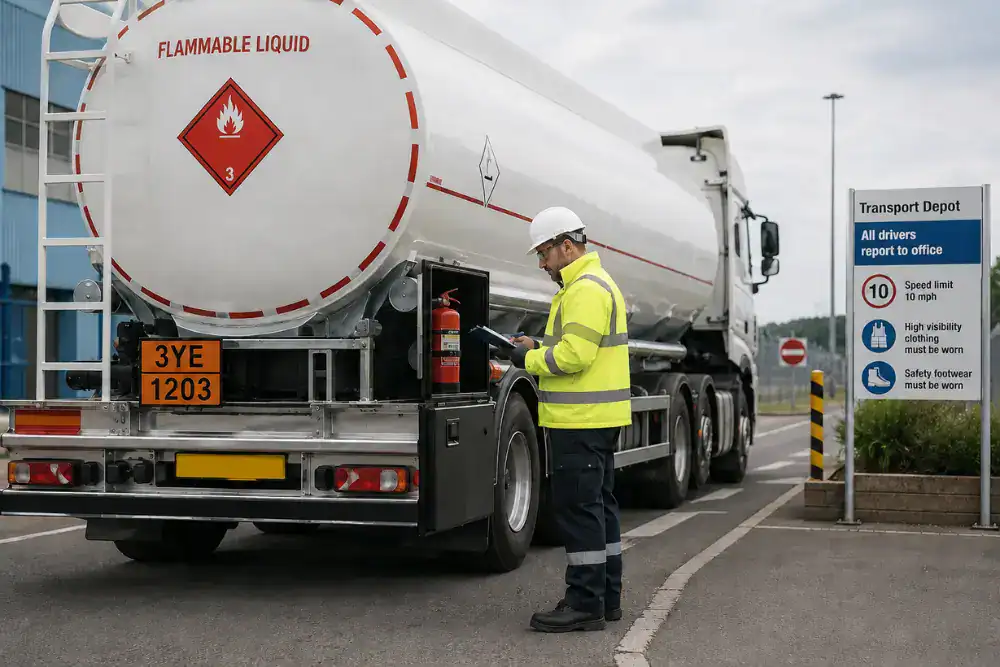
Learn how to check labels, proper shipping names, United Nations (UN) numbers and inspection markings. Recognise when transport documents, written instructions and driver certificates are required, and how Safety Data Sheets support safe transport.
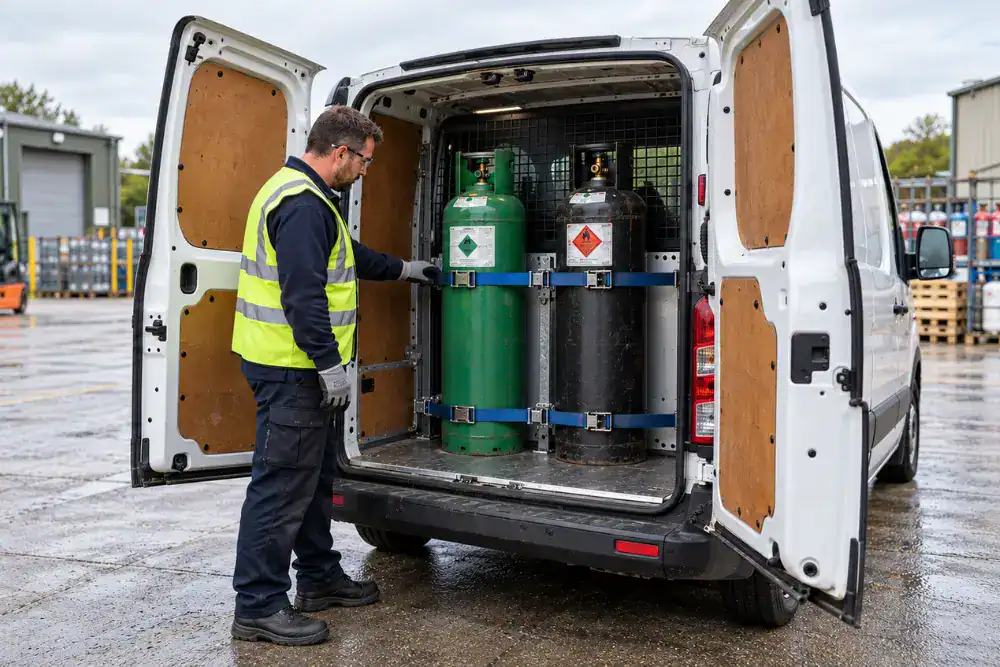
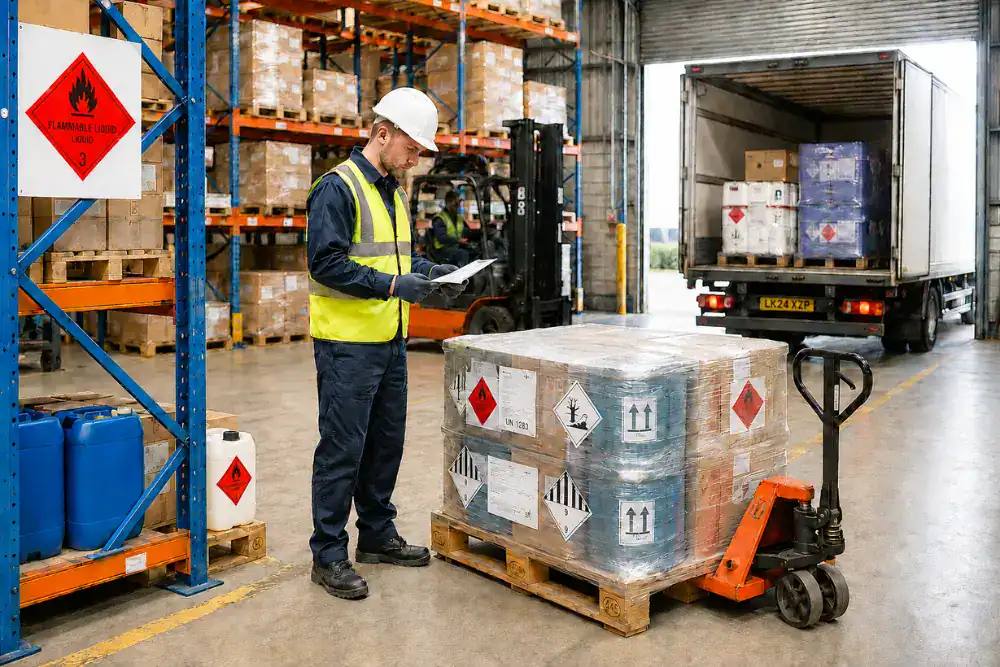
Learn how to check cylinder condition, valves, labels and test markings before loading. Confirm vehicle suitability, correct cylinder positioning, secure restraints, ventilation and the safety equipment required for the load.
Learn how to maintain ventilation, keep valves closed and monitor load security at safe stopping points. Recognise controls for ignition sources, excessive heat, passengers, parked vehicles and contamination in the load area.
Learn how to respond to collisions, breakdowns, suspected leaks and fires while following employer emergency procedures. Recognise when to withdraw, call emergency services, report incidents and seek advice before handling cylinders or continuing.
Disclaimer: This programme explains how to carry gas cylinders safely by road for work. It is aimed at smaller loads that do not require full ADR driver certification. Your employer will tell you which rules apply. Always follow the training, instructions and procedures your employer provides.
What You Will Learn
How to recognise the legal duties that apply to carrying gas cylinders by road for work
How load quantities affect transport requirements and when to seek advice about exemptions or driver certification
How to identify cylinder contents, check labels and markings and recognise documentation requirements
How to check cylinders, select suitable vehicle arrangements and position and secure the load
How to maintain appropriate ventilation when carrying cylinders in enclosed vehicles
How to recognise the safety equipment and personal protective equipment required for the vehicle and load
How to respond to a suspected gas leak, fire, collision or breakdown
How to follow journey precautions, monitor the load and report defects, unsafe conditions and incidents
Available in 20+ Languages
Course subtitles are available in multiple languages, including:
This course is approved by IIRSM – the International Institute of Risk & Safety Management.
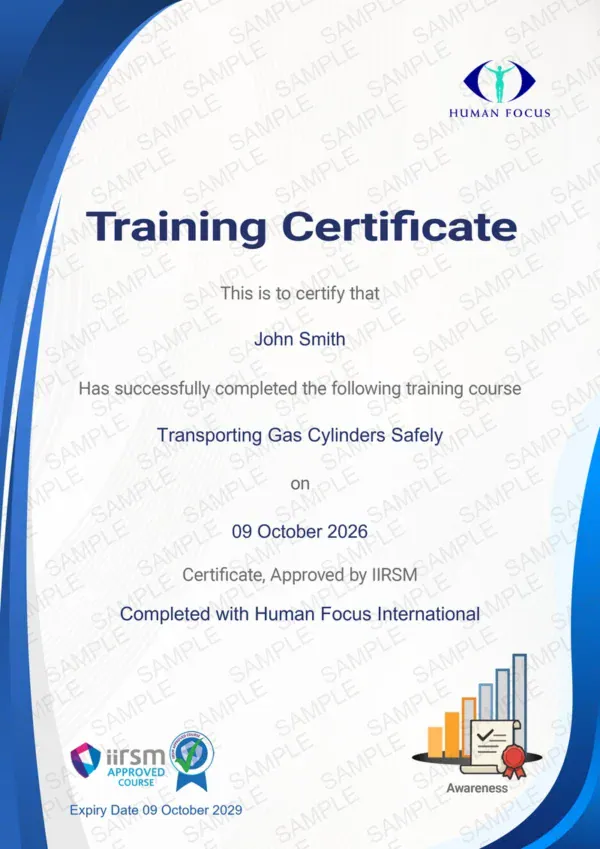
The course certificate includes:
User name
Company name
Course name
Completion date
Expiry date
Approval body
An IIRSM-approved course certificate will be available for download and printing instantly upon course completion.
Users must complete a final theory test before earning their certificate.
The end-of-course test is:
Fully online
Multiple choice
A score of 80% is required to pass.
Customer Feedback
Why Is Transporting Gas Cylinders Safely Training Important?
Small-load exemptions can be misunderstood, leaving employers with unsafe cylinder transport practices.
Cylinder checks, secure restraints and adequate ventilation remain essential, even where some transport requirements are relaxed. Loose or damaged cylinders can cause gas release, fire or serious injury during an otherwise routine journey.
Carriage of Dangerous Goods and Use of Transportable Pressure Equipment Regulations 2009 (CDG 2009) implement ADR 2025 requirements. The regulations apply in Great Britain, with equivalent legislation in Northern Ireland.
Employers must also address relevant duties under the Health and Safety at Work etc. Act 1974. The Provision and Use of Work Equipment Regulations 1998 apply to relevant work equipment.
British Compressed Gases Association (BCGA) Code of Practice 50 supports practical cylinder transport precautions. This course strengthens transport routines for workers carrying smaller loads without full ADR driver certification.
This training helps ensure:
Workers recognise that an exemption does not remove the need for safe loading and transport
Missing equipment, leaks or damaged cylinders are reported before the journey proceeds
Emergency actions follow employer procedures and workers’ training