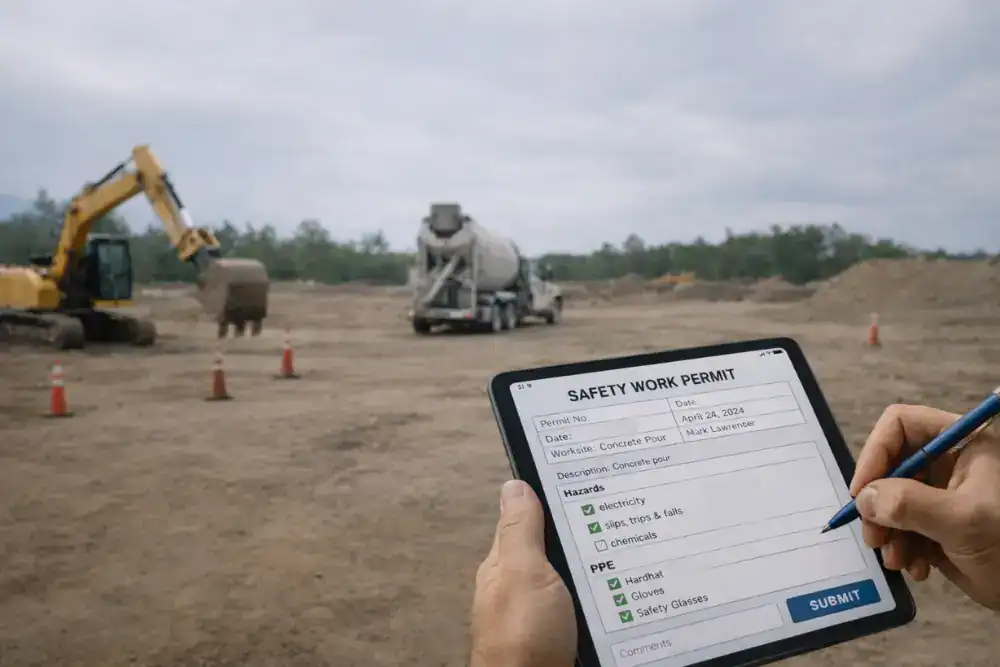
This IIRSM-approved Preventing Permit to Work System Failures course helps permit issuers, supervisors and dutyholders apply permit to work systems consistently on higher risk maintenance tasks. Through real incident case studies, it shows how failures recur when work starts without a permit, when permits do not reflect the task and precautions, and when handovers weaken communication.
The course supports briefings for workers and contractors, reinforcing how to keep permit status clear on site and when work should stop if conditions change.
This course is approved by the International Institute of Risk & Safety Management (IIRSM).
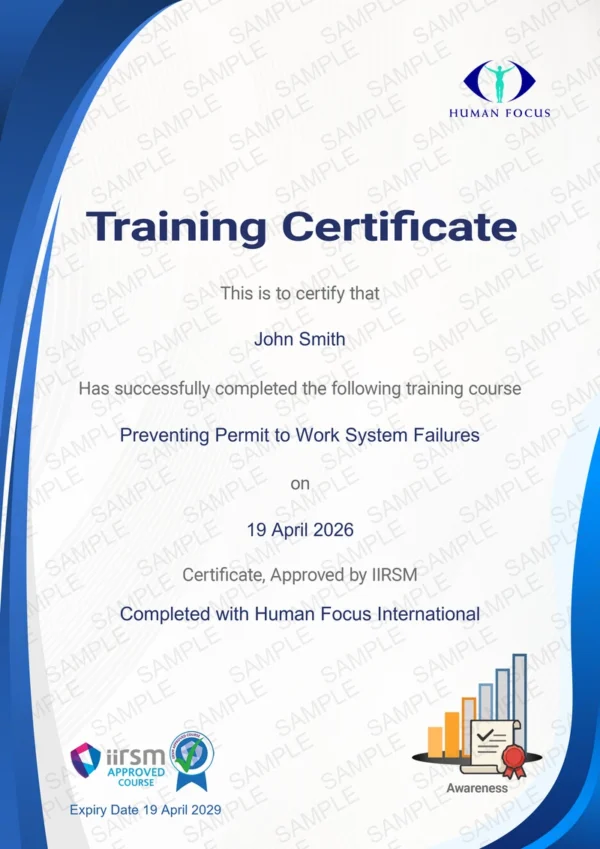
The course certificate includes:
User name
Company name
Course name
Completion date
Expiry date
Approval body
An IIRSM-approved certificate will be available for download and printing instantly upon course completion.
Users must complete an assessment before earning their certificate.
The end-of-course test is:
Fully online
Multiple choice
A score of 80% is required to pass.
Course attempts
Each licence includes one attempt at the final knowledge assessment.
If a trainee does not pass and wishes to try again, an additional licence is required. For their second attempt, the trainee can retake the assessment without repeating the course content.
Customer Feedback
Why Is Permit to Work System Failure Training Important?
Using permits to work for high-risk jobs can help minimise the risk of injuries and accidents at work and help businesses comply with the law.
The Health and Safety at Work Act 1974 requires business owners to provide adequate safe systems of work. It is part of their legal duty to ensure the health, safety and welfare of employees at work.
Although there are many safe work systems, the permit to work is designed to manage work activities where the risk factor is high. The consequences of failing to control these risks can result in severe injuries and accidents.
About Permit to Work System Failure Training
This online course on permit to work failures explores case studies where many workers lost their lives due to a deficiency in work systems. The course highlights common failures, such as the failure to follow these systems, and introduces several practical measures to promote an effective approach.
A permit to work system does not mean that a job is safe and that it can be undertaken without precaution. To be effective, workers need to know their role, be competent to carry it out, follow the system every time and remain vigilant. Anything less than this could cost lives.