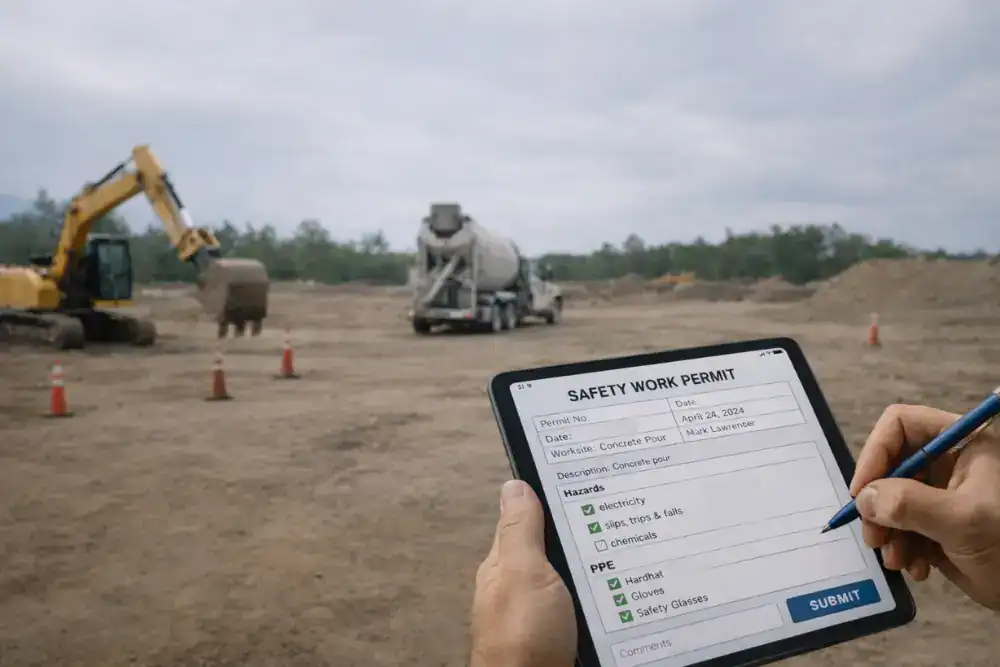
Permit-to-work failures during non-routine work are a leading cause of serious incidents. Work often starts, continues or finishes without the correct controls in place, leaving no automatic safeguard when risks change.
This IIRSM-approved Permit to Work Awareness Training for Contractors helps organisations ensure contractors understand when permits apply, what they require at each stage and how failures occur in practice. It gives a consistent foundation for applying permit systems correctly across sites, teams and tasks.
This Permit to Work Awareness Training course is designed for organisations that deploy contractors to sites where permit-to-work systems control high-risk activities.
It is suitable for:
External contractors and subcontractors
Contractor supervisors
Site managers
Individual workers and technicians
Maintenance and engineering operatives
It is particularly relevant for contractors working in high-risk environments, including confined spaces, electrical installations and areas involving hazardous substances.
Course Content
This course includes the following modules:
Understand the purpose of a permit-to-work system, how it works, and how it differs from other safety documents.
Learn which tasks and site conditions require a permit, such as hot work, confined space entry, electrical work, work at height, excavation and work involving hazardous substances.
Understand what is required of each role in the permit process, including issuers, receivers, workers and site management.
Follow each stage of the permit process — from planning and coordination through to acceptance, working under permit, managing changes and formal closure — using a realistic confined space scenario.
Recognise the most common failures that cause permit systems to break down and understand why these failures create serious legal and operational risks.
What You Will Learn
By completing this training, contractors will:
Understand when a permit-to-work is required and the risks of working without one
Apply permit conditions correctly and work safely within defined limits
Recognise high-risk activities that require permits, including hot work, confined space entry and electrical isolation
Carry out their responsibilities as issuer, receiver or worker at each stage of the permit process
Identify common permit failures before they create risk — and know what actions to take
Coordinate effectively with permit issuers and site supervisors throughout the work
Available in 20+ Languages
Course subtitles are available in multiple languages, including:
This course is approved by IIRSM – the International Institute of Risk & Safety Management.
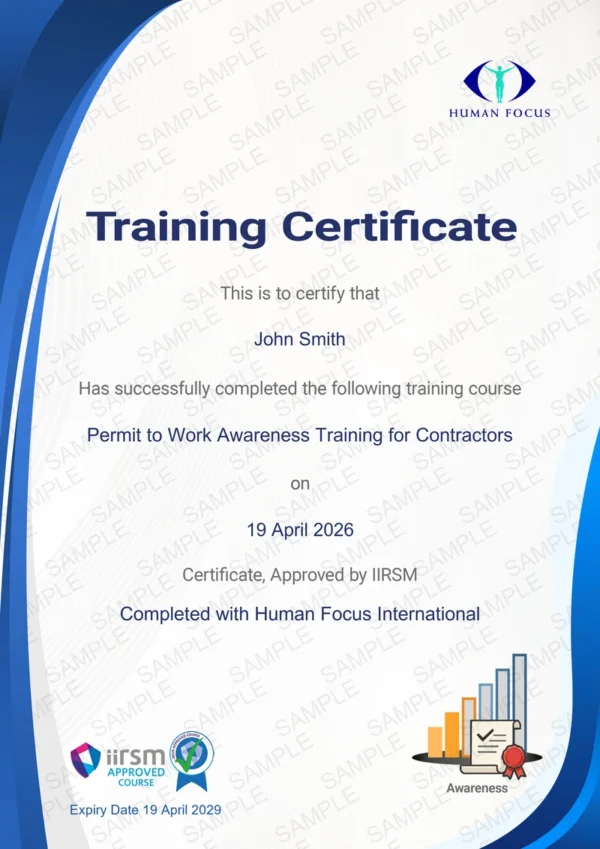
The course certificate includes:
User name
Company name
Course name
Completion date
Expiry date
Approval body
An IIRSM-approved course certificate will be available for download and printing instantly upon course completion.
Users must complete a final theory test before earning their certificate.
The end-of-course test is:
Fully online
Multiple choice
A score of 80% is required to pass.
Course attempts
Each licence includes one attempt at the final knowledge assessment.
If a trainee does not pass and wishes to try again, an additional licence is required. For their second attempt, the trainee can retake the assessment without repeating the course content.
Customer Feedback
Why Is This Training Important
Permit-to-work failures are a leading cause of serious and fatal accidents during non-routine work. These tasks can disable safety systems, expose live energy sources or bring workers into hazardous areas. If permit controls are not followed, there is no automatic safeguard.
The Health and Safety at Work etc. Act 1974 and the Management of Health and Safety at Work Regulations 1999 place clear duties on employers and workers to operate within safe systems of work.
HSE guidance HSG250 explains how permit systems should be structured and what each party is responsible for. On construction projects, CDM 2015 introduces additional requirements for planning and managing work safely.
In practice, failures occur when contractors do not fully understand what a permit requires. Common breakdowns include:
Starting work before a permit has been issued and signed
Continuing work after a permit has expired without revalidation
Assuming conditions from a previous shift or day still apply
Failing to return or formally close a permit after work is complete
These failures create risk for both contractors and the organisations that deploy them. Training ensures contractors understand what is required before work begins — not after something goes wrong.
How This Training Helps Your Organisation
This training helps organisations to:
Reduce variation in how permit conditions are applied across teams, sites and shifts
Improve contractor understanding of permit requirements before work begins
Strengthen compliance with HSE guidance and legal duties under UK regulations
Reduce the likelihood of incidents caused by permit failures
Provide training records to support audits, inspections and enforcement reviews
Start Your Permit-to-Work Training Today
Give your contractors a clear understanding of when permits apply, what they require and how failures occur in practice. This training helps ensure permit systems are followed consistently—reducing risk and supporting safe, compliant work across all sites.