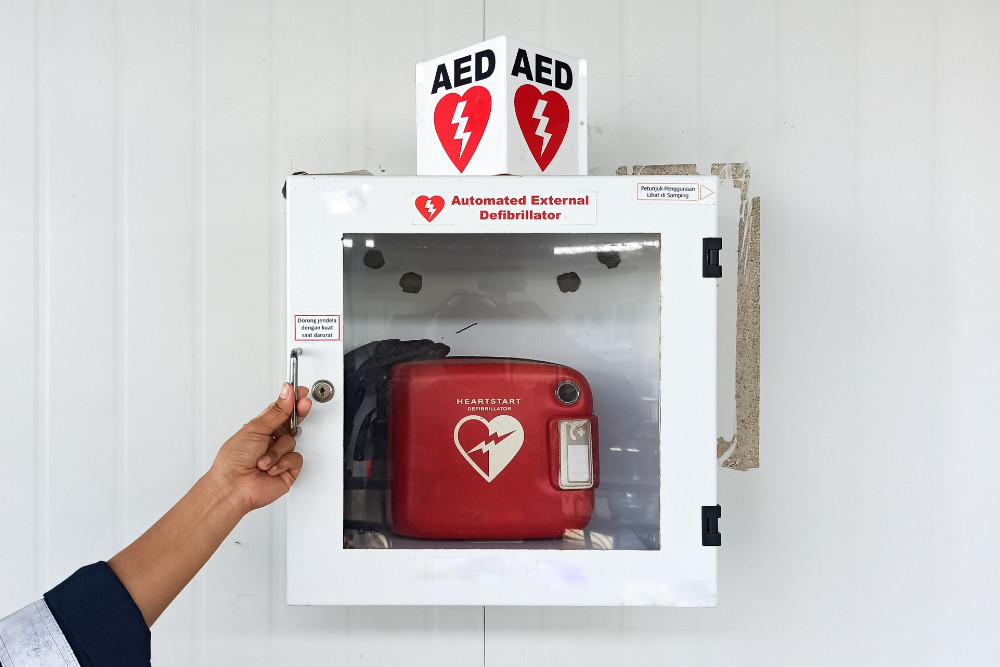
Prepare staff to respond quickly and confidently in an emergency
Refresh existing knowledge or learn the essentials of first aid. Know what to do in an emergency and how to manage common work-related injuries.
Prepare staff to respond quickly and confidently in an emergency
Refresh existing knowledge or learn the essentials of first aid. Know what to do in an emergency and how to manage common work-related injuries.

Every Human Focus course is independently reviewed and certified to ensure accuracy, legal compliance and relevance to industry standards. You get training that helps build capability, supports compliance and delivers credentials your workforce and regulators can trust.


Human Focus is a leading health and safety training provider, offering a wide range of online courses that provide guidance for both general and specific work areas. Online training offers benefits such as:
Our online first aid courses are designed to provide individuals with knowledge to recognise an emergency, respond appropriately and support a casualty until professional medical help arrives.
Courses cover a range of essential topics, building understanding of how to manage common injuries and the principles behind potentially life-saving interventions, including CPR (cardiopulmonary resuscitation), AED use and choking relief. Our Mental Health First Aid Training applies the same first aid approach to mental wellbeing, helping staff recognise when a colleague may be struggling and offer initial support. With this knowledge, employees can feel more confident and better prepared to act when it matters most.
Because they are delivered online, these courses do not replace the hands-on, competency-based training required to qualify as a workplace first aider. They are ideal for raising first aid awareness across a workforce and for helping qualified first aiders refresh their knowledge between practical courses.
Please note: These are online awareness and refresher courses. They are not a substitute for the practical, in-person First Aid at Work (FAW) or Emergency First Aid at Work (EFAW) qualifications required to certify a designated workplace first aider.
According to the Health and Safety Executive (HSE) statistics, 680,000 people suffered from a non-fatal injury at work and 40.1 million working days were lost due to work-related illness and injury in 2024/25.
First aid awareness promotes employee wellbeing and helps minimise the harm of workplace accidents and injuries, contributing to a safer and more productive work environment.
Building first aid awareness helps employees recognise emergencies and respond appropriately until professional help arrives. These courses cover essential topics such as CPR, AED use and immediate injury treatment to help users respond more confidently to a range of workplace medical situations.
Ensuring the safety and well-being of employees is a fundamental responsibility for any employer. To fulfil these responsibilities, it’s crucial to understand your obligations under the Health and Safety (First-Aid) Regulations 1981.
These regulations extend to all workplaces, regardless of the size or nature of your business. This includes organisations with fewer than five employees and the self-employed.
According to these regulations, employers must:
What counts as adequate and appropriate is determined by a first aid needs assessment. In some small, low-risk workplaces, an appointed person and a suitably stocked first aid kit may be enough — and an appointed person does not need formal first aid training. The assessment also determines how many first aiders you need and the qualifications they should hold. Fulfilling these responsibilities as an employer will help you contribute to a safer and more secure work environment for everyone.


First aid courses build the knowledge and confidence to act in an emergency. You’ll learn how to recognise common injuries and emergencies, respond appropriately and support a casualty until professional help arrives — knowledge that can make a real difference in those first critical minutes.
Yes. Once you pass the end-of-course assessment, you’ll receive a certificate that you can download and print immediately.
These certificates are valid for three years.
Your course certificate is valid for three years, so the course should be retaken every three years to keep it current. It’s also good practice to refresh your first aid knowledge more often — qualified first aiders are advised to refresh their training at least once a year — and these online courses are an easy way to do that.
Yes. All of our first aid courses are approved, certified or assured by established health and safety organisations, including IIRSM, CPD and RoSPA.
It depends on your role and what you need to achieve:
If your aim is to certify someone as a designated workplace first aider, you’ll need a practical, in-person qualification such as FAW or EFAW rather than an online awareness course. If you’re unsure which course fits, our team can help you choose.
No. These are online awareness courses, so on their own they don’t qualify you as a designated workplace first aider. Becoming a qualified first aider requires practical, in-person training that is assessed by a competent trainer — typically the First Aid at Work (FAW) or Emergency First Aid at Work (EFAW) qualification. Our online courses are designed to build first aid awareness and to help qualified first aiders keep their knowledge up to date between those practical courses.
Employers have a legal duty under the Health and Safety (First-Aid) Regulations 1981 to provide adequate and appropriate first aid for their employees, and this can include training. The regulations apply to every workplace — including small businesses with fewer than five employees and the self-employed. There is no single fixed requirement, though: the level of cover you need, including how many first aiders should hold a practical qualification, is determined by a first aid needs assessment based on the risks in your workplace.
There is no single fixed number — it depends on the findings of your first aid needs assessment. As a guide, HSE suggests the following minimum provision:
For low-hazard workplaces, such as offices:
For higher-hazard workplaces, such as construction sites or those using heavy machinery:
These are starting points rather than strict rules — your needs assessment may show you need more. Where it identifies that first aiders are required, they should be available whenever the need arises, which in practice means having a first aider on duty throughout the working day, with cover for breaks, absences, holidays and shift patterns. For a fuller explanation, see our guide on how many first aiders you need.
A first aid needs assessment is a review that helps you decide what first aid provision your workplace requires — including how many first aiders, as well as what equipment and facilities you need.
It considers factors such as whether your workplace is low or high-risk, how many employees you have, whether everyone works on-site, your history of accidents, and whether members of the public come into contact with your workplace. As well as guiding your provision, it helps demonstrate to the authorities that you are meeting your legal duties. Our First Aid Risk Assessment Training walks you through how to carry one out.
A mental health first aider is a designated member of staff who acts as a first point of contact for colleagues experiencing emotional distress or a mental health issue.
The role tends to suit people who are approachable and regularly interact with others — for example, HR professionals, managers and team leaders, health and safety officers, customer-facing staff, teachers and first responders. Their job is to recognise when someone may be struggling, offer initial support and signpost them to professional help — not to act as a counsellor or therapist.
Choosing mental health first aiders across different teams, sites and shifts helps make sure support is always within reach. Our Mental Health First Aid Training helps build the awareness and supporting knowledge for this role. As awareness training, it does not qualify learners to diagnose, treat or provide clinical mental health support.