Cognitive task analysis (CTA) is a structured approach to understanding the cognitive work that underlies human performance – how people perceive situations, build understanding, make decisions, and take action (Pemberton & Mooney, 2023).
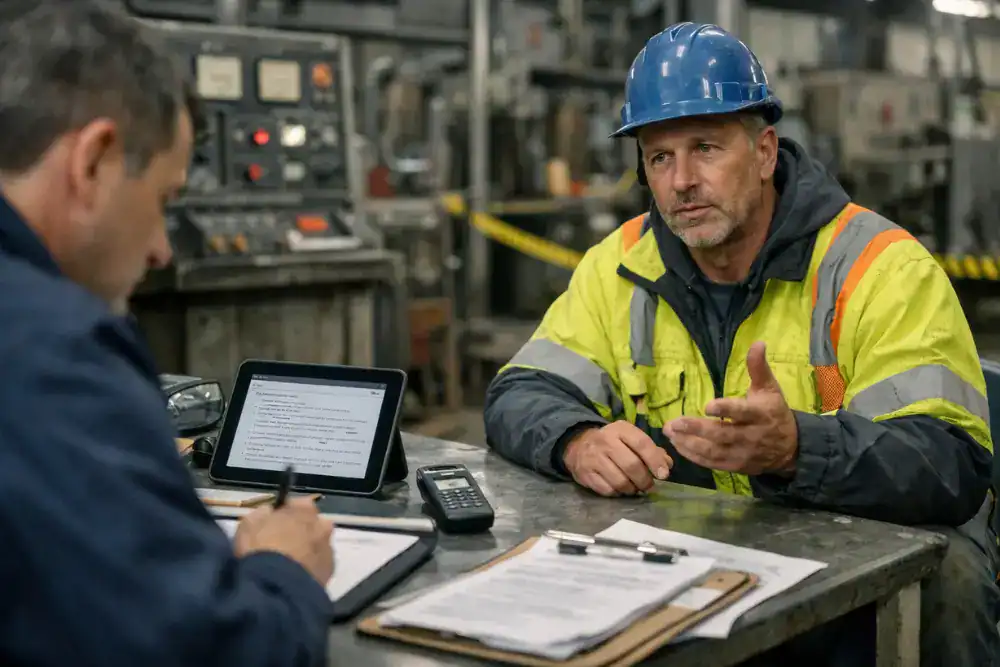
In the context of accident investigation, CTA interview techniques are designed to explore the headspace: not just what happened, but how people were thinking at each critical decision point – a more complete form of accident investigation interview techniques.
I applied a CTA approach in the above research project and demonstrated that this approach can generate qualitatively different and substantially richer learnings following a serious accident (Pemberton & Mooney, 2023).
Where the conventional investigation had gathered surface-level workplace accounts of events, the CTA interviews revealed the cognitive work underlying those events: what information was being used, what cues were being perceived or missed, what the individuals understood the situation to be at each critical juncture, and what would have needed to be different for different decisions to have been made.
The contrast was stark. CTA interviews are substantially longer and more intensive than conventional accident investigation interviews – and that depth is not incidental, it is the point. But more importantly, what they deliver is qualitatively different: cognitive insights and positive capacities that conventional interviews simply cannot surface.
To give a concrete example: a conventional investigation interview might record a workplace account such as “I checked pressure gauge before proceeding,” a CTA interview would go further and might include comments such as “the pressure gauge was telling me was probably safe to proceed – but it does not tell you the whole picture – you have to make a call in the information you have at that point – I never imagined it could have affected the process as it did.
This type of richer narrative explores three cues the operative was sensing: the goals they had, what their mental model of the bigger picture was, and how these formed their decision-making.
Critically, as we will see, the richest learnings come from comparing the cognitive approach of this involved with resident experts. This shines a light on the difference between knowing what went wrong and understanding what needs to go right.
It is now also my firm view that recording interviews and using AI-based transcription and analysis is becoming fundamental to getting the depth of insight that CTA interviews can generate. Properly recorded and transcribed CTA interviews provide the raw material – the clay – from which a meaningful learning structure can be built.
In my research, the CTA interview approach identified seven difficult decisions in the accident sequence. A difficult decision is one that a less experienced practitioner would be likely to get wrong – situations of genuine cognitive complexity, where the right course of action is not obvious and where expert pattern recognition makes a critical difference to outcomes.
For each of these difficult decisions, I built a Decision Requirements Table (DRT): a structured document that captures the cognitive demands of each decision point, the cues experts use to read the situation, and the mental models – so-called cognitive diamonds – that underpin expert judgement.
The DRT is the bridge between investigation insight and practical application: it provides the data needed both for simulation training design and for improving system and task design to better support people when facing these decisions in critical operational contexts.
Both technical cognitive skills and non-technical safety skills – particularly situational awareness, communication, and teamwork – were implicated across these decision points (Pemberton & Mooney, 2023).