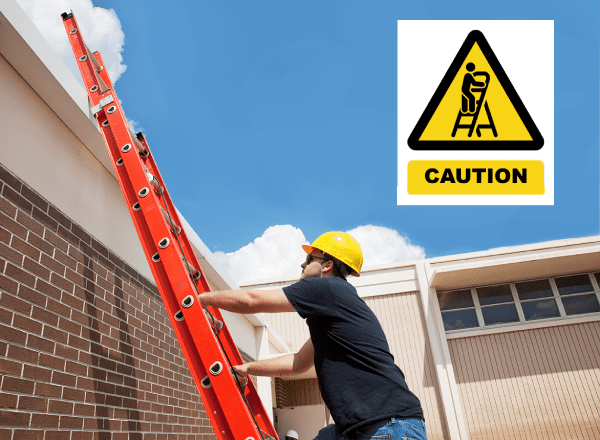
If you are required to use a ladder at work, you must be aware of the hazards and dangers you are exposed to. The hazards that workers face when working on ladders include:
Poor Selection
Different ladders are designed for different types of work. It is important that the ladder you choose is correct for the task and can support the scope of work. This includes height, weight capacity, and equipment used during the task.
Failure to Inspect Ladders
Pre-use inspection is the cornerstone of ladder safety. Parts on the ladder can become worn or damaged over time. This can cause ladders to break, bend, or collapse when the worker is performing a task.
Ground Placement
To be stable, a ladder must be placed on solid ground. Sandy or dirty, damp, wet, or uneven ground placement will cause your ladder to slide out from under you.
Improper Set Up
Ladders don’t just need to be secure on the ground, they also need to be secure at the top. They need to be leaned against a solid surface and properly extended. If not, the ladder will remain at risk of being toppled.
Failure to Maintain Three Points of Contact
Three-point-contact means keeping two hands and one foot, or two feet and one hand on the ladder at all times during use. It may seem simple, but failing to maintain three-points of contact has led to uncountable accidents involving slipping off of a ladder or a loss of balance that results in a fall.
Overloading
Overloading the ladder can often lead to tipping or buckling. You must ensure that tools and materials added to the ladder’s weight do not exceed this limit.
Overreaching
Overreaching is a common cause of ladder-related accidents. This occurs when someone working on a ladder reaches too far away from the ladder, thereby compromising his/her balance and causing it to tip over.
Placement Near Other Objects
Placing the ladder near hazardous energy or objects can be extremely dangerous. This includes places where there is traffic, construction activity, or energised sources such as power cables.
Weather Conditions
Weather conditions pose a significant hazard to ladder safety. Rain, snow, excessive humidity, ice, and high winds can make the ladder slippery and unstable.
Lack of Suitable Equipment
It is highly important that proper gear is worn before mounting the ladder. Suitable footwear, gloves, safety helmet, and carabiners prevent slipping and fall in case of unforeseen circumstances.
Lack of Training
Most importantly, all workers must have proper ladder safety training to ensure a safe work environment. Anyone using a ladder must understand how to complete a pre-use check every time the ladder is used.
Formal ladder inspections should also be carried out regularly and recorded. Anyone responsible for these inspections must be trained on how to do them properly. Online ladder safety training and working at heights training online is an excellent way to ensure this training is provided with records readily available upon completion.