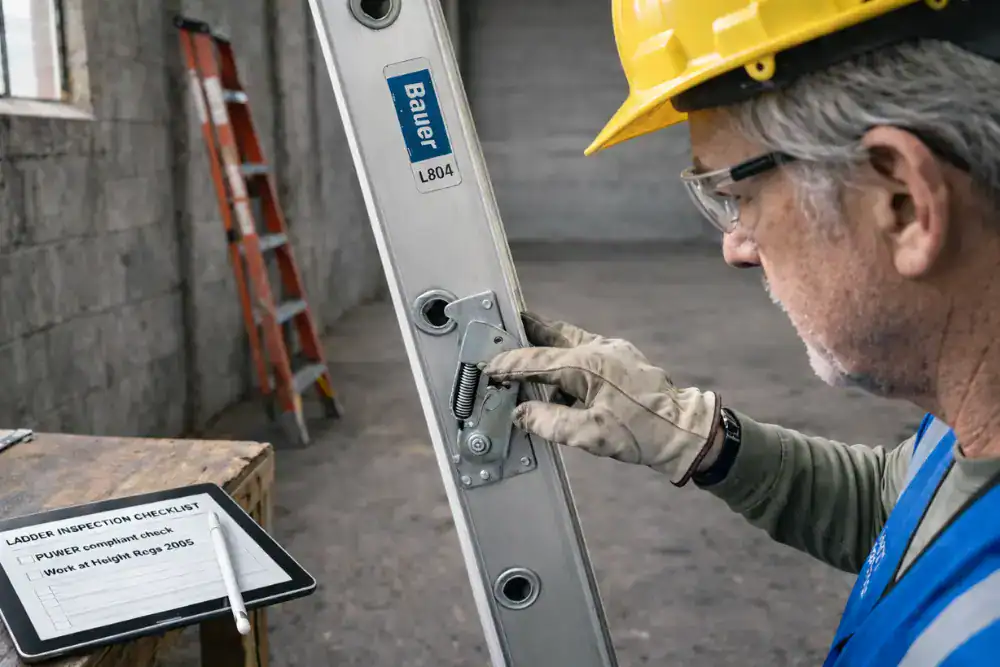
Ladder inspection sits within the duties created by the Work at Height Regulations 2005 and PUWER 1998, but those duties are risk-based rather than a universal requirement for the same formal inspection regime for every ladder.
This article sets out what a formal ladder inspection must verify for each ladder type, where the predictable failure points in inspection quality lie, and what the system conditions are that allow defective equipment to remain in service despite an inspection record existing.
That gap between paper compliance and genuine control persists because the conditions in which ladder inspections actually happen are rarely reflected in how the process is designed. In many organisations, inspectors covering large inventories work under time pressure that rewards completion over depth. Borderline calls – on corrosion depth, locking mechanism wear, stile distortion – take time and confidence; under that pressure, a marginal pass can become the easier outcome.
Authority gradients reinforce this: an inspector without a clear organisational mandate may find the removal-from-use decision challenged when the equipment is needed and work is in progress. HSE’s enforcement record for falls from height consistently identifies failures at the management system level – inadequate planning, absence of a functioning inspection regime, unclear accountability – rather than attributing outcomes to a single missed defect. The problem is structural, not attentional.
Both pieces of legislation make competency a condition of compliance, not an optional enhancement – a point the checklists and analysis below are designed to support.