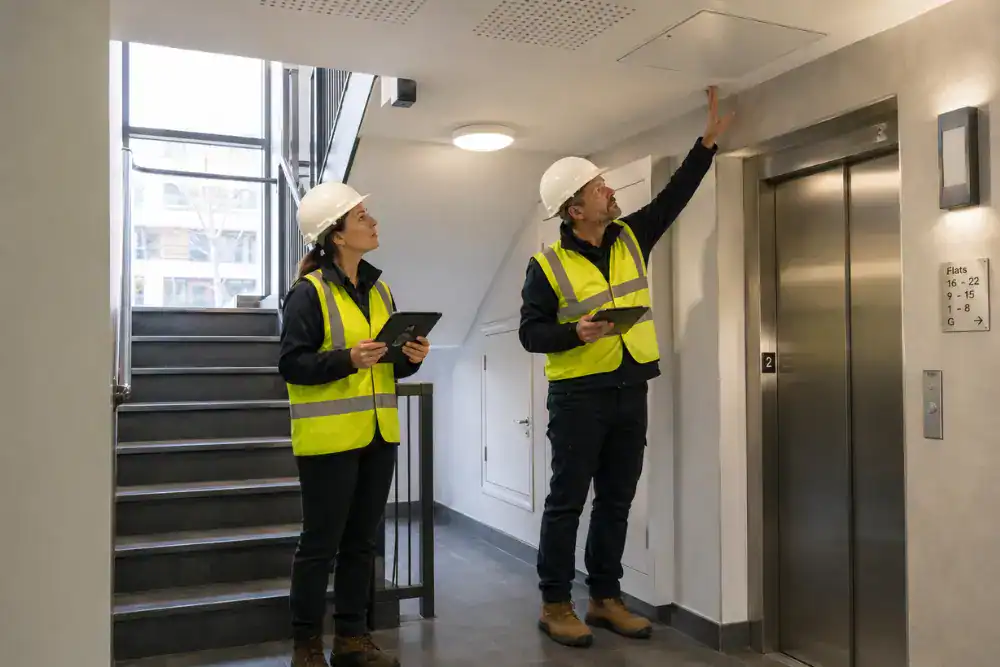
Higher-risk buildings concentrate risk. A failure in compartmentation, a missed structural defect or an unchecked fire door affects every household in the building at the same time. The Building Safety Act 2022 places responsibility for preventing and mitigating those risks on named duty holders. Accountable Persons and Principal Accountable Persons hold that responsibility for as long as the building is occupied.
Those duties are proving difficult to discharge in practice. The Building Safety Regulator reported that 66% of Building Assessment Certificate applications made in 2026 were refused, with assessments taking around twice as long as expected. The Regulator has found that refusals often occur because applications focus on process compliance rather than effective management of safety. In refused cases, applications did not show adequate arrangements to address the risks of fire spread and structural failure.
This shows that paperwork alone is not enough. Duty holders must be able to show how risks are identified, who is competent to manage them, how safety-critical work is controlled, and how residents are kept informed.
Under the Act, duty holders must also:
- Assess and keep under review the building safety risks in their part of the building
- Take all reasonable steps to prevent and mitigate fire spread and structural failure
- Maintain the golden thread of building safety information digitally and keep it current
- Report qualifying safety events to the Regulator through mandatory occurrence reporting
- Appoint competent people to assist with their duties and monitor their competence and capacity
Principal Accountable Persons carry further duties. They must register the building, establish and maintain the mandatory occurrence reporting system, prepare and update the safety case report and provide it when required by BSR, including with a BAC application, and prepare, maintain and act in accordance with a resident engagement strategy.
Accountability cannot be transferred. Appointing a managing agent, consultant or contractor moves the task, not the legal responsibility. Enforcement can result in Part 4 compliance notices, special-measures action and criminal prosecution, with fines or imprisonment available for certain offences. The Act extended the limitation period for certain Defective Premises Act 1972 claims to 30 years retrospectively and 15 years prospectively
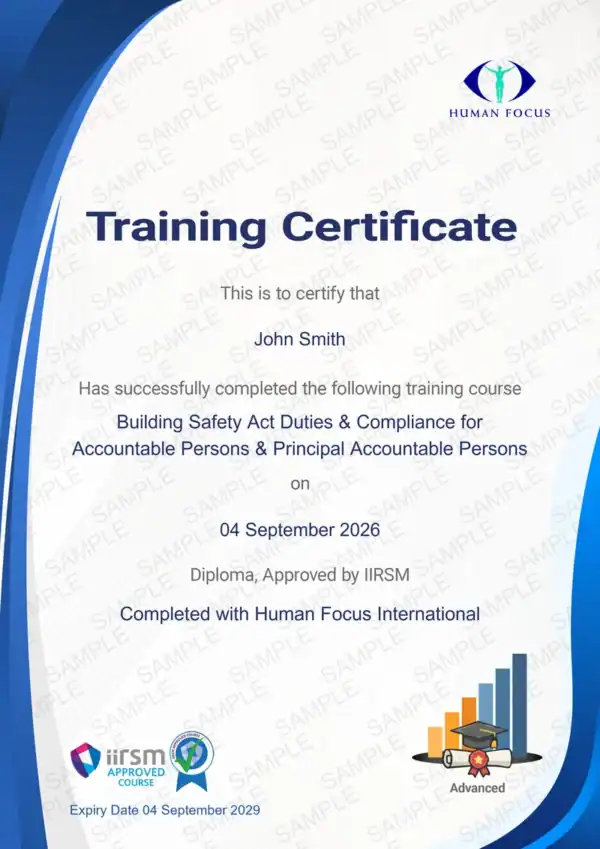
Training gives duty holders the understanding they need to meet these duties consistently and to recognise when the arrangements around them are not adequate.
How This Training Helps Your Organisation
This course helps organisations responsible for higher-risk buildings:
- Strengthen duty holders’ understanding of what the Building Safety Regulator expects to see, reducing the risk of refused or delayed Building Assessment Certificate applications
- Improve the quality of safety case reports by shifting teams from listing controls to demonstrating how risks are managed
- Understand how AP and PAP duties interact with the changes introduced by the Fire Safety Act 2021 [1.1]and the Fire Safety (England) Regulations 2022, including the separate responsibilities of Responsible Persons
- Apply one consistent standard of building safety understanding across every building, site and team in a portfolio
- Support competence assurance by recording structured training as part of the golden thread evidence base
- Improve oversight of contractors, consultants and managing agents so appointments are properly scrutinised and documented
Start Your Building Safety Act Training Today
Give the people who hold Accountable Person and Principal Accountable Person duties a clear understanding of what the Building Safety Act 2022 requires of them. Training your duty holders now helps you identify building safety risks earlier and evidence how those risks are managed. It also helps you show the Building Safety Regulator that your arrangements work in practice, not just on paper.