Excavator Safety Awareness Training for Site Staff
schedule
Course Duration: 30+ minutes
This IIRSM-approved Excavator Safety Training helps construction teams standardise safe working practices around excavators, reduce contact risks and demonstrate that they understand the key rules.
It explains how hazards, legal duties and controls such as exclusion zones, marshalling, signalling, daily checks and defect reporting work together in real site conditions to support consistent, safer behaviours.
The course gives supervisors and duty holders a credible way to brief site staff and demonstrate that they understand the key rules for working safely near excavators.
Explains what operators, pedestrians and duty holders must do on site and how clear rules help prevent accidents and make work easier to supervise.
Shows how common excavator dangers occur and how staff can stay out of danger zones and challenge unsafe behaviour before someone is hurt.
Explains how planning, design and choosing the right equipment remove hazards early, reducing the controls needed during live operations.
Details how isolation, barriers, visibility aids and secure attachments prevent contact with machinery and help keep people and excavators safely separated.
Outlines site rules, traffic routes, supervision and communication practices that keep people and excavators apart and reduce confusion between contractors.
Defines the training, cards and authorisation required to operate, guide or work near an excavator, helping duty holders set consistent standards across contractors.
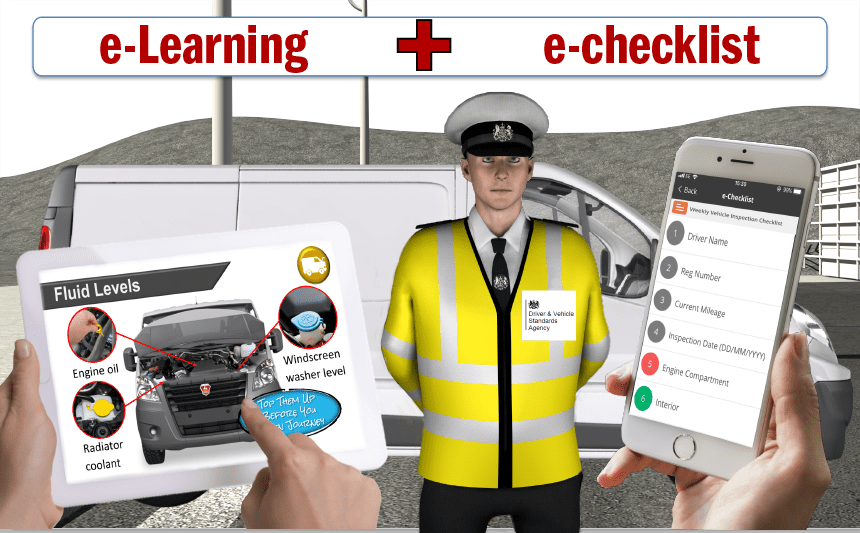
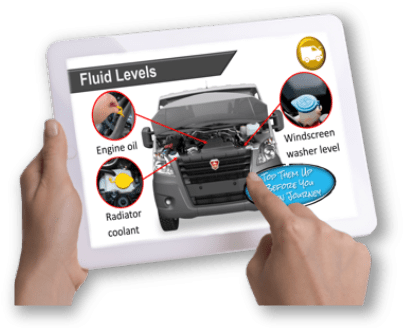
Shows how to carry out daily checks, isolate unsafe equipment, report defects and keep reliable records so faults are fixed quickly and repeat issues are spotted early.
What You Will Learn
Key duties for working safely around excavators.
Common hazards and the behaviours that prevent contact incidents
How elimination and engineering controls reduce risk before procedural controls
Site rules, routes, exclusion zones and marshalling that keep people and excavators safely separated
Training, competence and authorisation expectations for operators, marshals and pedestrians
Daily checks, defect reporting and safe isolation of equipment when faults are found
Available in 20+ Languages
Course subtitles are available in multiple languages, including:
This course is approved by the International Institute of Risk & Safety Management (IIRSM).
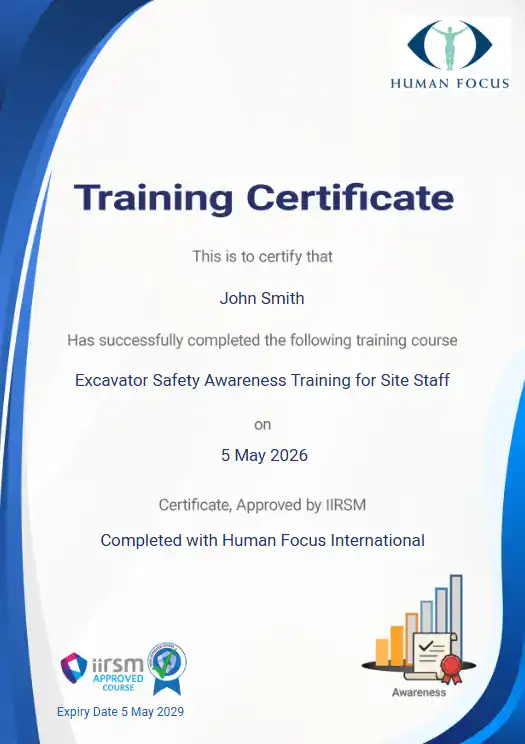
The course certificate includes:
User name
Company name
Course name
Completion date
Expiry date
Approval body
An IIRSM-approved certificate will be available for download and printing instantly upon course completion.
Users must complete a final theory test before earning their certificate.
The end-of-course test is:
Fully online
Multiple choice
A score of 80% is required to pass.
Course attempts
Each licence includes one attempt at the final knowledge assessment.
If a trainee does not pass and wishes to try again, an additional licence is required. For their second attempt, the trainee can retake the assessment without repeating the course content.
Customer Feedback
Why Is the Excavator Safety Awareness Training for Site Staff Training Important?
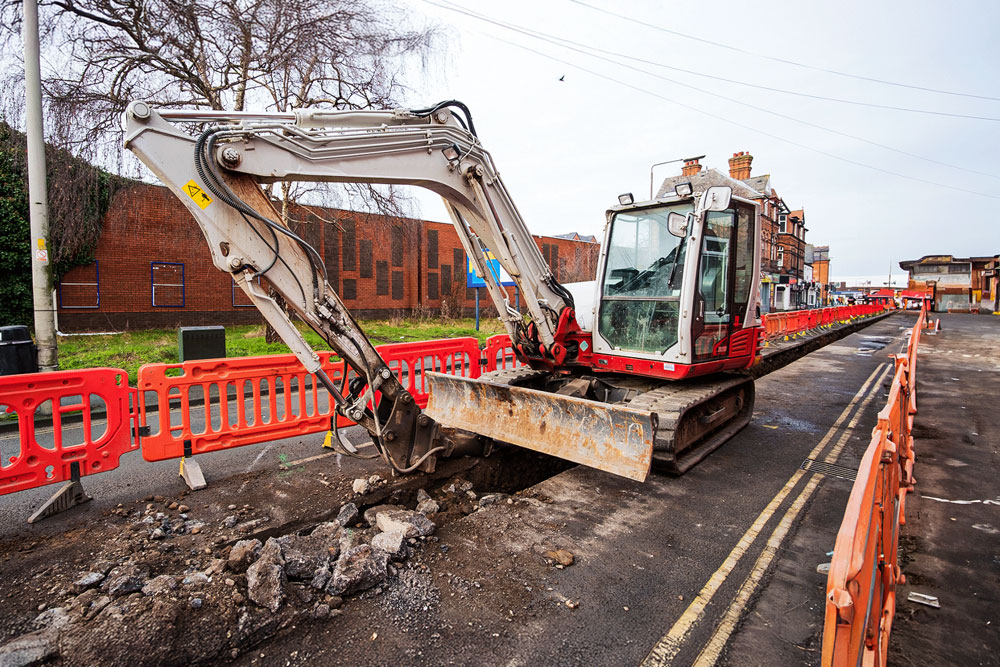
Excavators are linked to some of the most serious incidents on construction and civil engineering sites. The people most at risk are often groundworkers, marshals, subcontractors and visiting staff working on foot.
When site layouts, rules and behavioural expectations vary between projects, gaps appear in how movements around excavators are controlled. Staff may rely on assumptions about what operators can see, how a machine will move or which approach routes are safe.
This IIRSM-approved Excavator Safety Training gives you a simple, consistent way to brief non-operators on how to work safely around excavators. It sets shared rules for where people can walk, how to approach a machine, which signals to use and how to report faults. This reduces guesswork around machine movements and makes day-to-day supervision more straightforward.
As a result, this training supports you to
Brief crews and contractors on the same site rules for working around excavators
Clarify where people can walk, how to approach a machine, and which signals to use
Support more consistent day-to-day supervision of excavator movements across sites and shifts
Help you show clients, principal contractors and inspectors that non-operators have received structured instruction on excavator risks
Taken together, it provides a consistent baseline for safe behaviour around excavators, so key messages are less reliant on informal, site-by-site briefings.