If you manage a noisy workplace, unmanaged exposure to loud environments can leave employees with permanent hearing loss, tinnitus and long-term health issues.
Under the Control of Noise at Work Regulations 2005, you have a legal duty to assess noise risks, reduce exposure and provide effective protection.
This guide shows you how to recognise unsafe noise levels, measure and monitor exposure, and put controls in place so your business stays compliant while protecting your team.
Occupational noise exposure is one of the most widespread workplace health risks in Britain. More than one million employees regularly work in environments that could harm their hearing.
The scale of the problem is clear in recent figures from the Health and Safety Executive (HSE):
- An average of 12,000 workers annually report hearing problems caused or worsened by their job.
- In 2023 alone, 100 new cases of occupational deafness were formally assessed under the Industrial Injuries Disablement Benefit (IIDB) scheme.
The real risk for employers is that hearing damage develops gradually and is often missed until it becomes permanent. Because the harm is irreversible, employers must focus on early identification and robust, day-to-day control of exposure — and be able to show clear evidence that those controls are working.
The real risk for employers is that this damage develops gradually and is often missed until it becomes permanent.
The Control of Noise at Work Regulations require a structured approach to noise management. Employers must assess exposure, reduce noise at source, set and supervise protection rules, maintain control measures, monitor health, and review risks regularly.
The sections that follow explain what each duty requires in practice.
Every employer must start by understanding where noise exposure could realistically harm staff. A noise risk assessment is the tool that makes this visible. In practice, a useful assessment will:
- Identify the tasks, equipment or locations where exposure is likely to approach or exceed action values.
- Highlight workers who may need extra protection, such as new starters, young workers or those with existing hearing concerns.
- Estimate daily or weekly exposure using real working patterns, not assumptions.
- Set out the controls required to bring exposure down to an acceptable level.
- Provide a clear record of findings, decisions and outstanding actions so progress can be tracked.
The assessment must be revisited when equipment, processes or staffing change, ensuring any new exposure routes are identified early and addressed before risks escalate.
Once the assessment shows where exposure is too high, the next step is to reduce it as far as reasonably practicable. This means prioritising measures that remove noise at source before relying on administrative controls or PPE. In practice, effective control work involves:
- Selecting quieter tools or machinery when replacing or upgrading equipment.
- Using engineering measures (such as barriers, enclosures or damping) to reduce noise at its origin.
- Organising work so staff spend less time in high-noise areas, where engineering controls alone are not enough.
- Introducing technical or process controls in consistently noisy zones to keep exposure within legal limits.
- Keeping a record of the controls chosen and the reasoning behind them, so decisions can be justified if challenged.
The aim is to reduce exposure through practical, sustainable measures. Relying solely on hearing protection should occur only after all reasonable control options have been explored.
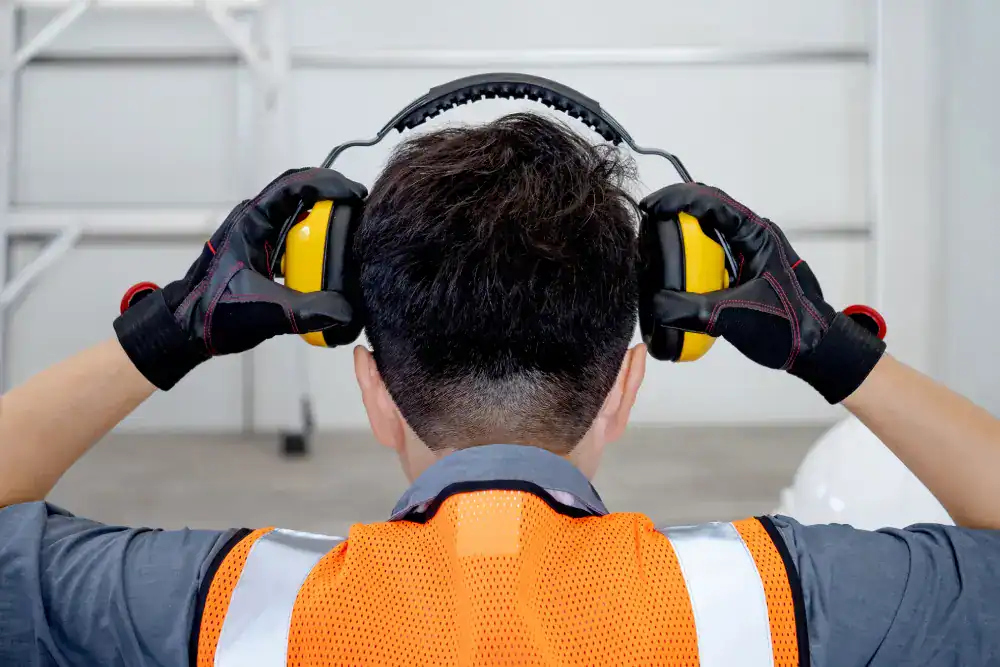
If exposure cannot be reduced to a safe level through controls alone, employers must issue suitable hearing protection. This step acts as the final layer of defence and must be applied consistently. Effective arrangements include:
- Selecting earplugs, earmuffs or specialist protection that matches the task and environment.
- Defining where hearing protection is mandatory and marking these areas clearly.
- Supervising work to ensure protection is worn correctly and at all necessary times.
- Keeping records that show how protection was selected and how its use is monitored.
Noise-control measures and hearing protection only work when they are kept in good condition and used properly. Employers must ensure that controls remain effective throughout daily operations. This involves:
- Carrying out regular checks and servicing of enclosures, silencers and other control measures to confirm they are performing as intended.
- Replacing hearing protection that is damaged, worn out or no longer suitable for the task.
- Ensuring staff use equipment correctly and consistently, with supervisors addressing any gaps promptly.
- Keeping simple maintenance and inspection records to trace and address issues early.
Employees should report defects as soon as they notice them, allowing problems to be fixed before exposure increases.
Where your assessment shows that staff may be at risk of hearing damage, employers must put health surveillance in place. The aim is to detect early hearing changes and identify when working conditions may still be exposing people to excessive noise. Effective arrangements include:
- Offering routine hearing checks (audiometry) at intervals appropriate to the level of risk.
- Reviewing results to spot patterns or early signs that exposure may still be above safe levels.
- Acting promptly when changes are detected by adjusting work practices or providing additional support to affected workers.
- Keeping clear records of appointments, results and follow-up actions so you can show how hearing is being monitored over time.
Workers need clear information and practical training so they can protect themselves and follow the noise controls you’ve put in place. Effective arrangements include:
- Explaining how noise exposure can damage hearing and what early symptoms staff should look out for.
- Training workers in safe ways of working, including how to use hearing protection correctly and when it is required.
- Telling staff about health surveillance so they understand why hearing checks are offered and what to expect.
- Creating simple opportunities for workers to raise concerns or comment on noise risks, such as during briefings or toolbox talks.
- Keeping a record of the information and training provided, including dates and attendance.
Well-informed employees are more likely to comply with controls and take ownership of their own safety.
Noise risks can change over time, so employers must ensure that existing controls continue to keep exposure at safe levels. A practical review process includes:
- Monitoring changes in machinery, processes or staffing that could increase exposure.
- Looking at health-surveillance results in groups to spot early signs that certain tasks or areas may still be too loud.
- Rechecking noise levels when equipment ages, is replaced or is used differently from when it was first assessed.
- Recording any updates made to assessments or controls so there is a clear history of decisions.
Regular review helps ensure that noise risks are identified early and managed before they escalate.
The law sets out clear limits on workplace noise. These limits cover both the average noise level over a working day or week and short bursts of very loud noise (known as peak sound levels). Once these levels are reached, employers must take action to protect staff.
At an average of 80 dB(A) over a day or week, or a peak of 135 dB(C) from a sudden noise, employers must act to manage risks. At this stage, the law requires them to:
- Carry out a noise risk assessment to identify where workers are at risk.
- Provide workers with information and training about noise hazards.
- Put basic noise-reduction measures in place.
- Make hearing protection available to any staff who want it.
When average exposure rises to 85 dB(A) over a day or week, or there are peaks of 137 dB(C), employers must take stronger measures. These include:
- Reducing noise at its source, for example by using quieter machinery or isolating loud equipment.
- Making hearing protection mandatory in noisy areas.
- Offering regular hearing checks to employees who are often exposed at this level.
The regulations also set a maximum level that must never be exceeded. This corresponds to an average of 87 dB(A) per day or week, or a sudden peak of 140 dB(C). If noise reaches this level, employers must take immediate steps to reduce exposure
The Noise Regulations require employers to give workers information, instruction and training whenever they may be exposed to harmful noise. Staff need a clear understanding of the risks and the steps they can take to protect their hearing in day-to-day work.
Our IIRSM-approved Noise Awareness Training in Industry course is designed to meet this need. It explains how noise exposure can damage hearing, what early signs workers should look out for, and the practical measures that reduce risk.
Providing this training helps workers make safer decisions and gives employers a straightforward way to show how noise risks have been communicated and managed.