If you’re responsible for keeping your workplace compliant and your team safe, you’ve probably looked at safety training budgets and felt that familiar tension: how do you deliver quality training without breaking the bank?
The good news is that cost-effective safety training doesn’t mean compromising on quality or compliance. With the right approach, you can protect your people and your purse strings at the same time.
Workplace safety training sometimes feels like a box-ticking exercise. But behind every course completion certificate is a genuine opportunity to prevent accidents, reduce sick leave, and create a culture where everyone goes home safely at the end of the day.
The challenge is that traditional classroom-based training can cost around £1,500 per person for accredited courses like NEBOSH, and pulling your team out of work for full-day sessions creates hidden costs in lost productivity.
For many safety managers, the question isn’t whether to train staff—it’s how to do it smartly. The most cost-effective training plans are role- and risk-based, aligned to what people actually do and the hazards identified in your risk assessments.
When comparing cheap employee safety training online, it’s easy to focus solely on the ticket price. But the true cost includes:
- Course fees – anything from tens to several hundred pounds per person
- Time off the job – classroom training means lost productivity
- Administration – tracking completions, chasing certificates, and maintaining records
- Compliance risk – incomplete or outdated training can result in penalties
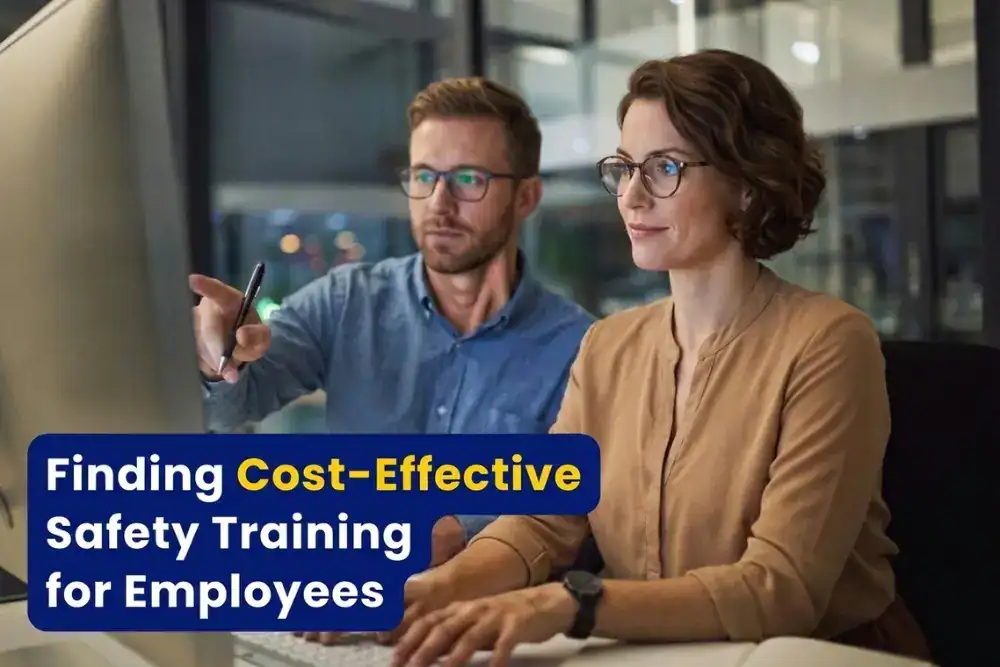
e-Learning has transformed this equation. Online workplace safety courses are considerably cheaper to enrol in and deliver, while bundle pricing can bring the per-employee cost down even further.
This is the sweet spot for most organisations. Self-paced courses allow employees to complete training during quieter periods, at their desks or even at home. Prices for essential health and safety courses on topics like manual handling, fire safety, COSHH, and working at height typically start at £25–£35 + VAT per person.
When evaluating an online safety training platform, look for recognised course approval (e.g., CPD/RoSPA/IIRSM where relevant), clear learning outcomes, and a Learning Management System (LMS) that supports role-based assignment, automated reminders, completion reporting, and audit-ready record keeping.
Human Focus provides 300+ certified online courses via a compliance-focused LMS that centralises enrolments, tracks progress, and generates reports without relying on spreadsheets and manual chasing. For teams managing renewals across multiple roles or sites, those automation features can significantly reduce administration and make it easier to demonstrate training status during internal reviews or external audits.
If you’re training a larger team or need ongoing access to courses, bulk bundles can dramatically reduce costs. Many providers offer pay-as-you-go bundles that lower the unit price the more you buy and custom pricing options for large teams. This makes budget forecasting easier as you scale.
Organisations like the Health and Safety Executive (HSE) offer free guidance, toolkits, and downloadable resources. While these won’t give you completion certificates or integrated tracking, they’re excellent for supplementing formal training and keeping safety top of mind.
The trade-off? You’ll need to invest time in creating your own training materials, delivering sessions yourself, and manually recording attendance—an administrative burden that often costs more in the long run than affordable online courses.
Sometimes the most cost-effective approach isn’t the cheapest—it’s the one that delivers the best outcomes. Blended learning combines short online modules with occasional in-person workshops for high-risk or hands-on activities (like first aid or equipment operation). This hybrid model keeps costs down while ensuring employees get the practical experience they need.
With so many options available, how do you find genuinely cost-effective training without compromising on quality? Here are a few quick checks:
- Accreditation: Look for approval from recognised bodies such as CPD, RoSPA, and IIRSM. This ensures content meets industry standards.
- LMS features: Can you track who’s completed what, run reports for audits, and set reminders for renewals? A good platform saves hours of admin.
- Content depth: A 10-minute course may help build awareness for frontline workers, but those with enhanced responsibilities may need more in-depth training.
- Support: What happens if someone gets stuck or you need to add more users quickly? Provider support is non-negotiable in H&S training.
Buying a course is one thing; ensuring your team actually absorbs and applies what they’ve learned is another. Here are a few low-cost ways to maximise impact:
- Create a culture of safety: Discuss training topics in team meetings, share real-world examples, and celebrate completions.
- Refresher nudges: Use your LMS to send automatic reminders when certificates are nearing expiry.
- Mix it up: Rotate training topics quarterly so safety stays fresh and relevant.
- Peer learning: Encourage employees to share insights from courses with their colleagues—it reinforces their own learning and spreads knowledge for free.
Finding cost-effective safety training for employees isn’t about cutting corners—it’s about being strategic. Online e-Learning platforms, bulk pricing, and a good LMS can deliver compliant, engaging training at a fraction of traditional costs. Providers like Human Focus combine affordability with features like automated reporting and a library of over 300 courses, giving you both value and peace of mind.
The real question isn’t whether you can afford to train your team. It’s whether you can afford not to. Investing in smart, scalable safety training protects your people, keeps you compliant, and ultimately saves money by preventing accidents and reducing downtime.