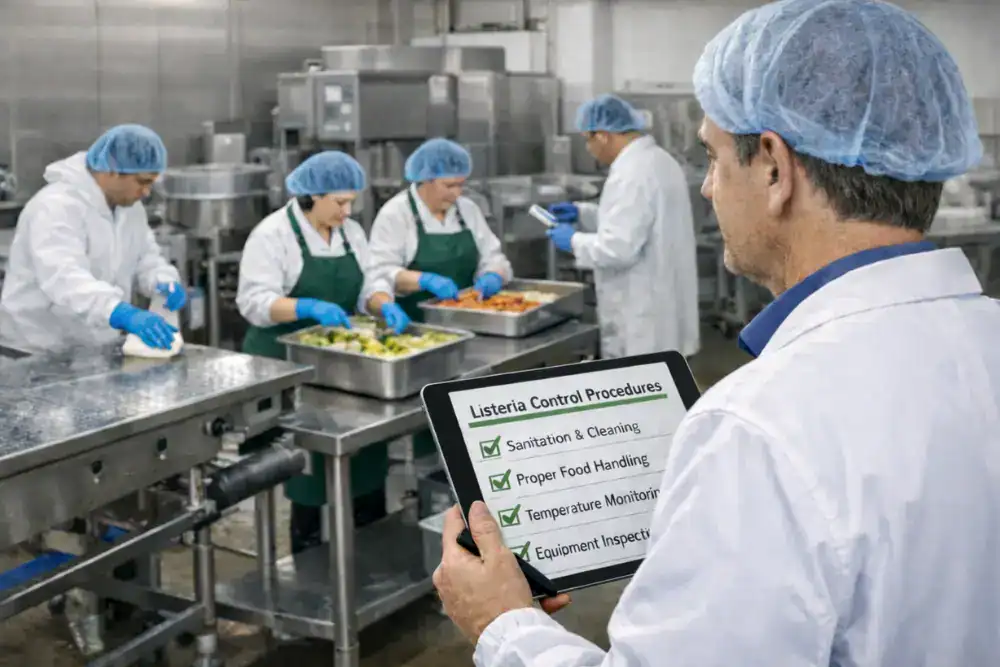
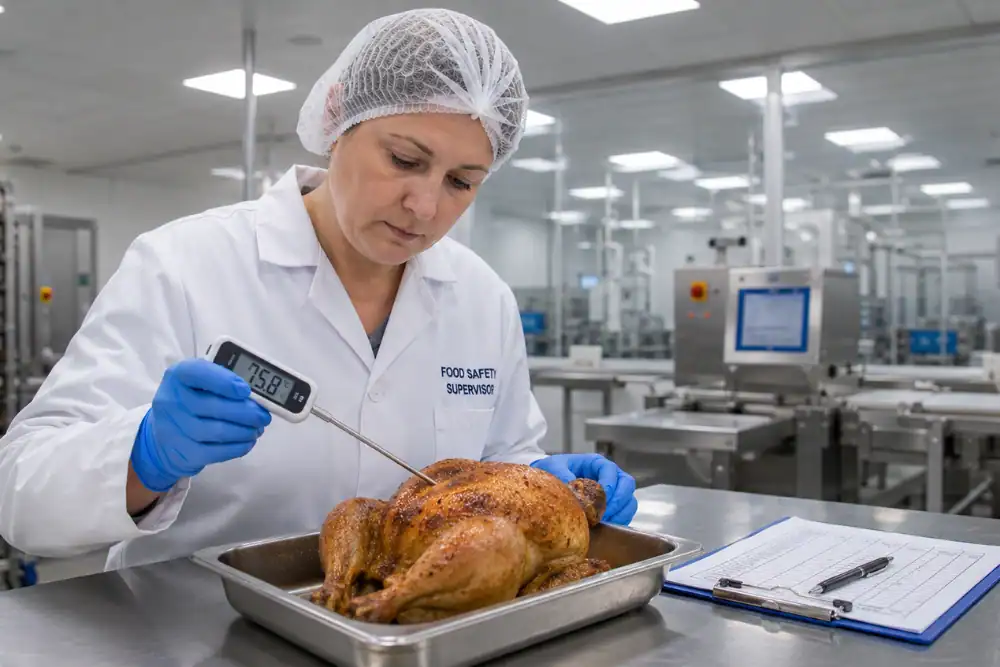
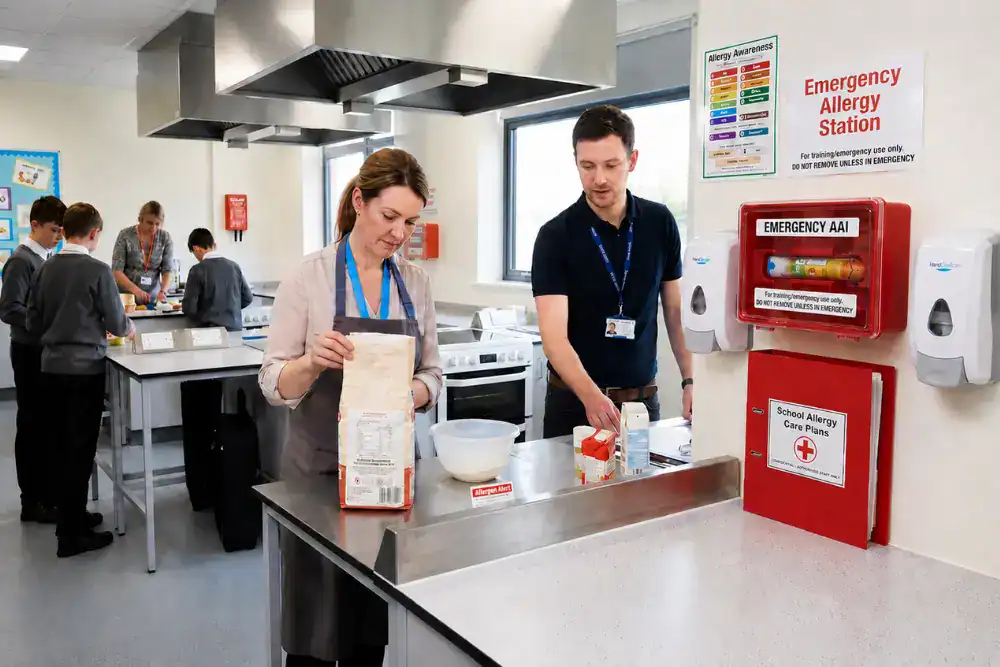
This IIRSM-approved Level 2 Listeria Training for Food Handlers helps food businesses ensure staff understand how Listeria contamination occurs in chilled and ready-to-eat food production, and the actions needed to prevent it.
It explains how the bacterium enters food environments, survives in harbourage sites and spreads through routine site movement and shared equipment. It also shows workers the practical hygiene and operational controls that prevent contamination from reaching ready-to-eat foods. The course helps food handlers understand the specific behaviours needed to support Listeria control programmes and protect consumers.
This course is approved by IIRSM – the International Institute of Risk & Safety Management.
The course certificate includes:
User name
Company name
Course name
Completion date
Expiry date
Approval body
An IIRSM-approved course certificate will be available for download and printing instantly upon course completion.
Users must complete a final theory test before earning their certificate.
The end-of-course test is:
Fully online
Multiple choice
A score of 80% is required to pass.
Course attempts
Each licence includes one attempt at the final knowledge assessment.
If a trainee does not pass and wishes to try again, an additional licence is required. For their second attempt, the trainee can retake the assessment without repeating the course content.
Erica is an internationally recognised food safety expert with over 30 years’ experience across industry, academia and government. From 2019 to 2025 she was Director of the Global Food Safety Initiative (GFSI), the world’s largest collaboration for food safety.
At GFSI, which benchmarks the certification standards used across global food supply chains, she chaired a forum of more than 200 national food safety regulators and worked with WHO, FAO and Codex. Earlier, she authored the World Bank’s Food Safety Investment Climate Toolkit, led the rewrite of the food and water sections of the WHO Guide to Hygiene and Sanitation in Aviation, and led international regulatory missions as Assistant Director at the UK’s Office for Product Safety and Standards.
She began her career with 14 years as Technical Director of a UK ready-to-eat food manufacturer, then led MSc Food Safety programmes at the University of Lancashire and the University of Greenwich. She is the author of Aviation Food Safety and has supported Human Focus in developing its food safety courses.
Customer Feedback
Why Listeria Training Is Important
Listeria monocytogenes is one of the most serious hazards facing chilled and ready-to-eat food producers.
Unlike many foodborne pathogens, Listeria can grow at refrigeration temperatures and survive in vacuum-packed or modified-atmosphere foods. Because the foods it contaminates are often eaten without cooking, there is no final step to remove the hazard before consumption.
For this reason, controlling Listeria depends heavily on consistent hygiene behaviour and strict environmental controls.
Under UK food safety law, employers must ensure:
Food hazards are properly controlled
Staff receive appropriate food safety training
Hygiene procedures are consistently followed
Cleaning and monitoring systems are effective
Workers also have a duty to follow site rules, report hygiene issues and support the controls in place.
When staff do not fully understand why specific controls are required, critical practices such as zoning, water management and equipment cleaning may be applied inconsistently.
Training helps ensure workers understand the specific behaviours required to prevent Listeria contamination in chilled food environments.
How This Training Helps Your Organisation
This course helps food businesses:
Ensure workers understand how Listeria contamination occurs
Improve consistency in hygiene and zoning practices
Reinforce Listeria control procedures across shifts and teams
Support compliance with UK food safety regulations
Reduce the risk of contamination reaching ready-to-eat products
By improving workers’ understanding of how Listeria behaves in food environments, the training supports more reliable implementation of site food safety controls.
Give your food handlers the knowledge they need to understand how Listeria contamination occurs and how to prevent it in chilled and ready-to-eat food production.