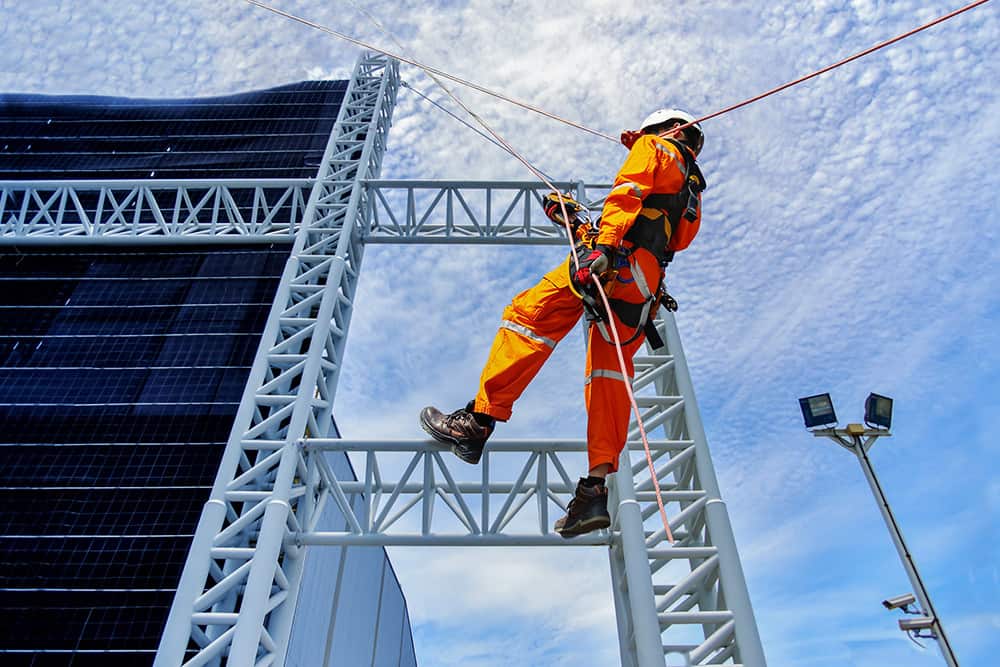
Falls from height are the single biggest cause of fatal injury at work in Great Britain. In 2024/25, they killed 35 workers, more than any other cause.
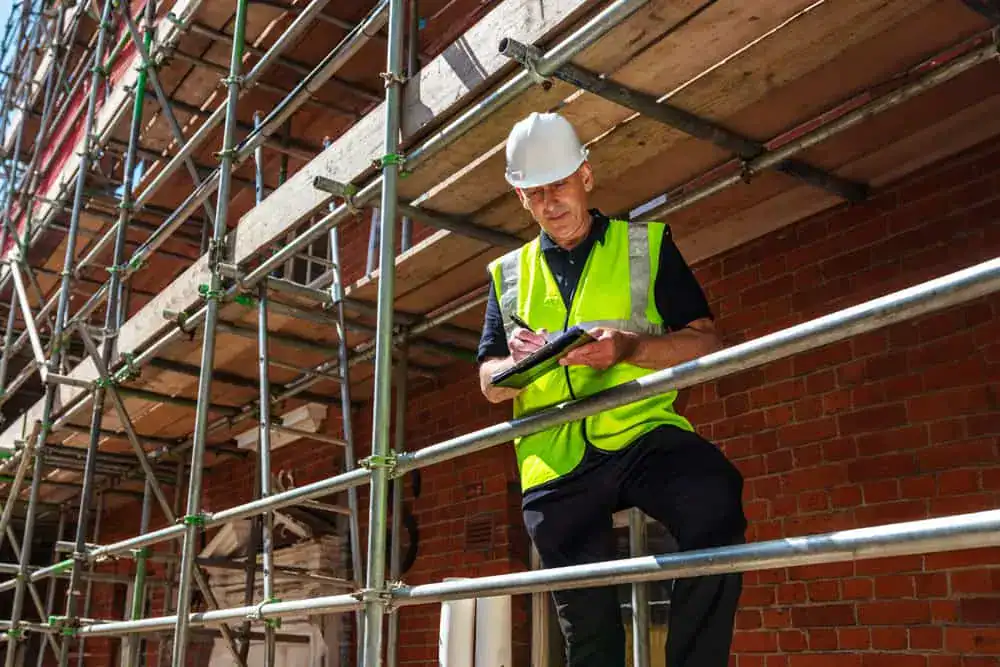
Scaffolds are a major work-at-height risk on construction sites. A scaffold can be unsafe because of how it was built, but it can just as easily become unsafe after handover, once it is in use.
On a live site, trades remove ties and boards to reach their work, materials are stacked above toe boards, debris builds up on platforms, and foundations shift after heavy rain or a knock from plant. A scaffold that was safe on Monday can be unsafe by Friday. Regular, competent inspection is what catches these changes, which is why the law requires every scaffold to be inspected, and the findings recorded, throughout its working life.
Are You Aware of Your Responsibilities?
It is easy to assume scaffold safety is the scaffolding contractor’s problem. In law, it is not only theirs. Under the Work at Height Regulations 2005, the duty to make sure a scaffold is inspected falls on the business that uses or hires it. If your teams work from scaffolds, that duty is yours.
A scaffold used for construction must be inspected:
- before it is used for the first time
- at intervals of no more than 7 days while it remains in use
- after any event that could affect its stability, such as strong winds, an impact or a substantial alteration
These inspections must be carried out by a competent person. The report has to record any defect found and the action taken to put it right, even when the fix is immediate, so recurring problems can be spotted. The record must be kept available on site for anyone who needs to see it.
Scaffolding duties also sit within a wider body of law, including:
- The Health and Safety at Work etc. Act 1974
- The Management of Health and Safety at Work Regulations 1999
- The Work at Height Regulations 2005
- The Construction (Design and Management) Regulations 2015
Getting this wrong carries real consequences. The HSE can issue improvement notices requiring failings to be put right, or prohibition notices that stop work immediately, and serious breaches can lead to prosecution. Fines for health and safety offences are unlimited, and directors and managers can face imprisonment where failings are serious.
Inspections carried out by people who genuinely know what to look for is the most practical way to meet these duties and keep workers and the public safe.
About this Training
This IIRSM-approved course prepares inspectors, supervisors and managers to carry out and check scaffold inspections properly. It works through five modules, building from how scaffolds are put together to a structured walkthrough a full inspection, with the key checks demonstrated by a professional inspector.
Learners come away able to:
- recognise the main types and components of a scaffold, and the part each one plays in keeping it stable
- understand the legal duties that apply to scaffolding work, including under CDM
- carry out a risk assessment and record the findings correctly
- check the things that most often go wrong, including foundations, ties, bracing, boards, guardrails, toe boards and access
- complete an inspection record with the information needed for audit and compliance checks
The course is online and self-paced, so staff can fit it around site work. It also comes with a free inspection e-checklist to help keep on-site checks consistent and properly documented.
It is worth being clear about what the course does and does not do. It builds the underpinning knowledge that competent inspection depends on. It does not, by itself, make someone competent or authorised. That judgement rests with you, based on each person’s training, experience and the scaffold in front of them. Used within that wider picture, it gives your team a shared, well-informed standard to inspect against.
How This Training Benefits Your Business
For the organisation, this is a practical way to raise the standard of scaffold safety and reduce the risk that comes with it. The course helps your business:
- bring inspections up to a consistent standard across sites, shifts and teams, rather than relying on individual habits
- meet its duties under the Work at Height Regulations and the wider legal framework
- catch faults such as missing ties, removed boards and overloading before they cause a fall or collapse
- give managers and inspectors a shared understanding of what to check and why it matters
- demonstrate due diligence and a strong safety culture when auditors, clients or HSE inspectors come calling
By improving how your people inspect scaffolds, the training supports steadier control of one of the most serious risks in construction.