DSE assessment training
Free e-Checklist Included

Display Screen Equipment (DSE) Assessor Training

schedule

Course Duration: Approximately 4 hours

This IIRSM-approved DSE Assessor Training course provides users with the knowledge necessary to conduct a display screen equipment assessment.

The course covers vital areas such as the legal background and the associated hazards and risk factors associated with DSE use. It then takes users through the process of assessment. The course comes with a free e-Checklist to guide users through assessments while recording them for compliance.

live_tv
100% online training
volume_up
Full audio voiceover
repeat_on
Fully online assessment
account_balance_wallet
Discounts when you buy in bulk
important_devices
Access on any device
app_shortcut
App available for iOS & Android
Training You Can Trust

Approved by IIRSM

In line with UK legislation

Certificate on completion

Developed by health and safety professionals

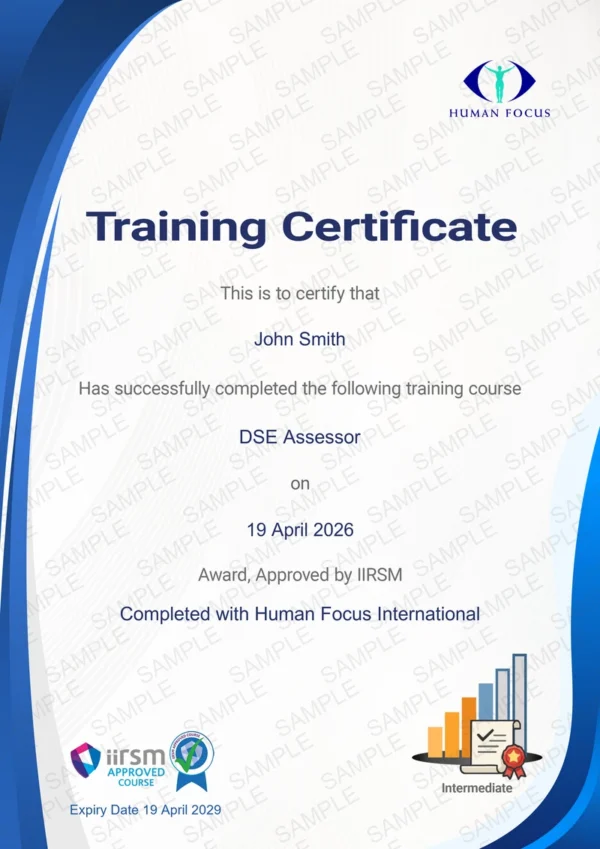
DSE Assessor Training Course Certificate

Disclaimer: This programme provides awareness and supporting knowledge only. Completing it does not by itself make you competent, qualified or authorised for workplace tasks. Follow your employer’s procedures, risk assessments and supervision. It does not appoint you to a dutyholder, responsible person or competent person role.

DSE assessment training
IIRSM-logo-for-website-131224
£150.00 +VAT

Discounts  for bulk purchases

Need Help?

£150.00 +VAT

Course Preview

Course Details

Course Duration Approximately 4 hours
Approval body IIRSM
Format Fully online
Assessment Multiple choice
Certification Same-day digital certificate
Certificate Valid For 3 years

Suitable For

Health and Safety Officers

Facilities Managers

Remote Workers

HR Professionals

Office Managers

All Office Staff

Course Content

This course contains the following modules:

  • Display Screen Equipment
  • Key Terms
  • Why We Need DSE Assessment
  • Legislation & Guidance
  • The Role of the DSE Assessor
  • Eye Fatigue
  • Headaches
  • Musculoskeletal Disorders & the Ranges of Motion that increase the risk of musculoskeletal disorders,
  • Mental Stress
  • Then, we will look at the specific risks associated with Remote Workers & Mobile Devices
  • DSE users with special requirements
  • Hierarchy of Risk Controls
  • DSE Suitability
  • Types of DSE
  • Environmental Risk Controls
  • Information Instruction & Training
  • Health Checks
  • Users with Special Requirements
  • Sitting
  • Ergonomic Best Practice: Upper Limbs
  • Ergonomic Best Practice: Display Screen
  • Safe Work Practices
  • Stretching & Exercises
  • Seating & Posture
  • Work Surfaces
  • Keyboards, Mice & Phones
  • Monitor, Document Holders & Software
  • The Work Environment
  • Understanding DSE Assessments
  • The Initial Assessment
  • Conducting the Assessment
  • Finishing Your Assessment
  • Walkthrough

What You Will Learn

Health risks associated with display screen equipment

Legal requirement to conduct DSE assessment

Best ergonomic practices for DSE

Best practice for setting up workstations

How to conduct DSE assessments face-to-face and online

How the risks of DSE use can be reduced

How to complete and record DSE assessments

Available in 20+ Languages

Course subtitles are available in multiple languages, including:

French

Dutch

German

Italian

Spanish

Polish

Course Approval Body

IIRSM-logo-for-website-131224

Approved by IIRSM

This course is approved by the International Institute of Risk & Safety Management (IIRSM).

The course certificate includes:

  • User name
  • Company name
  • Course name
  • Completion date
  • Expiry date
  • Approval body

An IIRSM-approved certificate will be available for download and printing instantly upon course completion.

Users must complete an assessment before earning their certificate.

The end-of-course test is:

  • Fully online
  • Multiple choice

A score of 80% is required to pass.

DSE Assessor Training Course Certificate

DSE Assessment e-Checklist

This training course comes with a free e-Checklist, which guides you through the steps of a DSE assessment while recording it for compliance. The e-Checklist is easy to access and use.

Note: This offer is for one DSE assessor training e-Checklist licence (which includes 2 digital checklists) per trainee who completes this course. The e-Checklist licence is for their use and cannot be transferred or shared by other users.

Terms and conditions apply – *Single DSE assessor training e-Checklist template standard charge from £10 per person per annum.

Customer Feedback

Why Is DSE Assessor Training Important?

In the most recent year for which figures are available (2024/25), more than 500,000 workers in Great Britain were affected by work-related musculoskeletal disorders (MSDs), resulting in 7.1 million working days lost.

Along with MSDs, working with display screen equipment can be a significant contributor to eye fatigue, headache and mental stress. These health hazards have the potential to cause short-term or long-term chronic conditions if not taken care of properly.

Your Responsibilities Under Display Screen Equipment Regulations

The Health and Safety (Display Screen Equipment) Regulations 1992 which place a legal duty on employers to protect their staff from this hazard. A failure to do so can result in significant fines.

These duties apply to anyone classed as a DSE ‘user’ – an employee who habitually uses display screen equipment as a significant part of their normal work, typically for continuous periods of an hour or more. As an employer, your core responsibilities under the regulations include:

  • Carrying out a suitable and sufficient assessment of every DSE user’s workstation, and reducing any risks identified to the lowest extent reasonably practicable.
  • Providing adequate health and safety training (under Regulation 6) so users understand the risks and how to work safely.
  • Arranging and funding eye and eyesight tests on request, and providing glasses where they are needed specifically for DSE work.
  • Ensuring users can take regular breaks or changes of activity to avoid prolonged, uninterrupted screen use.
  • Keeping clear records of assessments and the actions taken, so progress can be reviewed and updated when anything changes.

Crucially, these responsibilities apply regardless of where your people work. Office-based, home-based, hybrid and mobile workers are all covered, so a habitual screen user working from home is entitled to the same protection as a colleague at a fixed office desk.

The Health and Safety Executive (HSE) enforces the regulations, and non-compliance can lead to improvement notices, prohibition notices and fines – making proactive management both a legal and a financial priority.

About DSE Assessor Training

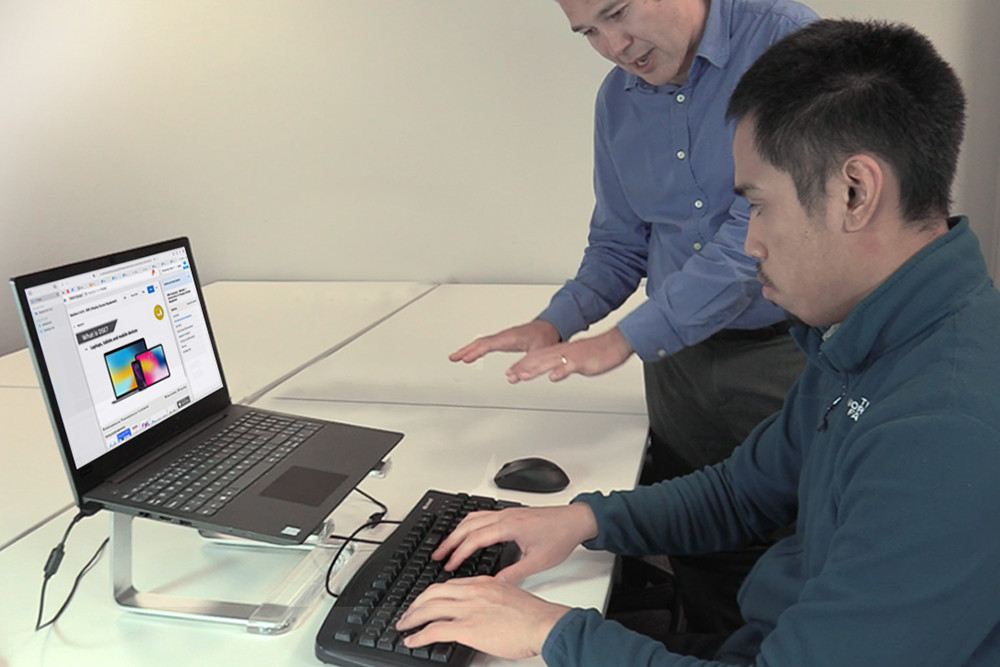
This training begins with the essentials of display screen equipment and the role of the DSE assessor, the legislation and guidance behind DSE work, and why assessments are needed. It looks at the health risks of DSE use – eye fatigue, headaches, musculoskeletal disorders and mental stress – and the controls used to reduce them, including the particular considerations for remote workers, mobile devices and users with specific needs.

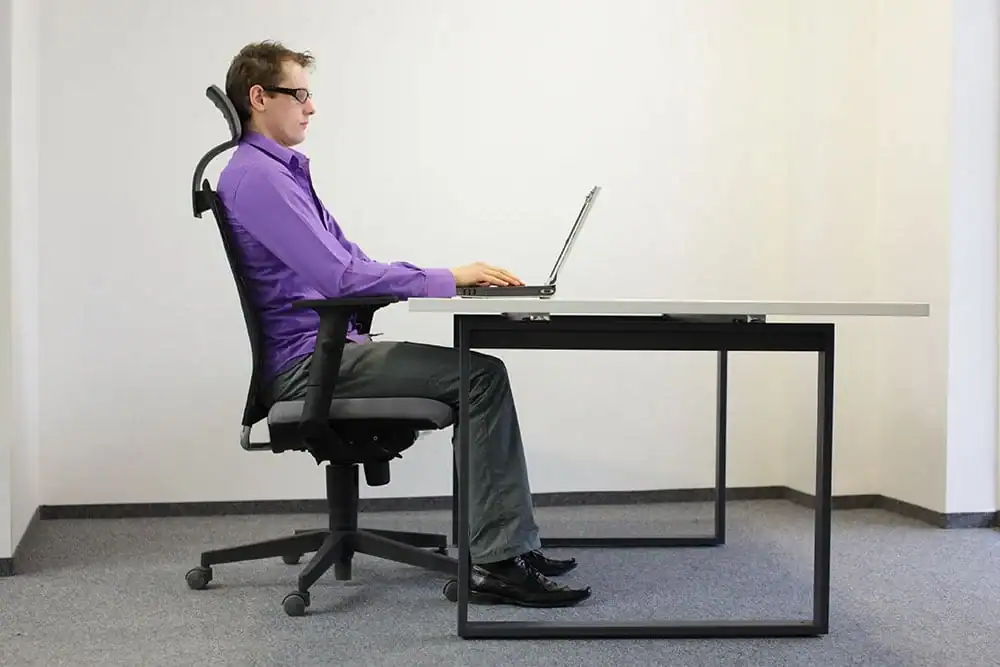
The course then turns to the practical side. It covers ergonomic best practice for posture, the upper limbs and screen position; the criteria for setting up a workstation, from seating and work surfaces to input devices, monitors and the wider environment; and how to plan, conduct, complete and record an assessment, whether face-to-face or online.

How This Training Benefits Your Organisation

Training your own staff to carry out DSE assessments brings benefits that extend well beyond meeting your legal obligations.

Having one or two competent assessors in-house gives your organisation the ability to manage screen-related risk both proactively and reactively – addressing problems before discomfort turns into injury, and responding promptly whenever a desk, role or workspace changes.

The benefits are felt right across the business:

  • Documented assessments show that you are meeting your legal duties and provide valuable evidence if a concern or claim is ever raised.
  • Catching musculoskeletal and eye-strain issues early helps prevent long-term sickness absence, reducing sick pay, cover costs and compensation claims.
  • Employees who are comfortable and free from aches and fatigue can concentrate better and produce higher-quality work.
  • A visible commitment to staff welfare strengthens trust, supports a positive health and safety culture, and helps you attract and keep good people.
  • In-house assessors can deliver inductions for new starters, reassess workstations whenever something changes, and resolve concerns promptly – freeing up managers and health and safety personnel.

For most organisations, training one or two in-house assessors is a practical and proportionate step that supports a healthier, more comfortable workforce while helping to control risk and cost.


Frequently Asked Questions

A DSE (Display Screen Equipment) assessor course, also known as a DSE risk assessment training course, provides attendees with the knowledge and skills to assess workstations and ensure they’re arranged to minimise health risks to the DSE user.

Anyone responsible for health and safety within an organisation who has received DSE training can assess DSE risk.

A DSE assessor’s role includes evaluating the safety and ergonomics of workstations where display screen equipment is used. They conduct comprehensive risk assessments to identify potential hazards and recommend corrective measures to ensure a comfortable and healthy work set-up.

DSE awareness is for employees who regularly use display screen equipment. It covers DSE risks and what users should do to protect themselves.

DSE Assessor Training prepares individuals to conduct assessments of others’ workstations and make recommendations for improvements.

Yes. Our DSE risk assessment course is online, so you can complete it at your own pace on any device with internet access.

Yes. This training is relevant for office-based and remote workers. It helps ensure that workstations, whether at the office or home, meet ergonomic and health standards.

Absolutely. Trained DSE assessors can help ensure that all workstations are set up for user safety and comfort. Employees will be able to focus without risking injury or experiencing the aches and pains often caused by prolonged desk work.

Yes. This online DSE Assessor Training course comes with a free DSE assessment e-Checklist, which guides users through the steps of a DSE assessment while recording it for compliance. The checklist covers all relevant points, such as evaluating the suitability of the chair, screen height and desk layout.

The course is priced at £150 + VAT for a single trainee. Discounted rates are available for bulk purchases. Click on ‘Discount’ beneath the ‘Buy Now’ button for more details.

Yes. This course is approved by IIRSM (the International Institute of Risk and Safety Management)

Related Courses