Typical hazards include:
- Unprotected edges or openings
- Fragile, sloping or deteriorated surfaces
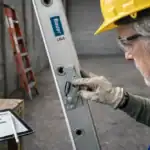
- Incorrect or unsafe ladder use
- Improvised or modified access methods
- Falling tools or materials
- Weather exposure, including wind, rain, glare and ice
- Inadequate standards of housekeeping at height
- Potential wildlife, including birds, and COSHH issues from guano
- Lighting levels, including low levels or glare from floodlights on the roof
- Overhead obstructions and hazards, including pipes and cables
These hazards matter. But by themselves, they rarely explain why a fall occurs. Accidents almost always involve a change in context that alters how workers interact with these risks.
These context-based factors feature repeatedly in fall investigations but are seldom captured in traditional risk assessments. Yet they play a decisive role in shaping real exposure.
Hazards that appear controlled during planning can become unsafe when site conditions shift.
Two examples from everyday site conditions illustrate this clearly:
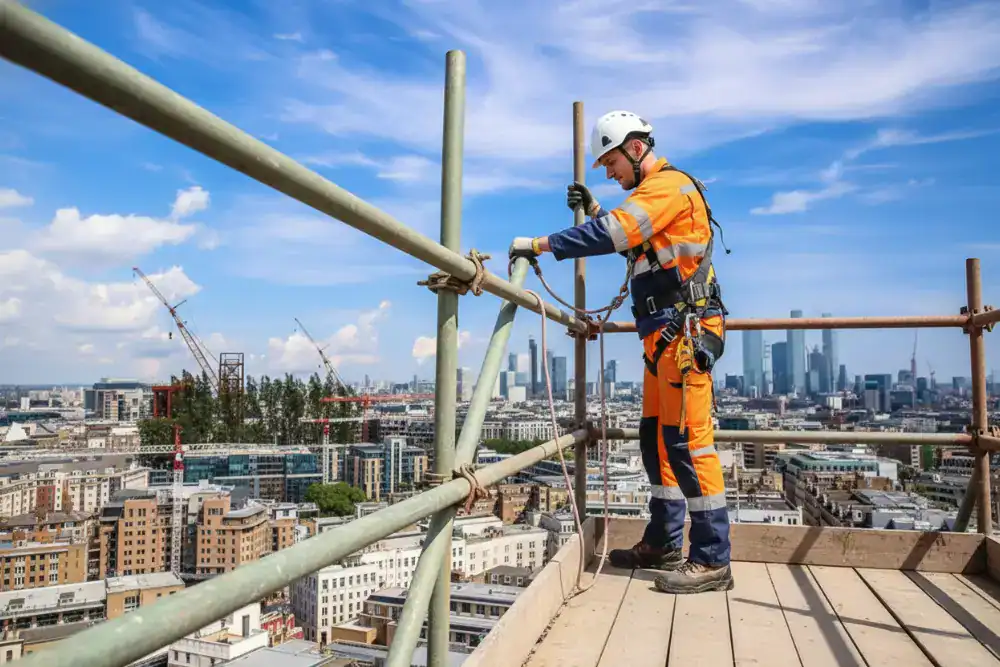
- A scaffold platform that was originally safe becomes hazardous once materials are stored on it, narrowing the working area and reducing stable footing.
- A ladder placed on firm ground becomes unstable after another trade disturbs the surface, leaving it uneven or softer than when it was first positioned.
Neither scenario is unusual. Both are typical of dynamic sites and demonstrate how exposure to height hazards changes as the environment and work conditions change.
Jansen et al.’s psychological network study found that workers’ perception of risk often diverges from actual exposure. Workers frequently.
- Believe they are personally unlikely to fall.
- And are even less concerned about the consequences.
- And are even less concerned about the consequences.
These perceptions arise from normal, predictable aspects of human cognition.
- Familiarity reduces perceived danger: Tasks performed repeatedly begin to feel routine, even when consequences are severe.
- Past success creates a false sense of safety: If a worker has never fallen before, they often assume they will not fall now. They interpret past success as evidence the method is safe, because they’ve always done it this way.
- Attention shifts with context: Noise, congestion, competing tasks, awkward movements or time pressure can all pull focus away from hazards that feel abstract or unlikely.
- Immediate task goals overshadow distant risks: Maintaining progress feels real and urgent. The possibility of a fall does not.
This is not carelessness. It is how human decision-making naturally works under changing conditions.
Supervisors influence safety not by demanding perfect vigilance, but by shaping conditions so safer choices happen naturally:
- Make safe methods easy to use, reducing friction.
- Plan access sequences that remove awkward or improvised movements.
- Use brief conversations to surface where tasks feel awkward or exposed.
- Introduce critical pause points during key transitions, allowing workers to re-check their footing, stability or environment.
- Pay close attention to routine tasks, where risk perception is lowest and drift is most likely.
- Listen to your team’s concerns and thoughts.
These approaches reflect Jansen et al.’s finding that specific behavioural intentions anchored to real task steps are more effective than general safety reminders.
Production demands are one of the strongest drivers of contextual risk. Common influences include:
- Compressed schedules.
- Sudden task additions.
- Pressure to maintain workflow.
- The required equipment was unavailable or considered too expensive.
- Multiple trades competing for the same space.
Under pressure, workers adapt to keep the job moving. They may alter their access method, reposition equipment or tolerate small deviations. These adjustments often look harmless but quietly increase exposure long before a fall occurs.
Investigations repeatedly show this pattern: the immediate cause is simply the last point in a chain of contextual pressures.
Improvised access is one of the clearest indicators that the planned method no longer fits real conditions.
Examples include:
- Standing on stored materials to gain height.
- Adjusting scaffold boards or railings informally.
- Using ladders in place of planned platforms.
- Stretching or reaching further than intended.
- Improvisation is often a workaround, not a sign of an unsafe attitude.
More often, it shows that the environment or workflow has diverged from the plan.
Many falls occur not during the main task, but during transitions:
- Stepping between levels.
- Moving from ladder to platform.
- Entering or exiting a MEWP.
- Repositioning to reach new areas.
- Taking down or installing access equipment.
During transitions, footing, balance and attention are all compromised. These moments are ideal for critical pause points — short, deliberate checks that help workers reassess stability and environment before committing to movement.
Small changes in the work environment often go unnoticed until they matter:
- Guardrails removed temporarily.
- Materials narrowing platforms.
- Scaffolds have been altered without communication.
- Changes in wind, glare or surface grip.
- Surfaces softening through weather or traffic.
These factors frequently appear in incident reports, yet are rarely reflected in RAMS written earlier in the day.
Supervisors can reduce exposure by looking beyond physical hazards and focusing on how the job behaves under real conditions.
Look specifically for:
- Changed surfaces
- Altered workspace
- Improvised solutions
- Conflicting activity
- Access routes that no longer match the plan
These small deviations help reveal where hazards are emerging.
Workers often know exactly where the job feels awkward or exposed.
Useful prompts include:
- “Where do you feel least stable?”
- “Where do you have to improvise?”
- “Which parts slow you down?”
These insights reveal hazards that cannot be spotted from a distance.
Mapping transitions helps anticipate where balance, grip or fall protection may be compromised.
Critical pause points help workers:
- Changed surfaces.
- Altered workspace.
- Improvised solutions.
- Conflicting activity.
- Access routes that no longer match the plan.
They are a simple tool for preventing drift from escalating.
Static paperwork cannot keep pace with a dynamic job. Updating RAMS as conditions evolve helps ensure that controls remain aligned with the real method of work.
Understanding common hazards is essential, but preventing falls requires recognising how those hazards interact with the shifting context of real work. When supervisors learn to see how exposure changes throughout the day, they gain the clarity needed to intervene long before an incident occurs.
Human Focus provides training and digital tools that help supervisors recognise contextual risk, anticipate drift and support safer decisions during height work.