Manual handling is routine across most workplaces, but poorly designed or rushed tasks quickly turn into back and joint injuries that disrupt staffing, slow output and increase claim exposure. These injuries tend to result from how the task is set up, not from how an individual lifts on a given day.
Under the Manual Handling Operations Regulations 1992, you must avoid hazardous manual handling where reasonably practicable, then assess and control the tasks that remain. In practice, this hierarchy is often applied out of order, with teams moving straight to technique training or generic aids before examining the task that creates the strain.
This guide sets out how to apply the hierarchy in real-world settings so you can make clearer decisions about risk, set effective controls and build a defensible approach to compliance.
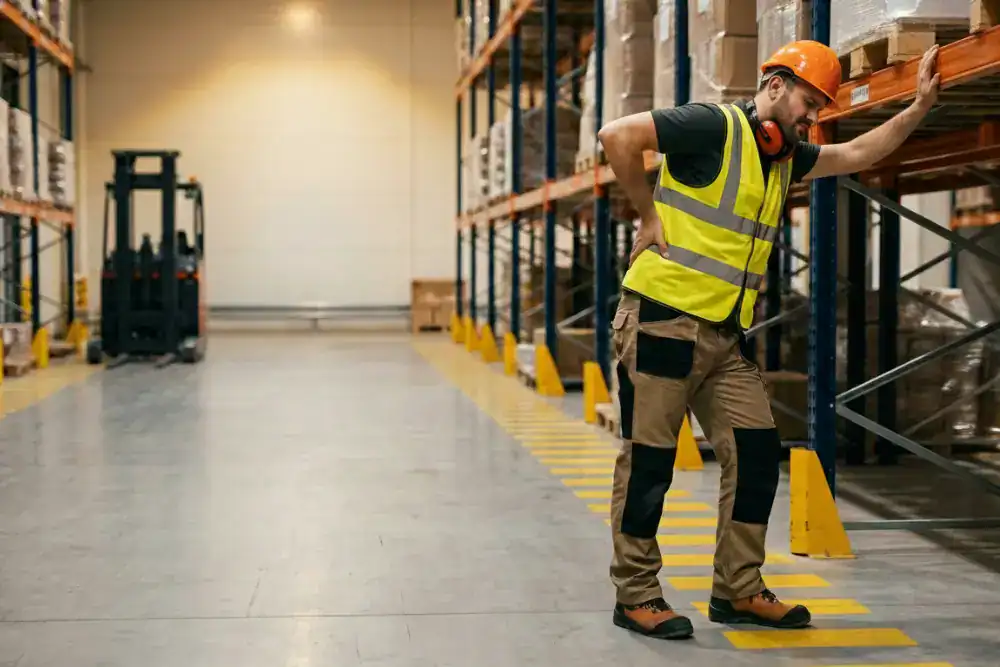
Hazardous manual handling is any task that places greater physical demands on the body than it can safely withstand. This typically happens when the task design forces high effort, awkward positioning or sustained exertion.
A hazardous manual handling task creates noticeable effort or discomfort, reduces control of the load or forces the worker into a position where stability is hard to maintain. Such tasks require review and redesign from employers so the work can be completed safely and consistently.
Manual handling tasks are a major contributor to musculoskeletal disorders (MSDs), such as back pain, strains, sprains and repetitive strain injuries. These conditions develop when muscles, joints or tendons are subjected to excessive or repeated physical stress, often from lifting, carrying, pushing or pulling.
These disorders also led to an estimated 7.8 million working days lost, reducing productivity and placing considerable financial strain on employers and the wider economy.
Handling, lifting or carrying activities alone accounted for around 17% of all workplace injuries during the same period, highlighting just how common and potentially hazardous these tasks can be when not managed properly.
You can understand hazardous manual handling more clearly by looking at why the body is put under strain, not just what the task looks like on the surface. Reviews of work-related musculoskeletal disorders show that a small number of load patterns account for most back, shoulder and upper limb problems in manual work.
Lifts, carries, pushes or pulls that feel heavy or demand strong effort place high loads on the spine and major muscle groups. The strain increases when a load starts near the floor or ends above shoulder height, as the body has less leverage in these positions. Research links handling heavier loads with higher rates of low back pain and increased lumbar spine compression.
Repeated bending, twisting or reaching puts the same tissues under load again and again. When this happens throughout a shift, the muscles and tendons do not get enough recovery time, and small strains accumulate into fatigue or irritation.
Research on highly repetitive jobs shows higher rates of shoulder and upper limb disorders in workers who perform the same movements repeatedly compared with those whose tasks vary more.
Stooping, reaching away from the body or working overhead limits the body’s ability to share forces across stronger muscle groups. When posture is restricted like this, more load is absorbed by smaller joints and soft tissues that are not designed to handle it. Studies in sectors such as agriculture and sawmills show higher rates of neck, shoulder and back disorders where awkward postures are common.
Supporting or steadying an item without a chance to relax keeps the same muscle fibres working continuously. This reduces blood flow and accelerates fatigue, even when the load itself is light.
Research on static postures shows a clear link between prolonged holding, increased muscular discomfort and higher spinal loading. This is why “light but long” tasks can create more strain than they appear to at first glance.
When a load shifts, rolls or swings, the handler has to react quickly to keep control. These sudden corrections create short spikes in force and abrupt changes in posture.
Experimental lifting studies comparing stable and unstable loads show higher spinal loads and altered trunk movements when the load is unstable. This is why poorly packed, unbalanced or swinging loads present a higher risk than their weight alone suggests.
Tight or cluttered spaces, uneven floors and poor lighting reduce the margin for safe movement. These conditions make it harder to maintain a stable posture, judge the load or keep a firm grip.
Regulatory and ergonomic guidance consistently identifies these environmental factors as contributors to both manual handling strain and slips, trips and falls. They amplify the effects of force, posture and repetition, which is why they should be treated as risk factors in their own right.
The hierarchy of control in the Manual Handling Operations Regulations helps employers focus their time and resources on the task features that create the most strain. When used properly, it gives supervisors a clear, defensible way to show why certain controls were chosen and how risks were reduced at source.
To show how each stage works in practice, consider a warehouse task where boxes are moved from floor level to a packing table.
The first priority is always to avoid hazardous manual handling wherever possible. This usually means adjusting the way the work is set up so the load does not need to be lifted, carried, pushed or pulled by hand.
In a warehouse task where boxes are moved from floor level to a packing table, avoidance could involve:
- Raising the starting point so that boxes are not handled from the floor.
- Adjusting the workflow so items arrive at a height that removes the need for a manual lift.
When hazardous manual handling is removed at this stage, the strain disappears with it, and the rest of the assessment becomes far easier to complete and justify.
The next step is to assess any manual handling that still has to take place after tasks have been redesigned. The aim is to pinpoint what is creating strain so controls can be focused where they will make the most difference.
A practical way to do this is to use the TILE approach:
- Task – How the job is actually carried out during a shift. Does it involve twisting, reaching away from the body or bending repeatedly? How often and for how long?
- Individual – Who is doing the work? Do they have the right capability, training and experience, and are they working alone or with support?
- Load – What is being handled? Is it heavy, bulky, unstable, difficult to grip or likely to move unexpectedly?
- Environment – Where the task takes place. Are spaces tight, floors uneven, routes obstructed or lighting levels too low for safe control?
In the warehouse example, boxes on a conveyor might be light, but staff could still twist and reach across a narrow, poorly lit section to grab them. In that situation, the main risk comes from posture and space, not from the weight of the load. A structured assessment like this makes those causes visible and supports clear, targeted changes instead of broad, generic fixes.
Once the main causes of strain have been identified, the final step is to put controls in place that reduce the remaining risk as far as is reasonably practicable. These changes should make the task easier to handle and eliminate factors that cause awkward movements or fatigue.
Examples of measures that reduce risk in the warehouse scenario include:
- Reorganising the work area to give staff enough room to move without twisting or reaching over obstacles.
- Setting handling points at a more comfortable height, so loads are managed closer to waist level.
- Improving lighting and visibility to support better posture and more accurate handling.
- Introducing suitable handling aids for heavier or awkward items and making sure staff know how to use them safely.
- Adjusting work patterns, such as alternating tasks or planning short recovery breaks to limit fatigue during busy periods.
These adjustments reduce the physical demands that remain after redesign. They help prevent the build-up of strain, lower the likelihood of musculoskeletal injuries and support steadier, more reliable performance across the shift.
The law requires employers to provide suitable training for anyone involved in manual handling tasks. Training is most effective once the task has been redesigned and the main risks have been controlled. At that point, it helps staff understand how the system of work should operate, how to recognise any remaining manual handling hazards and how to use handling aids correctly.
When people understand the controls in place, work is carried out more consistently. Staff handle loads with fewer awkward movements, and supervisors spend less time correcting unsafe habits. These are clear signs that training is supporting the wider approach to managing manual handling risks.
Our online manual handling training is designed to help employers build that consistency. It covers the main manual handling hazards, the TILE method for assessing risk and the correct use of mechanical aids, along with practical techniques that support safer movement.
Investing in training at this stage reinforces your control strategy. Staff understand how to handle remaining tasks more safely, supervisors see fewer inconsistent practices, and you can demonstrate a clear, evidence-based approach to managing manual handling risks.