In a busy commercial kitchen, poor cleaning can allow bacteria, allergens and pests to spread. This puts customers at risk, creates hazards for staff and can lead to failed inspections or even enforced closure.
Effective kitchen cleaning is essential because it protects people, supports safe working and keeps the kitchen running smoothly, even at peak times.
This blog takes key points from the Food Standards Agency and turns them into simple routines your team can follow on any shift.
Key Takeaways
- Use the two-stage cleaning method. Clean the surface first and then disinfect.
- Clean as you work, not after. Wipe spills, clear waste and disinfect surfaces throughout the day to stop contamination.
- Clean and disinfect high-contact surfaces like taps, handles, boards and utensils several times a day to prevent bacteria from spreading.
- Clean fridges, freezers and sinks regularly to stop bacterial growth and maintain food safety.
Why Kitchen Cleaning is Important
A dirty commercial kitchen is more than unsightly; it is a direct risk to public health.
Poor kitchen hygiene can result in:
Food Poisoning Outbreaks
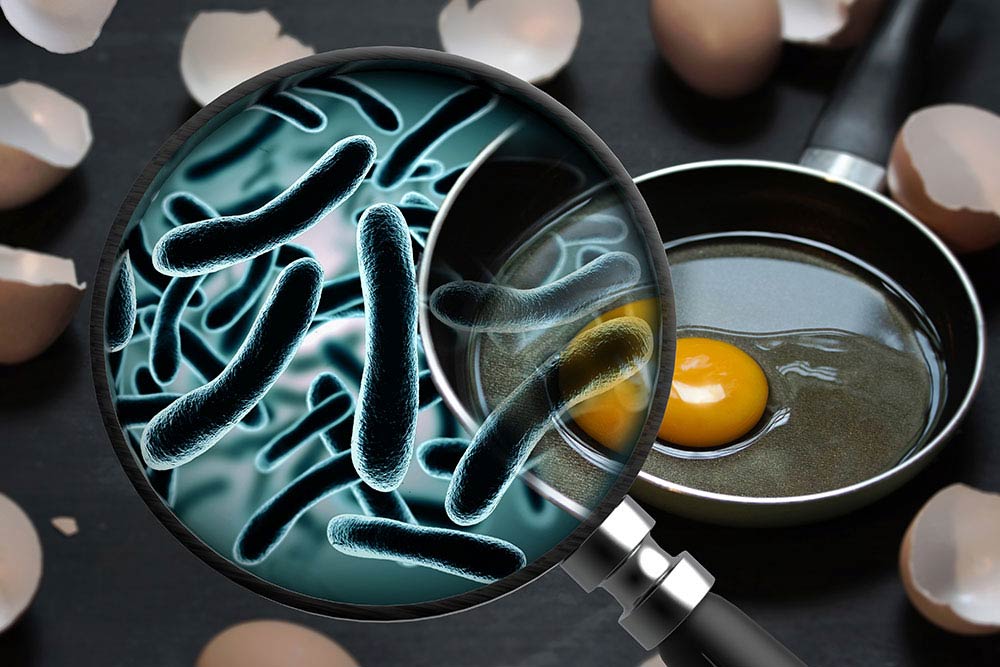
Bacteria such as Salmonella, E. coli or Listeria can spread quickly if surfaces, utensils and equipment aren’t disinfected. Even one contaminated dish can make dozens of consumers sick.
Allergen Cross-Contact
Tiny traces of allergens can trigger severe reactions. Without proper cleaning, allergens from nuts, milk, gluten or eggs can move from one dish to another.
Pest Infestations
Crumbs, grease and moisture attract rodents, flies and cockroaches. Once pests enter a kitchen, they are difficult to remove.
Legal Action
The Food Safety Act 1990 and the Food Hygiene (England) Regulations 2013 require food businesses to prepare and handle food safely, maintain hygienic premises and prevent contamination. Regular kitchen cleaning is part of these legal duties. Failure to comply can result in fines, closure or prosecution by local authorities.
Kitchen Cleaning Training
Improve daily hygiene standards and keep your kitchen inspection-ready with clear, consistent routines.Train your team with our CPD-certified course to carry out essential cleaning tasks safely and to a professional standard.
The Two-Stage Cleaning Approach
The two-stage approach is the safest way to remove dirt and prevent bacteria from spreading. It keeps surfaces ready for food preparation and helps your team meet FSA expectations.
Stage 1 — Cleaning
The first stage removes any dirt or grease so disinfectant can work properly. To do this, follow these steps:
- Use hot, soapy water or a suitable detergent to remove visible dirt, grease and food residue.
- Clean all surfaces, utensils and equipment, especially areas where residue tends to build up.
- Rinse with clean water to remove any leftover detergent or debris.
Stage 2 — Disinfecting
Once the surface looks clean, the next stage destroys harmful bacteria and viruses. Make sure you:
- Apply a food-safe disinfectant or sanitiser.
- Follow the manufacturer’s instructions for dilution and contact time.
- Allow the product to sit for the full required time so it can work effectively.
- Rinse with clean water if the label recommends it.
- Use products that meet BS EN 1276 or BS EN 13697 for reliable performance.
Clear and Clean as You Go
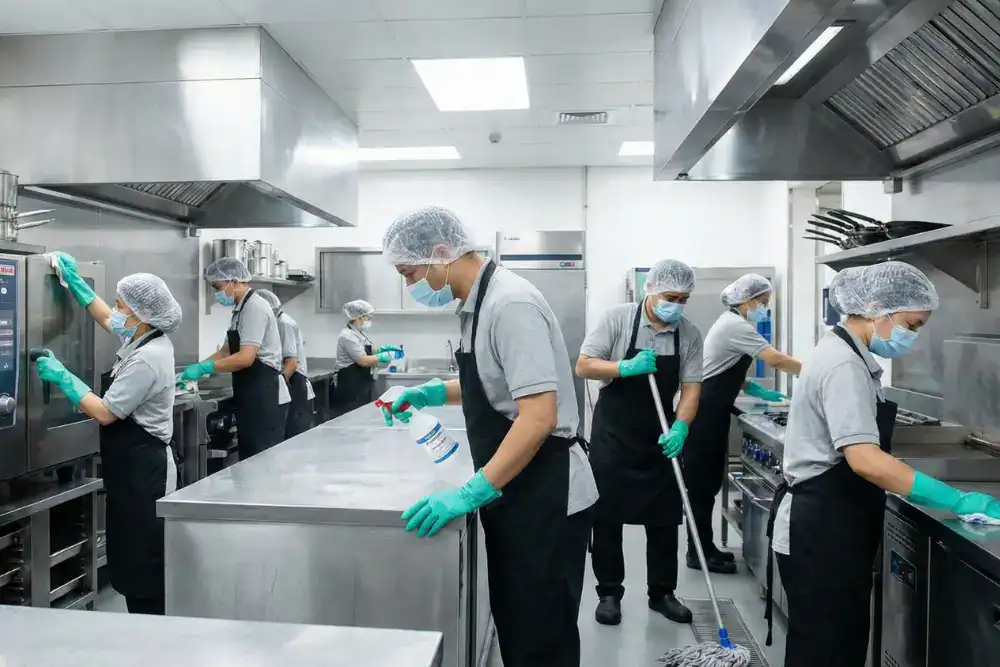
The FSA’s “Clear and Clean as You Go” method means cleaning while you work instead of waiting until the end of a shift. Used consistently, it helps to reduce the risk of cross-contamination. The habits below show how to put this into practice:
Remove Packaging
Take off the outer packaging before bringing food into the kitchen or storeroom. The outer layer may have touched dirty surfaces during storage or transport. After removing it, check the allergen information on the inner packaging before throwing it away so you can give customers accurate information.
Dispose of Waste Safely
Be careful when throwing away packaging and food waste from raw food. If packaging from raw food touches a surface, wash and disinfect that area straight away. Raw packaging can spread harmful bacteria and allergens to food and surfaces.
Keep Areas Clear
Clutter, rubbish, and dirty equipment make it harder to clean properly and increase the risk of cross-contamination. Clear items as you go so work surfaces stay easy to wipe down. Clearing used equipment also prevents bacteria and allergens from spreading to food or surfaces.
Clean Sinks Often
Wash and disinfect sinks regularly to prevent dirt and bacteria from building up. This is especially important when sinks are used for both food prep and equipment cleaning.
Clean Spills Immediately
Spills can happen at any time, especially during busy service. Wipe them up as soon as they occur so the area stays safe and easy to work in. If the spill involves raw food, disinfect the surface afterwards to reduce the risk of bacteria or allergens spreading.
Wipe Between Tasks
Once spills are dealt with, reset your station between tasks. Wash work surfaces thoroughly and use a clean or disinfected cloth each time, especially before preparing ready-to-eat food. Reusing a dirty cloth can transfer bacteria back onto areas you have already cleaned.
Essential Cleaning Procedures and Key Areas
Good cleaning keeps a kitchen safe and compliant. The following steps are based on the Food Standards Agency’s Safer Food, Better Business (SFBB) guidance on effective cleaning in commercial kitchens.
High-Priority Cleaning Items
Some areas and items in the kitchen carry a higher risk of cross-contamination because they are touched frequently or come into direct contact with food. These must be cleaned and disinfected regularly throughout the day.
High-contact and food-contact surfaces include:
- Work surfaces and preparation tables
- Knives, chopping boards and utensils
- Sinks, taps and draining boards
- Door handles
- Fridge and freezer doors
- Light switches, equipment button and cash registers
- Can-openers, telephones and weighing scales
Cleaning these items reduces the spread of dirt and bacteria to hands, food and other surfaces. Allow them to dry naturally after disinfection to avoid recontamination from towels or cloths.
Fridge and Freezer Cleaning
Fridges must be cleaned and disinfected at a time when they contain the least amount of food. Before cleaning, move all food to another fridge or a safe cold area and keep it covered. If food is left out at room temperature during cleaning, bacteria can grow quickly. This is why food should always be kept cold while the fridge is being cleaned.
If a dishwasher is available, use it for utensils and small equipment. If washing by hand, use hot soapy water, rinse, then disinfect and air dry. When only one sink is available for both raw and ready-to-eat items, clean and disinfect the sink and taps between each use.
Dishwashing
Use a dishwasher whenever possible, as it cleans at high temperatures that kill bacteria and remove allergens. Avoid overloading it and make sure it is maintained and serviced regularly.
If a dishwasher is not available, wash all plates, utensils and equipment in hot soapy water with a bactericidal detergent.
Use separate sinks for raw and ready-to-eat items. If one sink must be shared, change the water and clean and disinfect the sink, including taps and fittings, using the two-stage cleaning process between uses.
Proper cleaning and disinfection help stop bacteria from spreading between raw and ready-to-eat food.
Non-Food Contact Areas
Items and areas that do not come into direct contact with food are not as high a priority as food-contact surfaces, but they still need regular and effective cleaning. Examples include dry storage areas, walls and floors. These should be cleaned to remove dust, grease and any food debris that could attract pests.
When cleaning floors, take care to prevent splashes that could spread dirt or bacteria onto work surfaces or food areas. Always clean from the cleanest area to the dirtiest and finish with the floor.
For areas or equipment that are difficult to access or clean thoroughly, it may be necessary to hire a professional contract cleaner. Contract cleaners use specialised tools and have the experience to manage heavy-duty or deep-cleaning tasks.
Regular cleaning of these areas helps stop dirt and bacteria from building up, prevents pest attraction such as mice or cockroaches and keeps the whole kitchen environment safe and hygienic.
Make a Cleaning Schedule
A kitchen cleaning checklist helps make sure nothing gets missed. It also shows who is responsible for each task, how often it should be done and the method to use. This keeps cleaning consistent and makes it easier to train new staff.
The FSA provides a cleaning schedule form that you can adapt for your site. To build an effective kitchen cleaning checklist, follow these steps:
- List every item that needs regular cleaning, such as sinks, fridges, hobs, shelves, bins, vents and floors.
- Decide how often each item should be cleaned, for example after use, daily, weekly or monthly.
- Describe the cleaning method, including the product to use, the correct contact time and any tools required.
- Assign each task to a named team member.
- Keep the checklist somewhere staff can see and update it easily.
Managers should review the checklist regularly and sign off on tasks once they are completed. During inspections, environmental health officers often ask to see cleaning records, so a clear written schedule helps demonstrate that cleaning is properly planned and controlled.
The Role of Training
Even the best schedule fails without trained staff. Employees must understand how to use cleaning products safely, the difference between cleaning and disinfecting and how poor hygiene spreads bacteria.
We offer a kitchen cleaning training course that teaches staff how to use tools and chemicals correctly and how to apply safe, effective techniques across the kitchen. It covers various cleaning techniques such as damp wiping, mop sweeping, damp mopping and vacuuming, explaining when and how to use each type of cleaning technique effectively. It also shows how to handle waste safely waste including proper waste segregation and maintaining hygiene in refuse areas.
The course will help ensure the kitchens are cleaned to standard and remain safe, compliant and ready for inspection.