Forklift Inspection Training
Free e-Checklist Included

Forklift Inspection Training

schedule

Course Duration: Approximately 3 hours

This IIRSM-approved Forklift Inspection Training equips operators to conduct effective forklift inspections, focusing on key safety checks in accordance with the Lifting Operations and Lifting Equipment Regulations 1998.

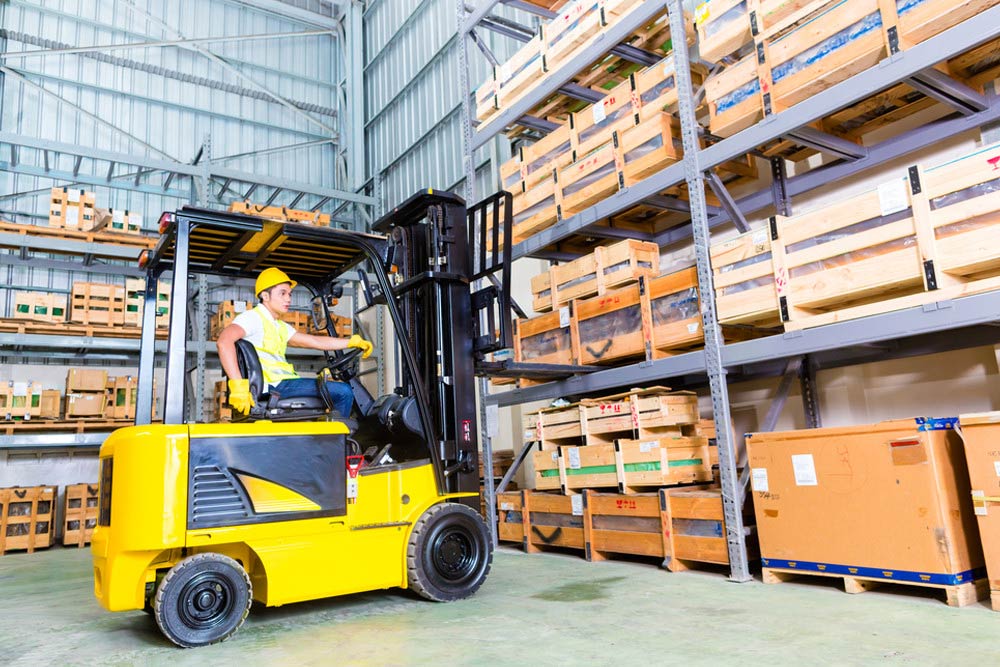
This Forklift Inspection Training provides an understanding of forklift hazards and control measures, before guiding users step-by-step through the pre-use and recorded inspection process. The course empowers personnel to ensure compliance, maintain safety and effectively complete inspection requirements in your operations.

live_tv
100% online training
volume_up
Full audio voiceover
repeat_on
Fully online assessment
account_balance_wallet
Discounts when you buy in bulk
important_devices
Access on any device
app_shortcut
App available for iOS & Android
Training You Can Trust

Approved by IIRSM

In line with UK legislation

Certificate on completion

Developed by health and safety professionals

Forklift Inspection Training Course Certification
Forklift Inspection Training
IIRSM-logo-for-website-131224
£295.00 +VAT

Discounts  for bulk purchases

Need Help?

£295.00 +VAT

Course Preview

Course Details

Course Duration Approximately 3 hours
Approval body IIRSM
Format Fully online
Assessment Multiple choice
Certification Same-day digital certificate
Certificate Valid For 3 years

Suitable For

Forklift Operators

Safety Officers

Maintenance Technicians

Warehouse Supervisors

Logistics Coordinators

Quality Control Inspectors

Course Content

This course contains the following modules:

Introduces the foundational concepts of forklift safety and the importance of inspections.

  • Understanding Forklifts
  • Types of Forklift
  • Key Legislation
  • LOLER Requirements
  • Key Terms
  • Why Inspections are Necessary

Covers the process of conducting thorough risk assessments specific to forklift operations.

  • Understanding Risk Assessment
  • Identify the Hazards
  • Evaluate the Risks
  • Control the Risks
  • Record Findings
  • Review

Outlines the specific requirements by LOLER for the safe use and maintenance of forklifts.

  • Suitability of Forklifts
  • Requirements for Lifting People
  • Strength & Stability
  • Position & Installation
  • Maintenance & Storage
  • Documentation Requirements

Guides users through forklift inspection requirements, including inspection types and their recommended frequencies.

  • Understanding Inspection
  • Starting the Inspection
  • Front of Forklift
  • Under the Hood & Power Source
  • Tyres & Wheels
  • External Conditions
  • Inside the Cab
  • Functional Checks
  • Final Steps

Walks users through what an actual forklift pre-use or recorded inspection looks like.

  • Starting the Inspection
  • Front of Forklift
  • Engine Compartment
  • Tyres and Wheels
  • External Condition
  • Inside the Cab
  • Functional Control Checks
  • Final Steps

What You Will Learn

Legal requirements for inspecting and maintaining forklifts

Inspection criteria and forklift faults

Key forklift components and safety features

How to conduct pre-use and recorded forklift inspections

Forklift hazards and the role of pre-use/recorded inspections

Post inspection actions and documentation

Available in 18 Languages

Course subtitles are available in multiple languages, including:

French

Dutch

German

Italian

Spanish

Polish

Course Approval Body

IIRSM-logo-for-website-131224

Approved by IIRSM

This course is approved by the International Institute of Risk & Safety Management (IIRSM).

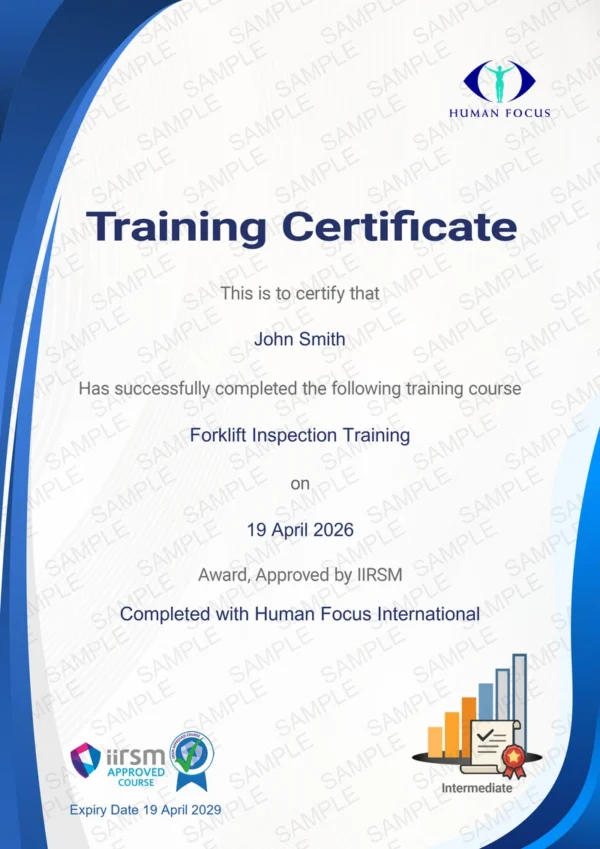
The course certificate includes:

  • User name
  • Company name
  • Course name
  • Completion date
  • Expiry date
  • Approval body

An IIRSM-approved certificate will be available for download and printing instantly upon course completion.

Users must complete an assessment before earning their certificate.

The end-of-course test is:

  • Fully online
  • Multiple choice

A score of 80% is required to pass.

Forklift Inspection Training Course Certification

Forklift Inspection Training e-Checklist

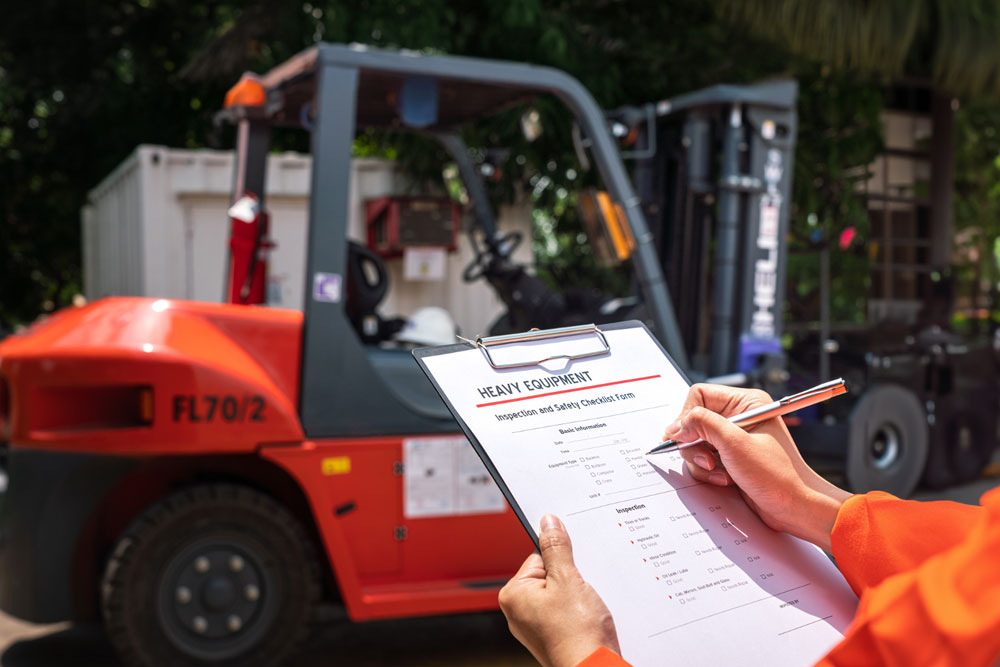
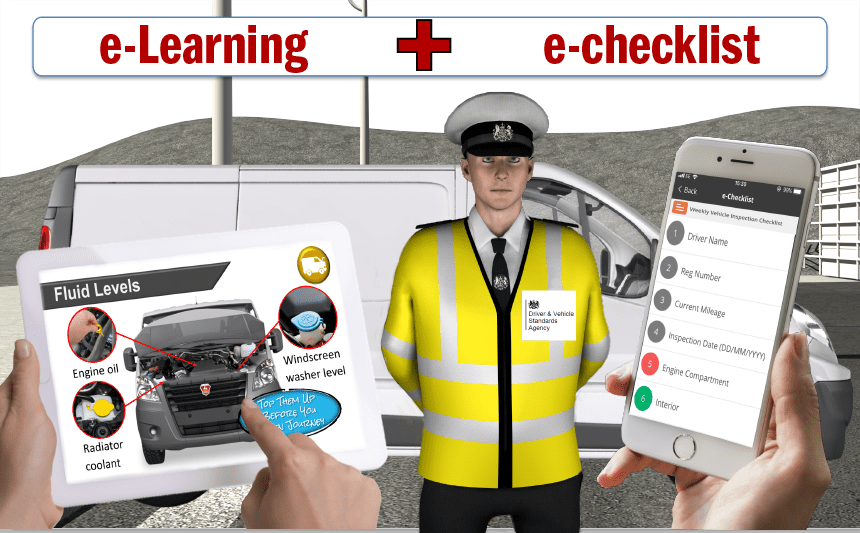
This course includes a free Forklift Pre-Use Inspection e-Checklist that guides operators and supervisors through each stage of a daily or recorded truck inspection and helps them capture clear, consistent records.

The checklist covers essential equipment identification details and all key safety-critical components, giving operators a structured, repeatable way to complete pre-use checks.

Use it to:

  • Record key truck details, including model, serial number, hired status and last LOLER inspection date
  • Work through pre-use inspections step by step, recording pass or fail for each component
  • Note defects, add photos and capture follow-up actions in one place
  • Build a basic record of inspections that shows checks have been completed and supports internal reviews

The checklist can be accessed on any digital device.

Note – This offer is for one Forklift Pre-Use Inspection e-Checklist licence per trainee who completes this course. This e-Checklist is for individual use and cannot be transferred or shared with other users.

Terms and conditions applyAccess to this e-Checklist is available for 12 months from the purchase.

Customer Feedback

Why Is Forklift Inspection Training Important?

Forklift inspections are a frontline control for spotting predictable faults before they escalate. Tyre wear, brake problems, damaged forks, steering issues and hydraulic leaks rarely appear without warning. They become serious when early signs are missed, tolerated or not reported.

Inspection training matters because it improves the quality and consistency of checks in real operating conditions. It does not replace supervision, maintenance capacity or clear stop-use rules. It makes those controls more effective by helping operators and supervisors spot defects earlier and escalate them correctly.

Training is particularly useful for reducing three common failure modes, when the site also backs inspections with clear authority to stop unsafe equipment and timely maintenance support:

  • Normalisation of defects: minor issues become accepted as the normal operating condition until a near miss or breakdown forces attention.
  • Incomplete checks under time pressure: the inspection becomes a tick-box routine rather than a control that blocks unsafe use.
  • Weak defect reporting: issues are observed but not clearly described or escalated to support maintenance decisions.

Effective inspection training builds competence in three areas that strengthen operational assurance:

  • Pre-use checks that are consistent, thorough and appropriate to the specific truck and attachment.
  • Recorded inspection discipline, including clear defect descriptions and correct escalation decisions.
  • Fault recognition and stop-use judgement, so operators know when the truck must be isolated and reported rather than used.

The practical outcome is better-quality inspection inputs. Whether those inputs prevent incidents depends on what the organisation does next, including isolation rules, supervisor backing and maintenance response.

Are You Aware of Your Responsibilities?

Forklift inspection and maintenance duties sit with the employer, but they depend on competent operators and supervisors applying the system day to day. In UK workplaces, the baseline expectation is that work equipment is suitable, maintained, inspected where necessary and used by trained people under a safe system of work.

Key responsibilities typically include:

  • Set an inspection system that covers pre-use checks, planned recorded inspections and defect escalation routes.
  • Define competence requirements for operators and supervisors, then provide training and supervision to match the risk and site conditions.
  • Ensure maintenance is planned and responsive, with clear rules for isolating defective equipment and authorising return to service.
  • Control how forklifts are used, including attachment suitability, rated capacity limits and site traffic controls.
    Plan higher-risk lifting and handling tasks, especially where loads are unusual, visibility is restricted or pedestrians and vehicles mix.
  • Keep inspection and maintenance records that show what was checked, what was found and what happened next.

Organisations are rarely exposed because paperwork is missing. They are exposed when the inspection system does not reliably prevent unsafe use. If people feel pressured to keep equipment running, if supervisors do not support stop-use decisions, or if defect reports disappear into a backlog, checks become ritual rather than control.

Forklift inspection training supports these duties by improving competence and consistency in checking, recording and escalation. It reduces reliance on individual judgement alone, but it delivers its full value only when the wider system makes it easy to stop, report and fix faults without delay or pushback.

About This Forklift Inspection Training Course

This course educates participants on the fundamentals of forklifts, associated hazards and relevant legal requirements. Users learn when and how to inspect a forklift, the correct procedures for documenting inspection findings and actions to take if any issues are identified.

By taking this course, users learn the full forklift inspection process, from identifying faults to documenting and reporting them.


Frequently Asked Questions

This course is designed for anyone involved in the operation, supervision or maintenance of forklifts, including operators, supervisors, safety officers and maintenance personnel. It is also beneficial for managers responsible for workplace safety and compliance with regulations.

Participants will learn the essentials of forklifts, how to conduct thorough risk assessments and the complete process of performing pre-use and recorded forklift inspections. They will also become familiar with legal requirements for inspecting forklifts and documenting findings to ensure compliance.

The knowledge and skills acquired from this course will help ensure forklifts are fit for purpose, thoroughly inspected by trained personnel and maintained for optimal performance.

Pre-use inspections should be conducted daily or before each shift, and recorded inspections should be conducted as regularly as required to ensure safety. This is often on a weekly basis.

Thorough examinations should occur at least every 12 months or more frequently—every 6 months or less—if the equipment is used to lift people.

This course is approved by IIRSM (the International Institute of Risk & Safety Management).

Related Courses